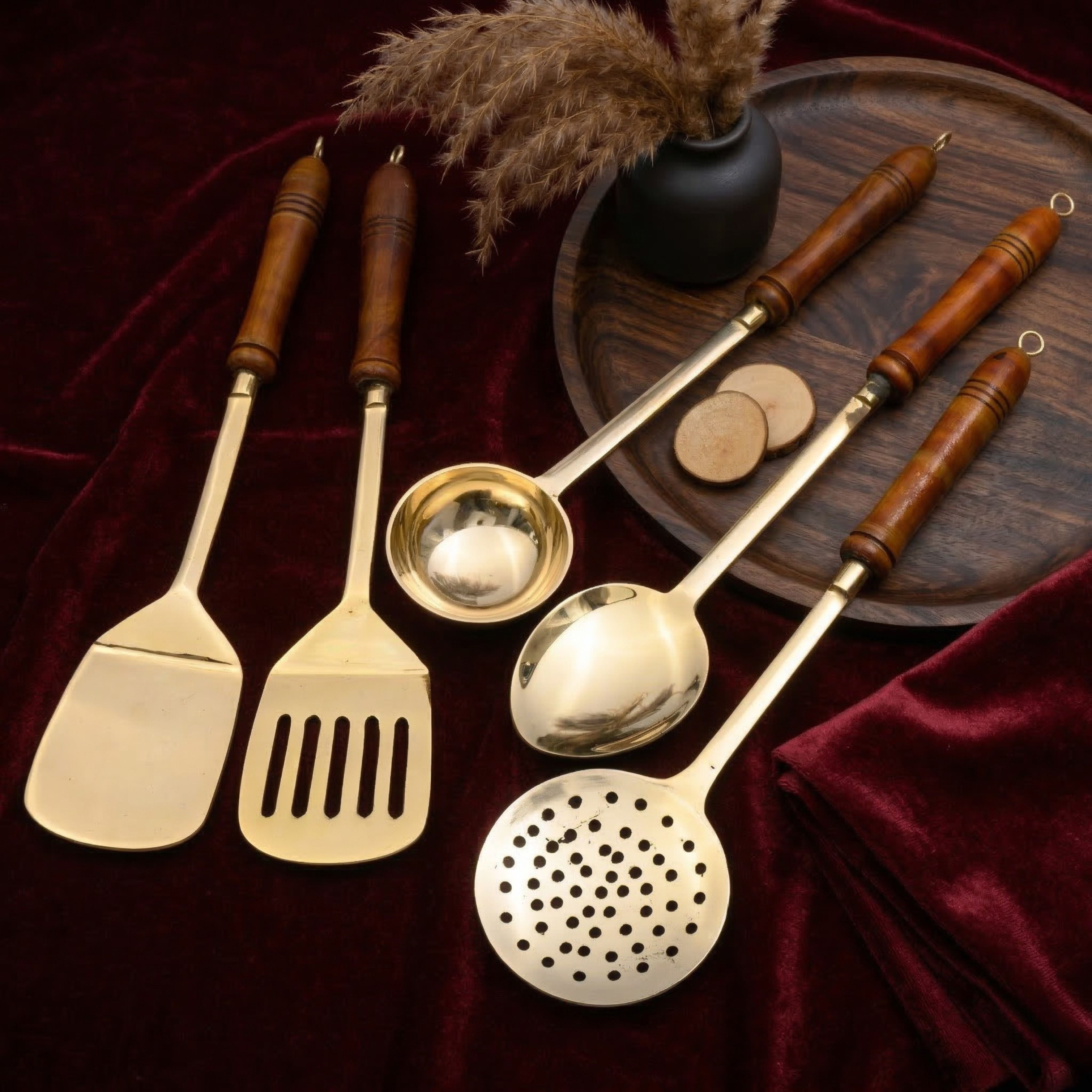
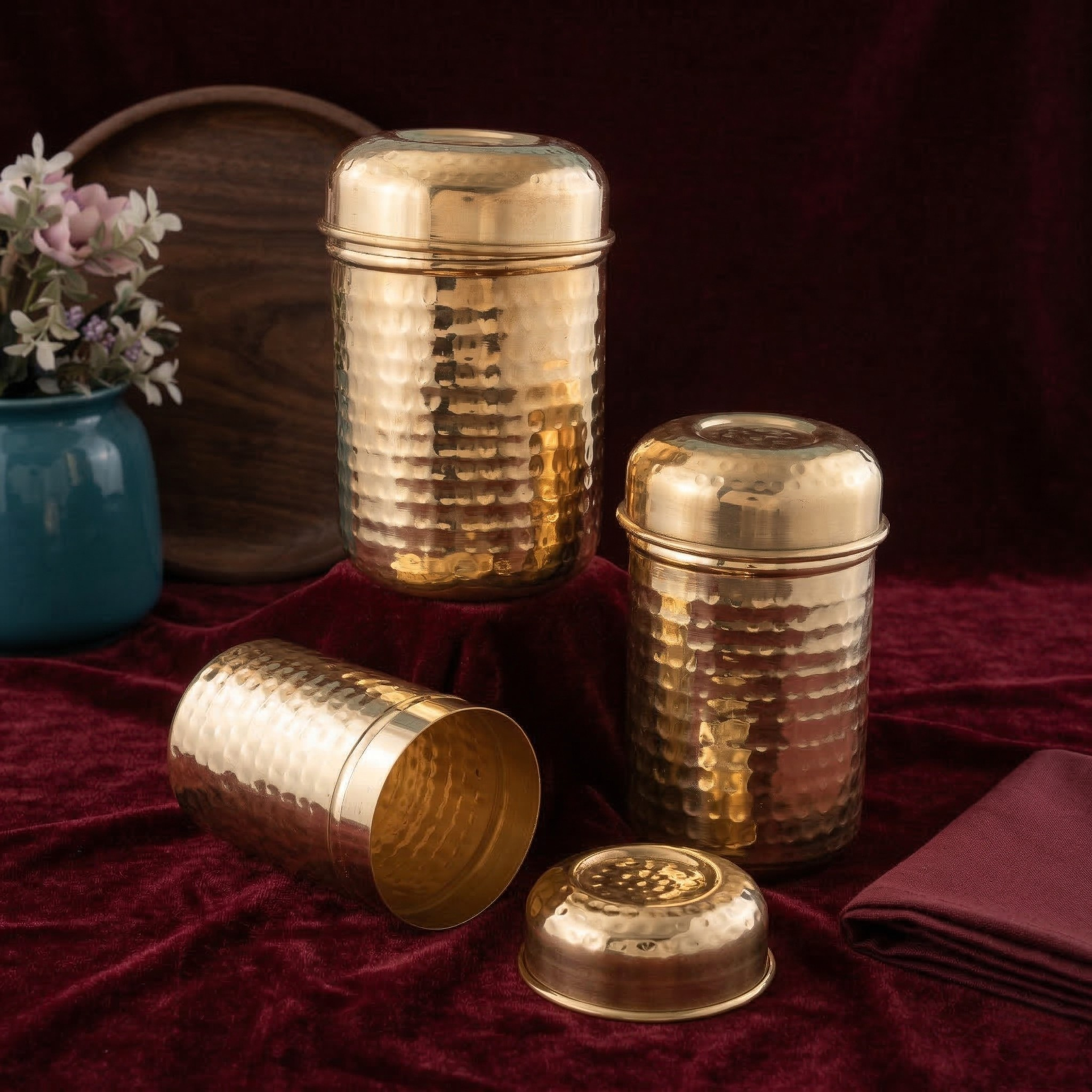
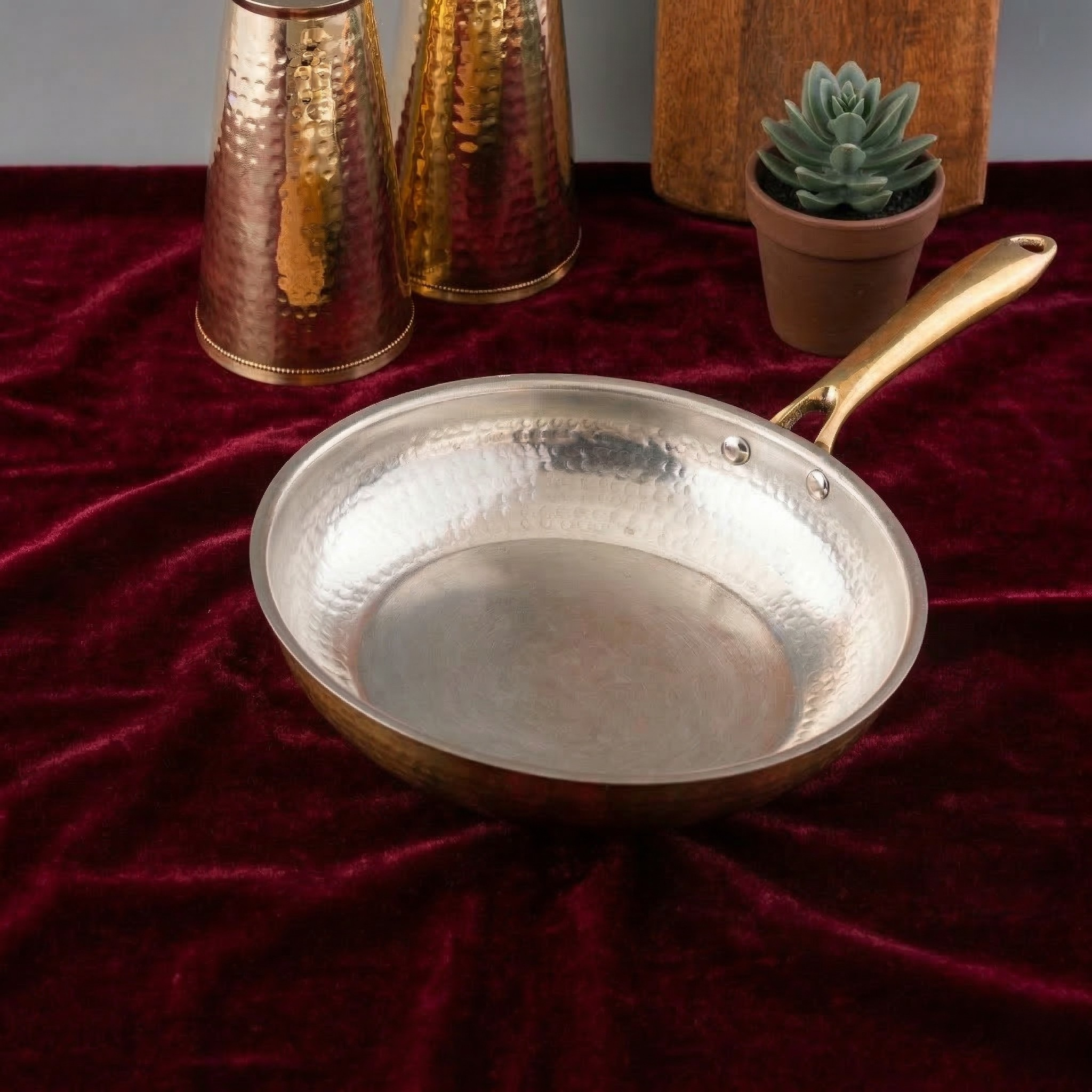
Bronze is an alloy made by combining copper and tin. In India, this alloy is commonly known as Kansa and has been used for generations to make utensils, temple bells, idols, and other traditional metalware. While "Bronze" is the internationally recognised name, "Kansa" is the name most people are familiar with across India.
The words Bronze and Kansa are often used interchangeably when referring to traditional Indian utensils, but not every bronze alloy is made for food use. Modern engineering industries also use different types of bronze for machinery and industrial components. Traditional Kansa, on the other hand, is produced specifically for utensils and ritual items using a copper-tin alloy. Understanding this difference makes it easier to choose genuine Kansa products and avoid misleading product descriptions.
Bronze and Kansa Are the Same Metal - Here's Why India Uses a Different Name
Kansa is not a separate metal from bronze. It's the same copper-tin alloy, just referred to by its Sanskrit-rooted name across most Indian languages: Kansya(KANSI) in Hindi, Vengalam in Tamil Nadu, Kanchu in Andhra Pradesh and Karnataka, and Kanh in parts of Assam and Bengal. English-language product listings and export catalogues label it "bronze" because that's the internationally recognised term, but the metal in your grandmother's thali and the metal used in a European bronze bearing come from the same family of copper-tin alloys, even if the exact ratios differ.
You'll also hear the term "bell metal" used for this alloy, particularly for anything that needs to produce a clear, ringing sound, temple bells, cymbals, and gongs. That's not a different material either. Bell metal is simply bronze with a slightly higher tin content, which changes how the metal vibrates when struck. A higher-tin composition rings; a lower-tin composition holds its shape better under a hammer. Craftsmen have understood this trade-off for centuries, adjusting the ratio depending on whether the final piece needs to sing or to serve dinner.
One clarification worth making early: not every alloy called "bronze" is food-safe or meant for eating. Aluminium bronze, used in marine propellers and industrial fittings, and phosphor bronze, common in electrical connectors and springs, are both technically bronze because they're copper-based alloys with added elements beyond tin. Neither is what you'd want on your dining table. Kansa refers specifically to the copper-tin alloy crafted for utensils, cookware, and ritual objects, not the broader industrial family of bronzes. Our earlier piece on whether Kansa utensils are safe for daily use covers the exact composition ratio, regional naming conventions, and how to verify you're buying genuine, food-grade Kansa, so we won't repeat all of that here.
What Exactly Goes Into Bronze? The Real Metallurgy Behind Kansa

The Core Combination: Copper and Tin
At its simplest, bronze is copper hardened with tin. Copper alone is soft, workable, and an excellent conductor of heat, but it dents easily and reacts more readily with acidic foods over time. Tin is added to change that. Utensil-grade Kansa typically sits close to a 78 percent copper, 22 percent tin ratio, a proportion that's been refined over generations of trial and error rather than picked arbitrarily. We've broken down that ratio and what happens if it shifts too far in either direction in our Kansa safety and daily-use guide, which is worth reading if you're comparing product listings and want to know what "pure Kansa" actually means on a label.
Why Tin Gets Added to Copper in the First Place?
The reason isn't decorative. Pure copper oxidises quickly when it comes into contact with moisture, salt, and acids, the kind of environment every kitchen utensil deals with daily. Tin slows that process down considerably. When alloyed correctly, it forms a more stable surface structure that resists corrosion far better than copper on its own, while also raising the hardness of the metal so it holds an edge, keeps its shape under repeated use, and survives decades of handling instead of years.
There's a visual signature too. Pure copper has a reddish-orange colour. Add tin, and the metal shifts toward a warmer, golden-brown tone, which is part of why bronze utensils look distinct from copper ones on a shelf even before you check the label.
Other Bronze Alloys You'll Come Across
Bronze isn't a single fixed formula. It's a family of alloys, and knowing the difference matters if you're shopping online and see the word "bronze" attached to products that have nothing to do with the kitchen.
-
Aluminium bronze replaces or supplements tin with aluminium, producing a stronger, more corrosion-resistant alloy used in ship propellers, pumps, and industrial valves.
-
Phosphor bronze adds a small amount of phosphorus for improved elasticity and wear resistance, commonly found in springs, electrical contacts, and musical instrument strings.
-
Manganese bronze actually leans closer to a high-strength brass in composition and is used in heavy-duty gears and marine hardware.
-
Bell bronze, sometimes called high-tin bronze, pushes the tin content up toward 20 to 23 percent specifically for its acoustic properties, giving temple bells and cymbals their characteristic ring.
None of these industrial variants belong on a dinner table. If you're buying tableware, cookware, or anything meant to touch food, the alloy you want is the traditional copper-tin Kansa composition, not a generic "bronze" listing that could technically mean any of the above.
How Bronze Is Actually Made - From Raw Metal to Finished Object
Making bronze starts with melting copper and tin together at high temperature, typically in the range of 700 to 950 degrees Celsius depending on the exact composition and the method being used. The two metals need to combine into a fully homogenous melt; if they're not mixed evenly, the finished piece ends up with weak spots or inconsistent colour.
From there, two broad traditions take over, and which one gets used depends heavily on what's being made and which part of India it's being made in. Heavy cookware, like the thick-walled uruli pots popular in Kerala, is usually sand cast or shaped using the lost-wax method, where a wax model is coated in clay, the wax is melted out, and molten bronze is poured into the resulting cavity. This produces dense, thick-gauge pieces built for slow cooking.
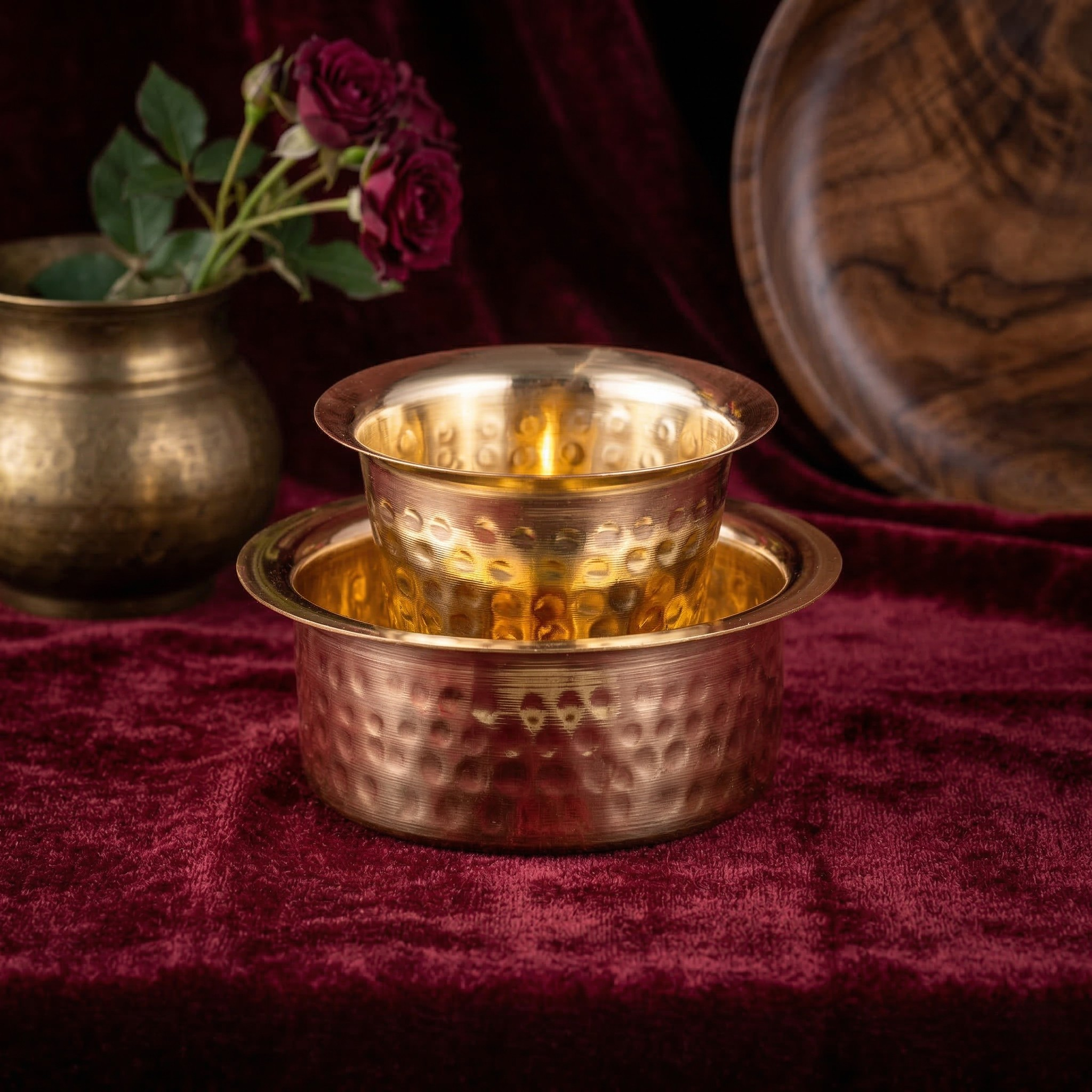
Tableware, on the other hand, particularly the thalis, bowls, and glasses associated with everyday dining in Gujarat, Odisha, and parts of North India, is more commonly hand-forged. Artisans take a cast ingot, heat it repeatedly, and hammer it into shape by hand, a process that can involve dozens of individual heating and beating cycles before the final form emerges. It's slower and more labour-intensive than casting, but it produces a lighter, thinner, highly polished finish that's specifically suited for food contact and everyday handling. We've documented this hand-forging tradition and the specific stages artisans go through, from heating and tempering to lathe finishing, in more depth in our piece on Kansa and bronze forging craftsmanship, including how Sihor's artisans approach the process.
Every batch of finished Kansa should ideally be tested for its actual copper-to-tin ratio before it reaches a kitchen, since composition that drifts too far from the traditional proportions changes both durability and safety. If you want the full breakdown of how to verify that testing and what documentation a genuine manufacturer should be able to show you, that's covered in our safety guide for Kansa utensils.
If you'd like to see what finished, hand-forged Kansa tableware actually looks like once this process is complete, our Kansa bronze utensils collection has thalis, bowls, and glass sets made using the same traditional hammering technique described above.
The History of Bronze and Kansa - From the Bronze Age to Indian Kitchens

Bronze's Global Origins
Bronze is old enough that an entire era of human history is named after it. The Bronze Age is generally dated to roughly 3300 BCE onward, marking the point when societies across Mesopotamia, Egypt, the Aegean, and China shifted from stone tools to metal ones, largely because bronze could be cast into sharper, more durable blades and tools than anything stone offered. It's one of the first alloys humans deliberately engineered rather than simply found, which is part of why metallurgists still treat it as a milestone material.
Bronze in Ancient India
The subcontinent has its own, well-documented chapter in this story. Bronze artifacts from the Indus Valley Civilisation, dating back to roughly 2500 BCE, have been recovered at excavation sites including Mohenjo-daro. The most famous of these is the small bronze figure known as the "Dancing Girl," now housed at the National Museum in New Delhi, cast using an early form of the lost-wax technique that's still used for bronze casting today. Finding a functioning example of lost-wax casting this old tells you the alloy and the craft around it were already fairly mature four and a half thousand years ago, not a later import.
Kansa's Role in Indian Households and Temples
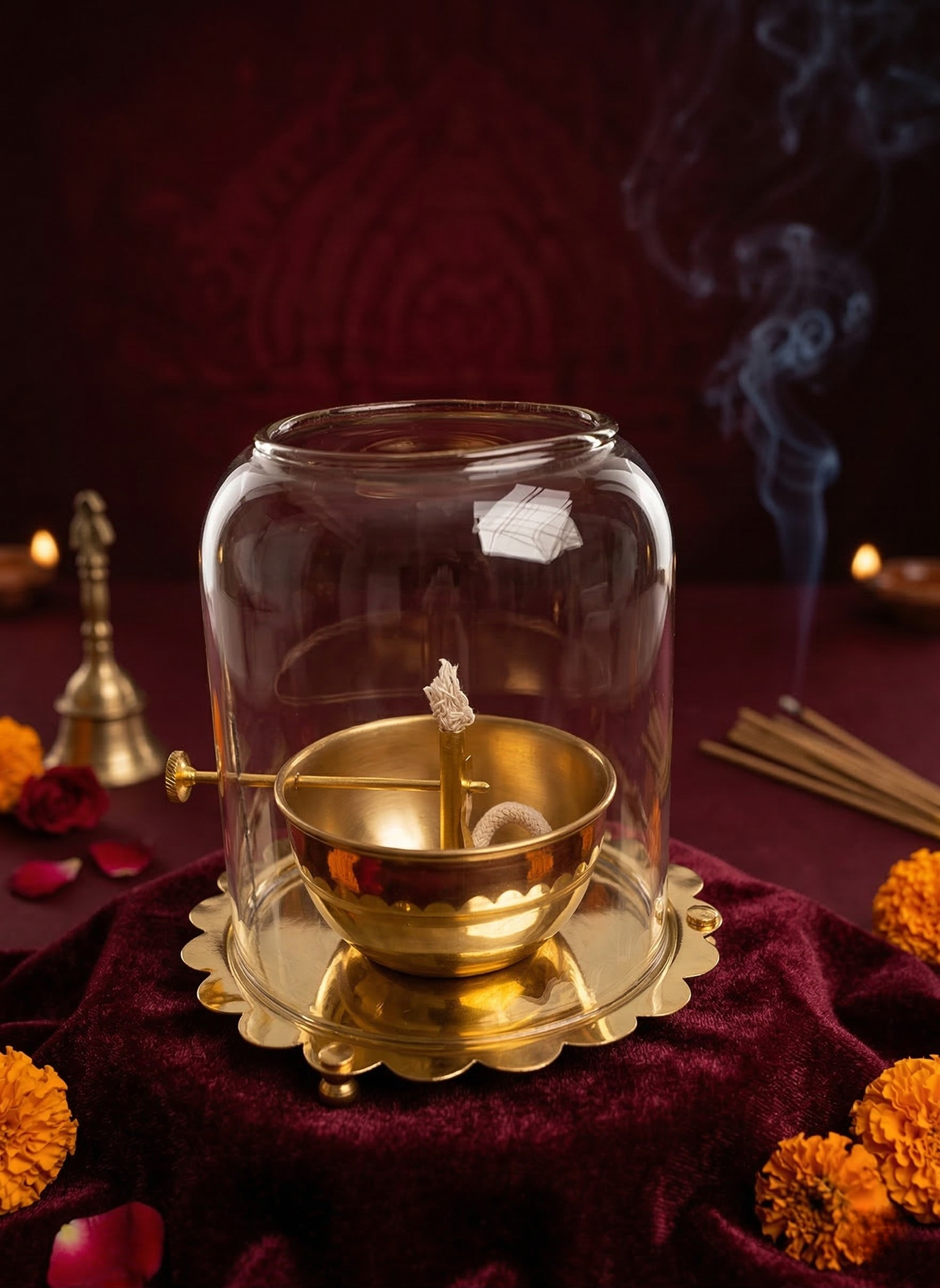
Bronze objects continued showing up across Indian religious and domestic life for the centuries that followed, temple idols, ceremonial bells, ritual vessels, and eventually everyday dinnerware. The reason it stuck around wasn't nostalgia. Bronze held an edge better than the softer metals available at the time, resisted tarnishing reasonably well, and could be cast or forged into intricate shapes that suited both sacred objects and practical kitchenware. That dual role, equally at home on a temple altar and a dining table, is fairly unusual for a single material and is part of why Kansa still carries cultural weight in Indian households today, beyond its basic function as a serving metal.
Bronze (Kansa) vs Brass vs Copper - What's Actually Different
These three metals get confused constantly, partly because they share a warm, golden colour family and partly because they've all been used in Indian kitchens for generations. Here's the actual distinction:
|
Metal
|
Composition
|
Typical Colour
|
Common Use
|
Reactivity
|
|
Bronze (Kansa)
|
Copper + Tin (roughly 78:22)
|
Golden-brown
|
Eating and serving utensils, temple bells
|
Low, tin buffers copper's reactivity
|
|
Brass
|
Copper + Zinc
|
Bright yellow-gold
|
Cooking vessels, pooja items, decor
|
Moderate, depends on zinc content
|
|
Copper
|
Unalloyed copper
|
Reddish-orange
|
Water storage, bottles, tumblers
|
Higher, reacts more with acidic contents
|
The practical difference shows up in how each metal is actually used. Bronze's low reactivity and smooth surface make it well suited for direct food contact, which is why thalis and eating bowls are traditionally made from it. Brass tends to show up more in cooking vessels and pooja items, where its strength and slightly different reactivity profile work in its favour. Copper's biggest advantage is in water storage, where its natural properties are put to specific use rather than in prolonged contact with cooked, acidic food.
None of these three metals is simply a "better" or "worse" version of the others. They're suited to different jobs, and understanding which one fits which purpose matters more than picking the most expensive-looking option on a shelf.
Where Bronze (Kansa) Is Used Today
Bronze's applications extend well beyond the kitchen, and the range is a good reminder of how versatile this alloy actually is.
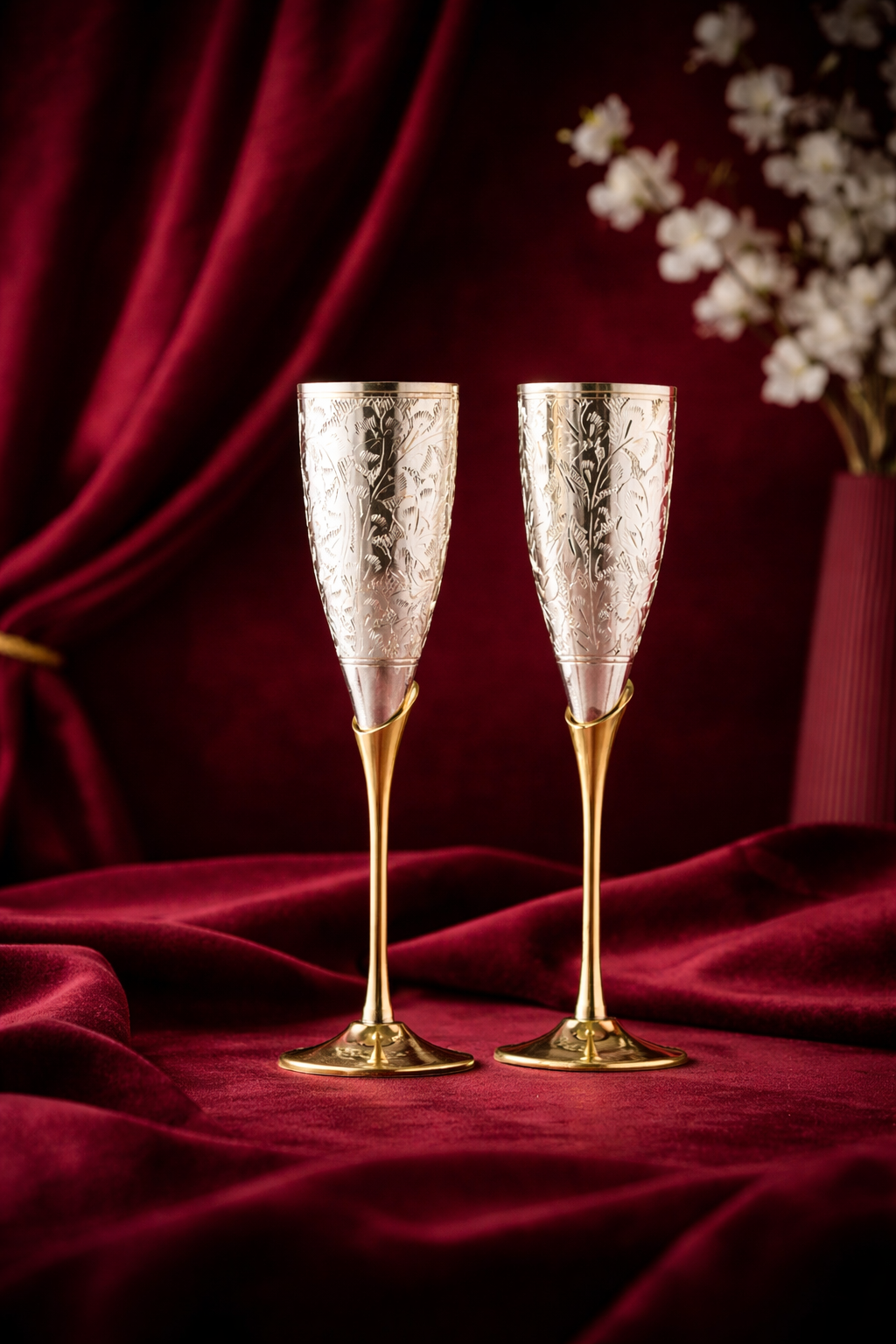
Cookware and tableware. Thalis, katoris, glasses, and serving bowls remain the most recognisable use of Kansa in Indian homes, valued for both function and the way the metal ages and develops character over years of use.
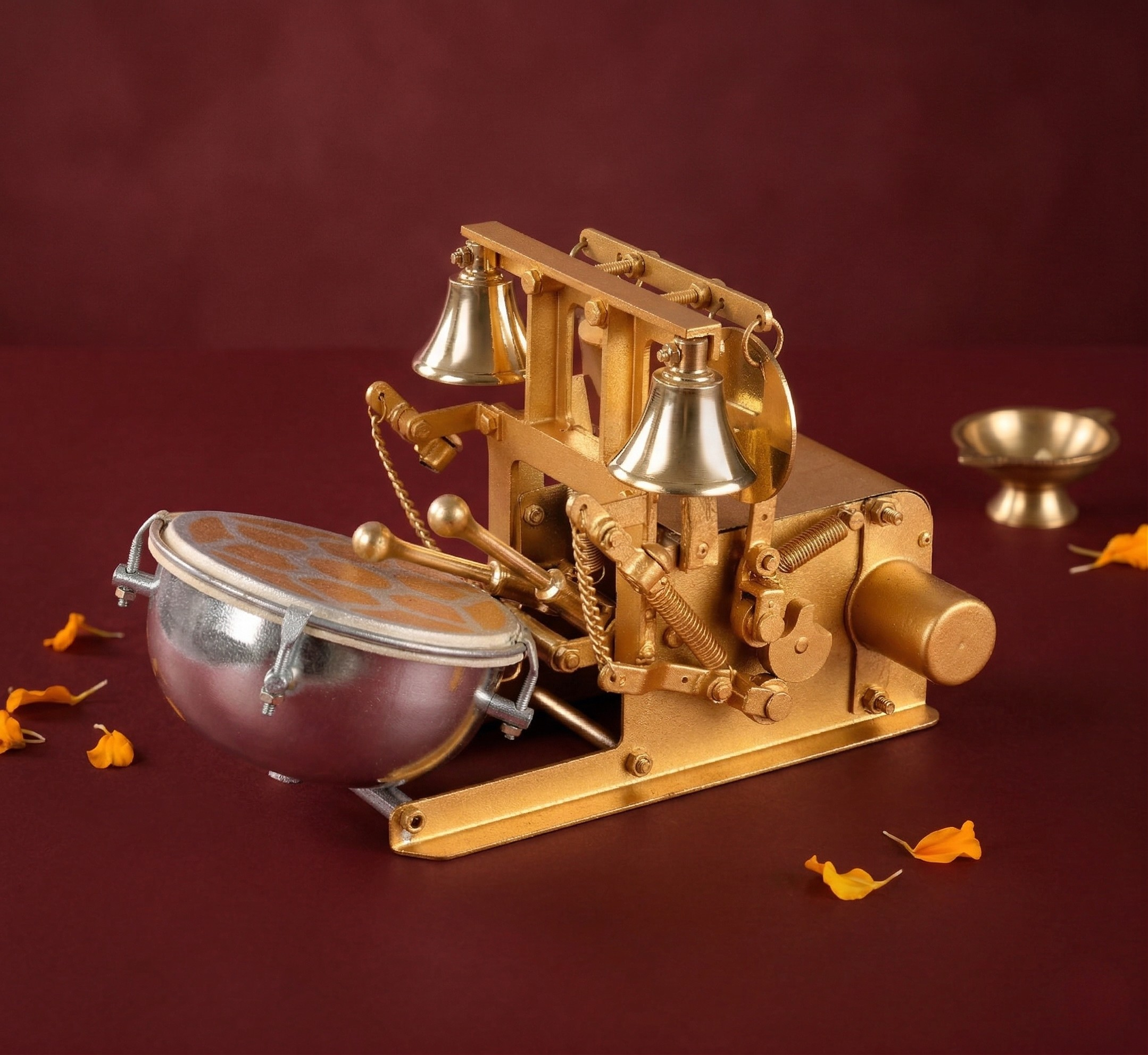
Temple bells and idols. The higher-tin bell bronze composition produces the clear, sustained ring associated with temple bells across India, a property that's been deliberately engineered into the alloy for centuries rather than a happy accident.
Sculpture and art casting. Lost-wax casting, the same technique behind the Dancing Girl figure, remains the standard method for bronze sculpture worldwide, from small devotional idols to large public monuments.
Industrial and engineering applications. Outside the home, bronze shows up in bearings, bushings, and marine fittings, largely because of its low friction and strong resistance to corrosion in wet or saline environments, properties that make it genuinely useful in machinery, not just decorative.
Musical instruments. Cymbals are commonly cast from a specific high-tin bronze alloy known as B20, roughly 80 percent copper and 20 percent tin, chosen specifically because that ratio produces the sustain and tonal complexity percussionists want. It's essentially a cousin of the same bell-metal composition used in temple bells, applied to a completely different instrument.
That range, from your dinner plate to a ship propeller to a cymbal, is a fairly strong indicator of why this particular alloy has stuck around for over five thousand years instead of being replaced by something newer.
Common Misconceptions About Bronze and Kansa
"All bronze is safe to eat from." Not accurate. Only food-grade Kansa, made at or close to the traditional copper-tin ratio and finished without contaminants, is meant for eating and drinking. Industrial bronze alloys with aluminium, phosphorus, or manganese additions are built for entirely different purposes and shouldn't go anywhere near food.
"Bronze and brass are basically the same thing." They're not, even though both are copper-based and both have a warm, golden tone. Bronze pairs copper with tin. Brass pairs copper with zinc. The quickest way to tell them apart without lab testing is colour and sound: bronze tends to be a deeper, more golden-brown, while brass leans brighter and more yellow, and each produces a slightly different tone when struck.
"Bronze turning dark or black means it's damaged." This is one of the most common misunderstandings, and it's simply wrong. That darkening is a natural patina forming as the surface reacts mildly with air, moisture, and food acids over time. It's not a sign of toxicity or deterioration, and in most cases it doesn't affect how the utensil performs. For the full breakdown of what causes this and how to manage it if you'd rather keep your Kansa looking bright, our safety and care guide covers that in detail.
"Bronze is a modern manufacturing material." Given how often it shows up in contemporary product listings, it's easy to assume bronze is a relatively recent industrial development. It's actually one of the oldest engineered alloys humans have ever produced, with a documented history stretching back over five thousand years.
How to Tell If You're Buying Genuine Bronze (Kansa)
A few quick checks help before you commit to a purchase. Genuine Kansa produces a distinct, clear ring when tapped lightly, a result of its bell-metal lineage, whereas lower-quality or heavily alloyed substitutes tend to sound duller or flatter. It should feel noticeably heavier than a similarly sized steel or aluminium piece, given bronze's higher density. It's non-magnetic, so a simple magnet test can rule out pieces that have iron mixed in or are steel dressed up to look like bronze. And genuinely well-made Kansa carries a consistent golden-brown colour without patchy discoloration straight out of the box.
These checks are useful for a quick gut-check while shopping, but they're not a substitute for lab-tested composition data. For the complete authentication checklist, including what documentation a trustworthy seller should provide, our detailed Kansa authenticity guide walks through it step by step.
Bronze (Kansa) at a Glance
-
Composition: Copper and tin, typically around 78:22 for utensil-grade Kansa
-
Colour: Golden-brown, distinct from copper's reddish tone and brass's brighter yellow
-
Hardness: Noticeably harder and more corrosion-resistant than pure copper
-
Historical period: In continuous use since roughly 2500 BCE on the Indian subcontinent, part of the broader global Bronze Age dating to around 3300 BCE
-
Modern uses: Tableware and cookware, temple bells, sculpture, industrial bearings, musical instruments
-
Regional names in India: Kansa, Kansya, Vengalam, Kanchu, Kanh, and other variants depending on the region
Bringing Bronze Back Into the Kitchen
Bronze earned its place in Indian households the same way it earned its place in the Bronze Age: it simply worked better than the alternatives available at the time, and it kept working for thousands of years afterward. That's a fairly rare track record for any material, let alone one still being hand-forged using techniques barely changed from how the Dancing Girl of Mohenjo-daro was cast. Whether you're drawn to it for the craftsmanship, the history, or simply because a well-made thali outlasts almost anything else in the kitchen, understanding what's actually in the metal makes it a lot easier to buy the real thing rather than a look-alike.
At Raj Gharana Metals, our Kansa utensils are hand-forged in Sihor using the same copper-tin composition and hammering traditions described throughout this guide. If you'd like to see the finished pieces, our Kansa (bronze) collection is a good place to start.
FAQs
1. Is Bronze the same as Kansa?
Yes. Kansa is the traditional Indian name for a type of bronze made from copper and tin. While the name varies by region, the material belongs to the bronze family and has been used for utensils, cookware, temple bells, and ritual items for centuries.
2. What is Bronze made of?
Bronze is primarily made by combining copper and tin. The exact ratio depends on its intended use. Traditional Kansa utensils are commonly made with a high percentage of copper and a smaller amount of tin to improve strength and durability.
3. Is Bronze better than Brass for utensils?
Bronze and brass serve different purposes. Bronze (Kansa) is commonly used for dining and serving utensils because of its copper-tin composition. Brass contains copper and zinc and is more often used for cookware, decorative pieces, and pooja items.
4. Is Bronze safe for eating and drinking?
Food-grade Bronze, also known as Kansa, is considered suitable for serving and eating food when it is made with the correct alloy and proper manufacturing standards. Always buy from a trusted manufacturer that uses genuine Kansa.
5. Why do Bronze utensils turn dark over time?
Bronze naturally develops a darker surface when exposed to air, moisture, and certain foods. This is a normal oxidation process and does not mean the utensil is damaged. Regular cleaning helps maintain its appearance.
6. How can I identify genuine Kansa utensils?
Authentic Kansa usually has a rich golden-brown colour, feels heavier than steel, is non-magnetic, and produces a clear ringing sound when lightly tapped. Buying from a reputable manufacturer is the best way to ensure authenticity.
7. What is the difference between Bronze, Brass, and Copper?
Bronze is made from copper and tin, brass is made from copper and zinc, and copper is used in its pure form. Each metal has different properties and is suited to different household and industrial applications.
8. Are all Bronze products suitable for food use?
No. Bronze is a broad category of copper-based alloys. Some industrial bronze alloys contain additional metals and are designed for engineering applications. Only food-grade Kansa should be used for utensils and tableware.
9. Why has Kansa been used in India for so many years?
Kansa has been used in Indian households for generations because it is durable, long-lasting, and suitable for everyday dining. It also holds cultural and traditional significance in many regions of the country.
10. Can Bronze utensils last for generations?
Yes. Genuine hand-forged Kansa utensils are known for their durability. With proper care and regular cleaning, they can remain in use for decades and are often passed down through families.
Buy Premium Kansa Utensils Online From Raj Gharana Metals
Explore premium Kansa utensils made from the traditional copper and tin alloy by skilled artisans in Sihor. Find handcrafted thalis, bowls, glasses, and complete dinner sets that combine timeless craftsmanship with lasting durability for everyday dining.
Shop Premium Kansa Utensils