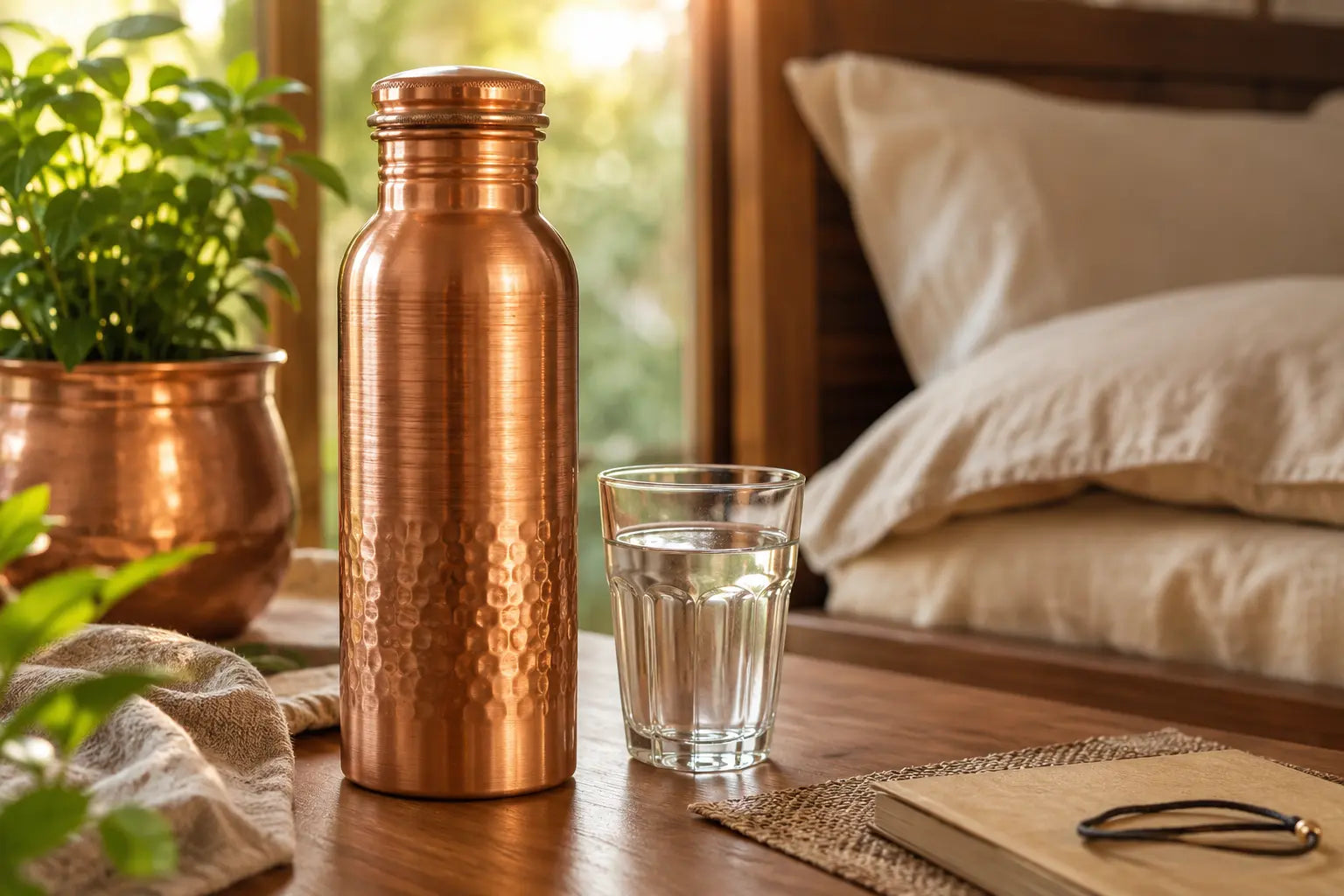
Water should be stored in a copper bottle for a minimum of 6 to 8 hours. Overnight storage of roughly 8 hours is the most practical and widely recommended window. The maximum is 24 hours, after which the water should be replaced. Storing it any longer than a day raises copper ion levels beyond what the body needs daily.
This timing isn't random. It's rooted in both Ayurvedic tradition and modern microbiological science. The following sections explain exactly what happens at each stage, why the window matters, and how to build a routine that actually works for you.
Why the Duration of Storage Matters
A copper bottle isn't passive. When water sits inside a copper vessel, the metal begins releasing tiny amounts of copper ions into the water. This process is gradual and time-dependent.
Too short a time and the water barely benefits. Too long and the copper ion concentration rises higher than necessary. The sweet spot is where the water has absorbed just enough.
This natural process is backed by science. It is called the Oligodynamic Effect copper's inherent ability to destroy or inhibit the growth of harmful microorganisms. Ancient households across India understood this without naming it. Modern microbiology simply confirmed what generations already practiced.
The key insight: the benefit you get from a copper bottle is directly tied to how long the water has been in contact with the copper surface.
The Ideal Storage Window: 6 to 8 Hours
Here is what actually happens during different stages of storage:
0 to 2 Hours
Copper ions begin to release, but at very low levels. The water is not yet meaningfully enriched. Drinking at this stage is fine, but you won't receive the full antimicrobial or mineral benefit.
2 to 6 Hours
The oligodynamic effect starts building. Bacterial populations in the water begin to reduce. If you're filling a bottle in the morning to drink by afternoon, this is roughly the range you are working with, still useful, but not optimal.
6 to 8 Hours
This is the ideal window. Copper ion concentration reaches a level that is effective for health without being excessive. Bacteria like E. coli and Salmonella show significant reduction after water has been stored in copper for at least 6 hours.
Overnight (8 to 10 Hours)
This is the most practical and traditionally practiced routine. Fill the bottle before you sleep. Drink from it first thing in the morning. Most people find this effortless to maintain, and it aligns perfectly with the Ayurvedic practice of drinking Tamra Jal copper-infused water on an empty stomach.
If you use a pure copper bottle without any inner coating or lining, the water contacts the metal directly, which is essential for this process to work correctly.
What Happens If Water Is Stored Beyond 24 Hours?
This is the question most people have but rarely find answered clearly.
After 24 hours, copper ions continue to accumulate in the water. The water does not become poisonous overnight. But the concentration begins climbing higher than what the body needs or benefits from daily.
Copper is an essential trace mineral, but like all minerals, the body requires it in specific amounts. Drinking water that has been sitting in a copper vessel for 36 or 48 hours regularly pushes intake toward unnecessary levels.
Data Point 1 - World Health Organization (WHO)
According to the WHO's Guidelines for Drinking-water Quality, the guideline value for copper in drinking water is 2 mg per litre. This is the globally recognised upper threshold for safe copper in water. Regularly consuming water stored beyond 24 hours may push intake toward or past this threshold if large quantities are consumed.
The practical rule is simple: replace the water every 24 hours. Never let stored water sit beyond one full day.
If you notice a slightly metallic or bitter taste in the water, that is your clearest sign that it has been stored too long or the bottle needs a good clean.
Morning vs. Night - When Should You Fill the Bottle?
Both options work. The right one depends on your daily rhythm.
Fill at Night, Drink in the Morning
This is the most consistent and historically practiced method. Filling the bottle between 9 PM and 11 PM means the water has 7 to 9 hours in the copper before you wake up. Drinking it on an empty stomach is the traditional way, and there is good reason for it an empty digestive system absorbs trace minerals more readily.
Fill in the Morning, Drink by Afternoon or Evening
This works well for people who prefer to drink copper water later in the day. Fill at 7 AM and the water reaches the ideal 6-hour mark by 1 PM.
What to Avoid
Filling the bottle and drinking from it within an hour or two gives you almost no meaningful benefit from the copper. The interaction window simply hasn't been reached yet. This is one of the most common mistakes people make when starting out with a copper bottle.
Does the Type of Water Affect Storage Duration?
Yes, and this is something most guides ignore entirely.
The source of your water changes how the copper bottle behaves. Here is what you need to know:
-
RO or filtered water: Works best with copper bottles. The water is clean and the copper ions infuse predictably within the 6 to 8 hour window. This is the ideal combination.
-
Tap water with chlorine: Chlorine can react with copper and alter the taste of the water. If you use tap water, let it sit in an open glass for a few minutes first to allow chlorine to dissipate, then pour into the copper bottle.
-
Hard water (high mineral content): Common in many parts of India, hard water contains dissolved minerals that can slow the copper infusion process slightly. For hard water, lean toward the higher end of the window 8 hours rather than 6.
Regardless of water type, the 24-hour maximum remains the same. No source of water changes that upper limit.
How Many Times a Day Should You Drink Copper-Stored Water?
This is where moderation matters most.
One to two glasses (roughly 250 to 500 ml) of copper-stored water per day is considered adequate for most adults. This is not a beverage you drink all day as your primary source of hydration.
Think of it as a wellness practice one glass in the morning on an empty stomach, possibly another later in the day. For the rest of your water intake, use a regular bottle.
Data Point 2 - Indian Council of Medical Research (ICMR)
The ICMR lists copper as an essential micronutrient with a recommended dietary intake of 1.7 mg per day for adults. This figure reinforces why moderate, daily consumption of copper-stored water makes sense it helps you meet your trace mineral needs without overshooting them.
Drinking exclusively from a copper bottle all day, every day, is not the recommendation. Balance is the point.
Temperature and Season - Does It Change Storage Time?
Yes, and this is worth knowing if you live in a place with extreme temperatures.
In summer and hot climates: Copper ion release happens slightly faster at higher temperatures. During peak Indian summer when room temperatures can reach 40°C and above 6 hours is often sufficient for effective infusion. Water should not be stored beyond 18 to 20 hours during hot months, as the warmer environment accelerates the process.
In winter and cooler conditions: Ion release slows down at lower temperatures. During winter months, 8 to 10 hours of overnight storage is more appropriate to reach the same effective level of infusion.
One rule that applies year-round: never store water in a copper bottle in direct sunlight. External heat from the sun can accelerate patina development on the bottle's surface and affect water quality over time.
Signs That Water Has Been Stored Too Long
You don't need a lab test to figure out if water has been sitting too long in your copper bottle. Your senses are enough.
-
Metallic or bitter taste: The most noticeable indicator. If the water tastes sharp or bitter, it has been stored past its ideal window or the bottle needs cleaning.
-
Unusual smell: Often caused by residue from the previous batch not being rinsed out properly before refilling.
-
Visible water discoloration: Rare, but if the water looks slightly off in colour, discard it immediately and clean the bottle thoroughly.
Any of these signs means: discard the water, clean the bottle with lemon and rock salt, rinse well, and start fresh.
Quick Note: A greenish or brownish coating inside the bottle is copper patina, a natural oxidation layer. It does not harm the water, but it does need to be cleaned regularly. Leaving it untreated and refilling on top of old water is where problems begin.
How to Build a Safe Daily Copper Bottle Routine
The best routines are simple ones that you can actually maintain. Here is a clean daily framework:
-
Evening (8 to 10 PM): Rinse the copper bottle with plain water. Fill it with fresh filtered water. Seal it and leave it on your bedside table or kitchen counter.
-
Morning (6 to 7 AM): Drink one to two glasses of the stored water on an empty stomach. Allow 20 to 30 minutes before your morning tea or breakfast.
-
Rest of the Day: Switch to a regular water bottle for your remaining daily water intake. Do not continue drinking exclusively from the copper bottle.
-
Every 24 Hours: Replace the water. Never let a batch sit beyond a full day.
-
Once a Week: Deep-clean the inside of the bottle with a mix of lemon juice and rock salt. Rub gently, let it sit for a few minutes, rinse thoroughly, and air dry completely before the next use.
Data Point - 3 Journal of Health, Population and Nutrition (2012)
A peer-reviewed study conducted in India found that copper vessels were highly effective in killing harmful bacteria including Salmonella typhi and Escherichia coli when water was stored for at least 16 hours. After overnight storage, zero bacterial growth was detected in copper-stored water samples reinforcing why the overnight routine is both practical and scientifically sound.
Common Mistakes People Make With Copper Bottle Storage
Knowing what not to do is just as important as knowing what to do.
-
Storing water for 30 minutes and drinking it: You get almost none of the benefits. The copper ion concentration at this stage is negligible.
-
Leaving water for 2 to 3 days: More time does not mean more benefit. It means excess copper concentration and a potentially unpleasant taste.
-
Using a copper bottle for acidic drinks: Juices, lemon water, carbonated drinks, and milk should not be stored in copper. Acidic liquids react aggressively with copper and can leach far more metal than is safe.
-
Never cleaning before refilling: Pouring fresh water over the remains of a previous batch introduces stale residue into the new water. Always rinse before refilling.
-
Assuming all copper bottles are the same: Coated or lined copper bottles do not allow proper water-copper contact. For the Tamra Jal practice to work, the bottle must be pure, uncoated copper.
For those who use a jumbo copper bottle for larger daily quantities, the same rules apply: the storage duration does not change based on bottle size, only on time.
Copper Bottle Storage Duration for Children and the Elderly
Children can drink copper-stored water, but in smaller quantities. One small glass a day after the standard 6 to 8 hours of storage is appropriate. The same water should not be left for more than 24 hours for children either.
For elderly individuals, especially those managing kidney-related conditions or those on copper-sensitive medications, it is worth consulting a physician before making copper-stored water a daily habit. The body's ability to process excess minerals changes with age, and a doctor's guidance adds a layer of safety.
For pregnant women, there is no conclusive study recommending avoidance, but one small glass a day is a sensible, moderate approach during pregnancy.
The broader principle for all these groups: copper water is a wellness supplement to a healthy hydration routine, not a replacement for it.
Copper Bottle Water Versus Regular Water - Is the Difference Real?
People who have used copper bottles for any length of time consistently report that the water tastes different, cleaner, slightly earthy, and fresher than water stored in plastic or stainless steel.
That difference is real, not imagined. Plastic bottles, over time, can leach trace compounds into water. Stainless steel is neutral but inert it does nothing to enhance the water. Copper, on the other hand, actively interacts with the water and contributes trace minerals to it.
This doesn't mean copper water is a cure for anything. What it does mean is that when used correctly with the right duration, the right routine, and the right bottle, copper-stored water is a genuinely supportive daily practice that has stood the test of time across centuries of Indian tradition.
You can also explore the full range of traditional copper drinkware to find options suited to your household's daily needs.
FAQs
1. How long should water be stored in a copper bottle before drinking?
Water should be stored in a copper bottle for at least 6 to 8 hours. This allows enough time for copper ions to infuse into the water and support the bottle's natural antimicrobial properties.
2. Is it safe to drink water stored overnight in a copper bottle?
Yes, storing water overnight for 8 to 10 hours is considered one of the most effective and commonly practiced methods. It provides adequate copper infusion without exceeding recommended levels.
3. Can water be kept in a copper bottle for more than 24 hours?
It is not recommended to store water in a copper bottle for longer than 24 hours. Extended storage may increase copper levels beyond what is necessary for daily consumption.
4. What happens if I drink water from a copper bottle after two days?
Occasionally drinking water stored for more than 24 hours may not cause immediate harm, but regular consumption is not advised due to increased copper concentration and possible changes in taste.
5. How much copper bottle water should I drink daily?
Most adults can consume one to two glasses (250–500 ml) of copper-stored water per day as part of a balanced hydration routine.
6. Can I fill a copper bottle with tap water?
Yes, but filtered or purified water is generally preferred. If using chlorinated tap water, allowing it to sit briefly before transferring it to the copper bottle may help improve taste.
7. Does hot weather affect how long water should be stored in a copper bottle?
Yes. Higher temperatures can speed up copper ion release, making 6 hours sufficient in many cases. However, water should still be replaced within 24 hours.
8. Can children drink water stored in a copper bottle?
Yes, children can drink copper-stored water in moderate amounts. A small glass per day after the recommended storage period is generally considered sufficient.
9. Can I store lemon water or other beverages in a copper bottle?
No. Acidic drinks such as lemon water, fruit juices, vinegar-based beverages, and carbonated drinks should not be stored in copper bottles because they can react with the metal.
10. How often should a copper bottle be cleaned?
A copper bottle should be rinsed daily and deep-cleaned at least once a week using natural ingredients such as lemon juice and rock salt to help maintain its condition and performance.
Conclusion
The answer to how long water should be stored in a copper bottle is clear: at least 6 to 8 hours, ideally overnight, and no longer than 24 hours. This window is where the science and the tradition align perfectly.
Fill the bottle at night. Drink the water in the morning. Replace it every day. Clean it once a week. These four habits are all you need to make the most of a copper bottle.
What makes this practice sustainable is that it fits into a routine you already have sleeping and waking up. The copper bottle does the work while you rest.
At Raj Gharana Metals, every copper bottle is crafted from pure, uncoated copper exactly the kind your daily Tamra Jal practice needs to work as it should. No shortcuts, no inner linings, no compromises. Just the honest metal that Indian households have trusted for generations.