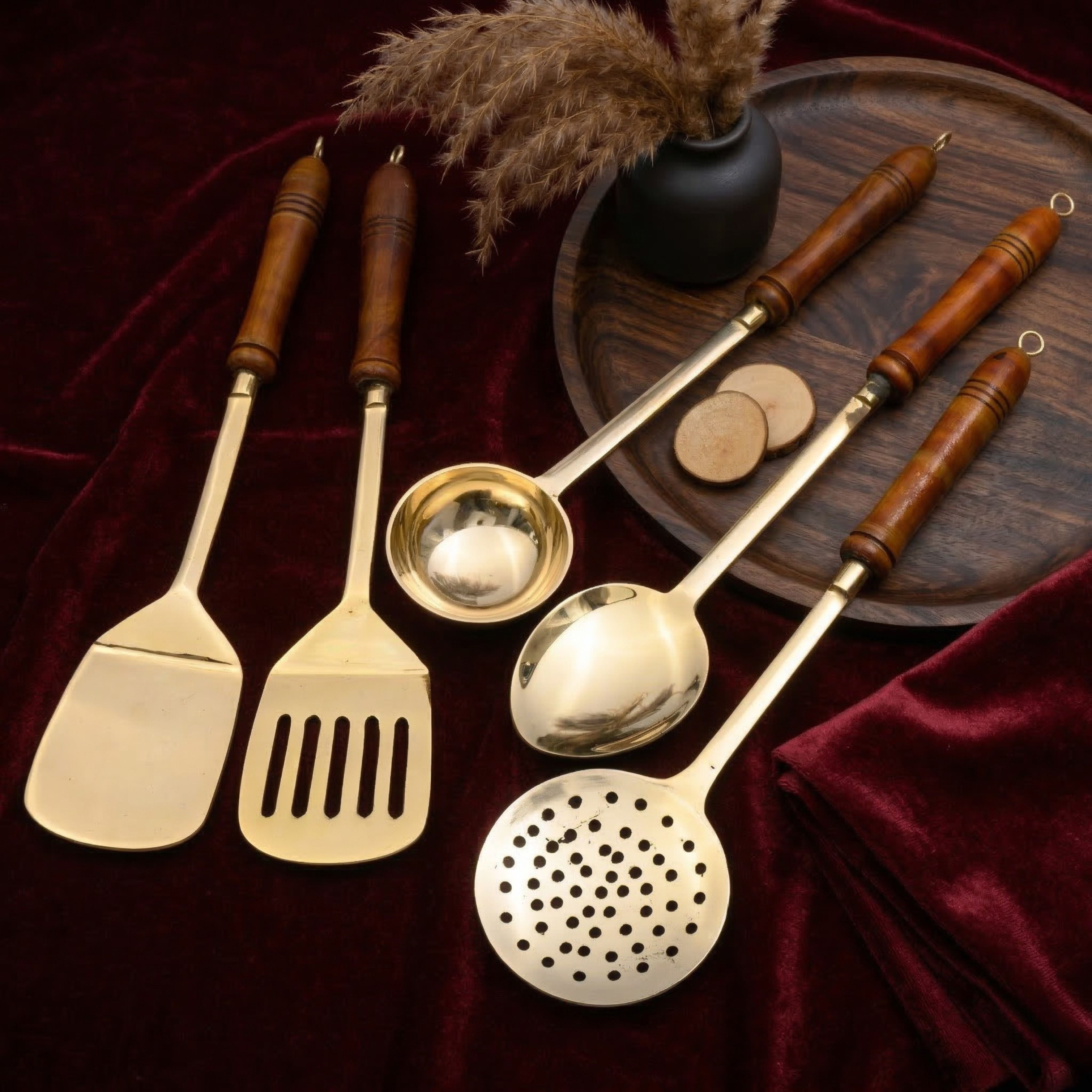
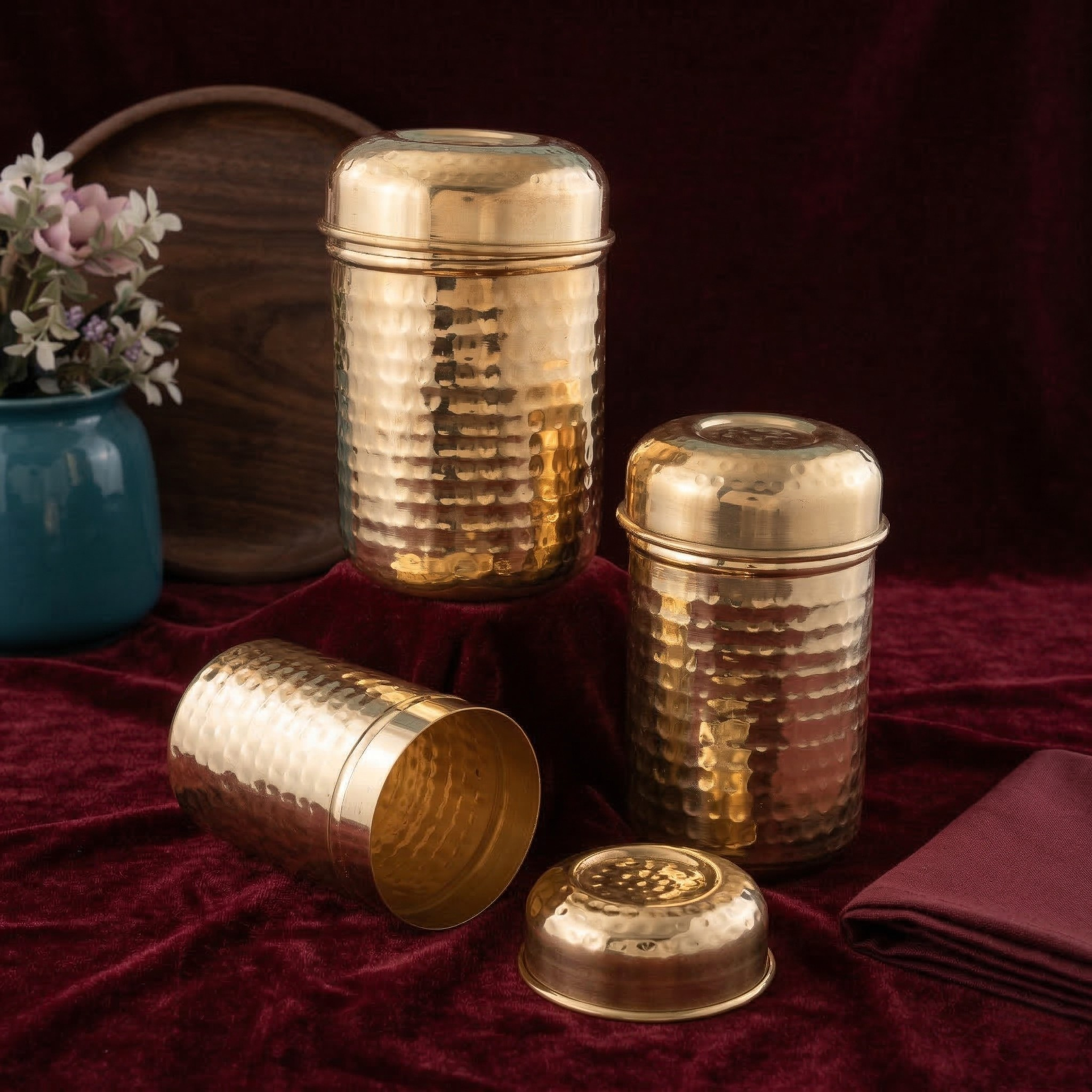
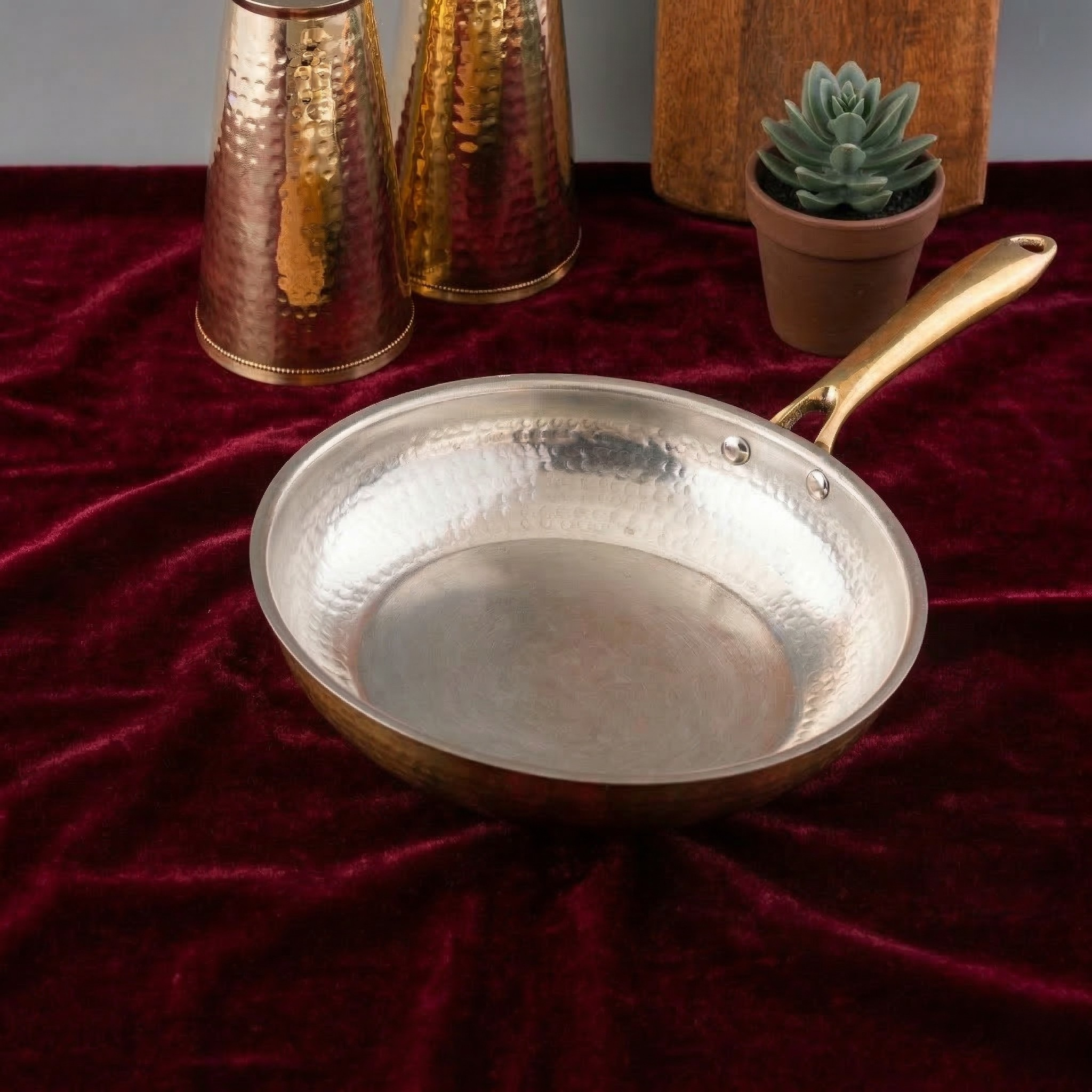
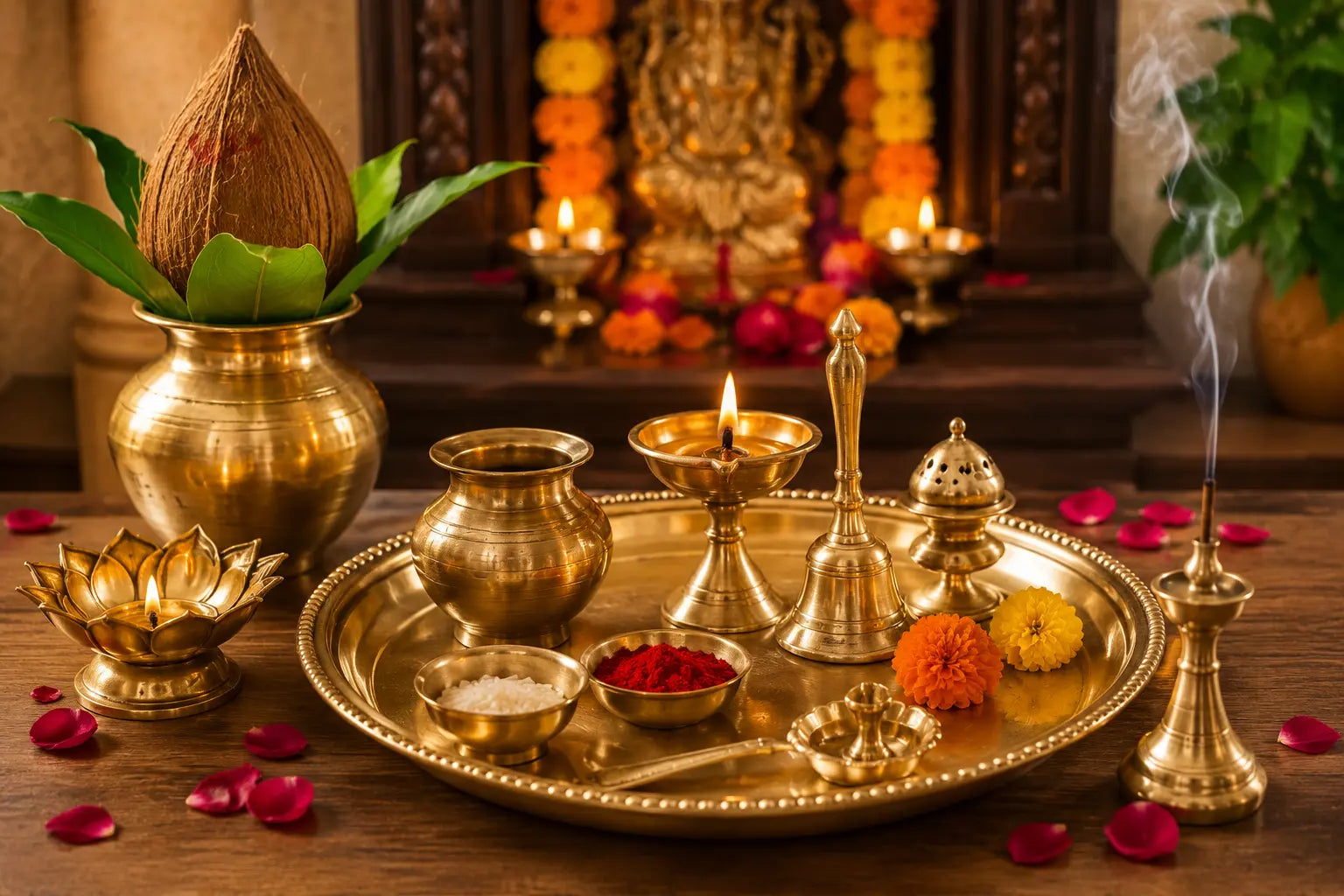
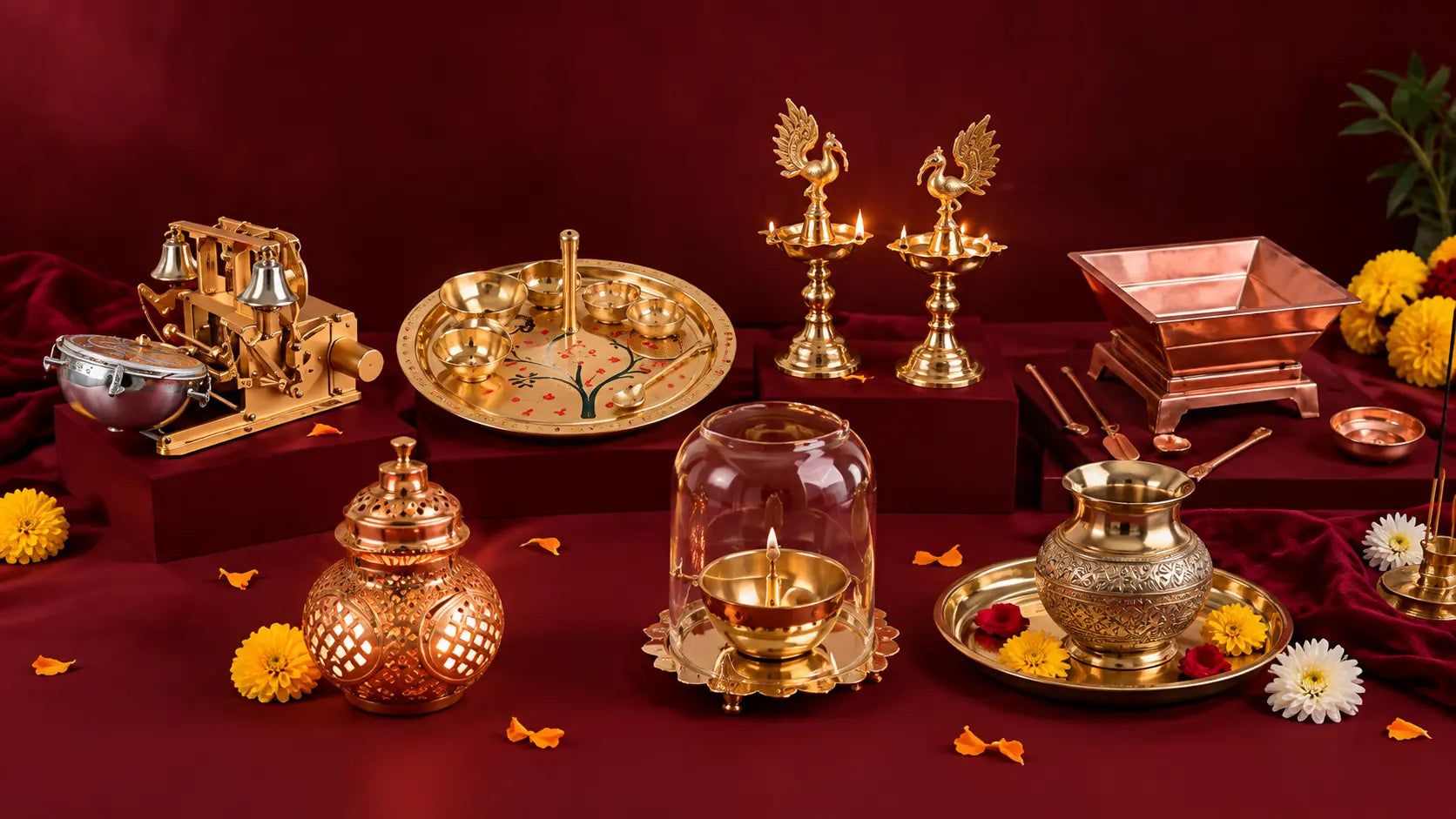
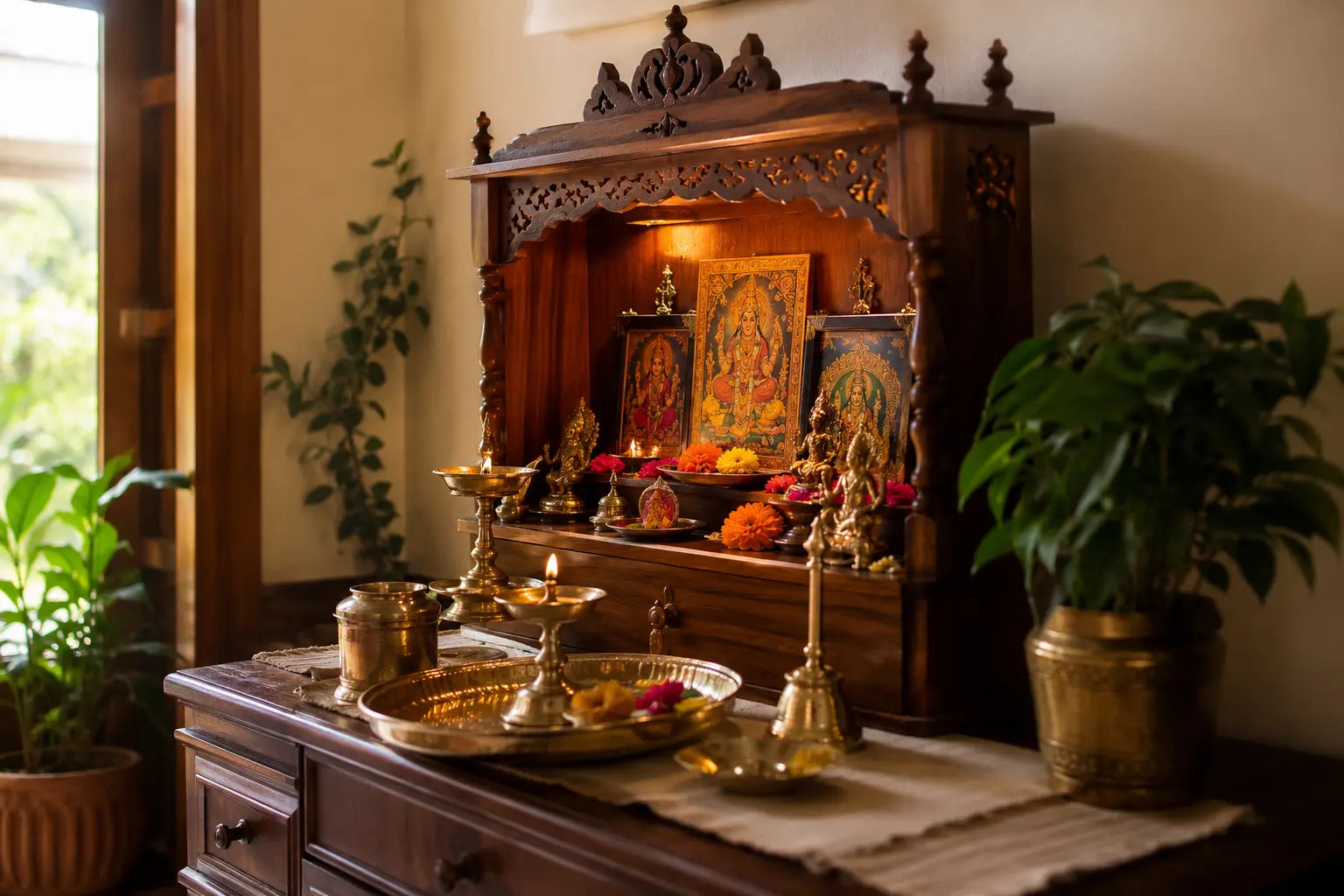
Brass pooja items remain a trusted choice for many Indian homes and temples because they bring together traditional use, durability, practical handling, and the character of handcrafted metalwork. Brass has been used for ritual objects such as lamps, bells, plates and vessels for generations, while the craft itself remains part of India's documented cultural heritage.
UNESCO inscribed the traditional brass and copper craft of utensil making among the Thatheras of Jandiala Guru, Punjab, on the Representative List of the Intangible Cultural Heritage of Humanity in 2014. The organization notes that these handcrafted utensils can have both ritual and everyday uses, including use during special occasions and at temples. UNESCO
That history explains part of brass's continued presence in pooja spaces, but tradition is only one reason. Brass is also well suited to making sturdy, reusable objects that can be handled regularly, cleaned, stored and used year after year. For someone setting up a home mandir, the practical question is less about whether brass is universally "better" than every other material and more about whether it suits the way the pooja space will actually be used.
Why Has Brass Been Used for Pooja Items for So Long?
Brass is an alloy made primarily from copper and zinc. Its ability to be shaped and finished into different forms has made it useful for household objects as well as decorative and ritual articles.
The history of traditional Indian brasswork is particularly interesting because the craft was not limited to ornamental objects. UNESCO's documentation of the Thatheras describes a process in which metal sheets are heated, hammered and shaped into vessels and other objects. The finished pieces can be used for both utilitarian and ritual purposes, including at temples.
This distinction matters. Brass became part of worship spaces not simply because it looked attractive, but because artisans could turn the material into objects that served a purpose.
A brass plate can hold offerings. A diya can hold oil or ghee and a wick. A bell can be repeatedly handled during worship. A small vessel can be used for water or other ritual purposes.
The same material can therefore appear throughout a pooja setup while serving very different functions.
What Makes Brass Practical for Daily Pooja?
A home mandir is usually used repeatedly rather than occasionally. That makes the material of the objects important.
Brass has several practical qualities that suit this kind of repeated use.
Durable for Regular Handling
Pooja items are picked up, moved, cleaned and stored frequently. A well-made brass article can withstand this kind of handling for a long period when it is cared for properly.
This is one reason brass objects are often kept in families for years. Their value can become partly practical and partly sentimental as the same diya, bell or thali becomes associated with festivals, family ceremonies and everyday worship.
Suitable for Different Types of Pooja Accessories
Brass can be formed into a wide variety of shapes and sizes. That makes it suitable for everything from small containers to larger lamps.
For example, a 7-piece brass pooja thali set can bring several commonly used articles together in one arrangement, including a thali, diya, loti, kankavati, incense stand, spoon and bell.
For a household that performs daily pooja, keeping these articles together can make the ritual setup easier to organise.
It Develops Character With Use
Brass does not necessarily stay bright and polished forever. Exposure to air, moisture, oils and handling can cause the surface to darken or develop tarnish.
That change is normal for brass.
Some people prefer the bright polished appearance of newly cleaned metal, while others like the slightly aged character that develops over time. Either way, regular cleaning can help maintain the appearance of the article.
The Cultural Importance of Brass in Indian Worship
The role of brass cannot be separated completely from India's traditional metalworking history.
UNESCO's record of the Thathera craft describes handmade brass and copper utensils produced through heating, hammering, shaping and polishing. The organization also records that these objects have been made for ritual purposes, including temple use, as well as for everyday use.
This provides a useful piece of context when discussing brass pooja items. Their continued presence is connected to a living craft tradition rather than being a recent decorative trend.
Traditional metalworking also gives individual objects a degree of character that mass-produced items may not have. Hand-finishing can result in small variations in texture, shape or surface appearance. Those differences are often part of the appeal of handcrafted pieces.
Tradition Does Not Mean Every Ritual Is the Same
Indian worship practices vary between families, regions and religious traditions.
One household may use a particular brass bell every morning. Another may bring out a larger diya during festivals. A family may use a brass thali for aarti but choose another material for certain accessories.
For that reason, it is better to describe brass as a traditional and widely used material rather than claim that every Hindu ritual requires brass.
The distinction keeps the information useful without turning a common tradition into a universal religious rule.
Which Brass Pooja Items Are Commonly Used at Home?
There is no single mandatory list of pooja articles for every household. The right selection depends on the type of worship, available space and personal family practice.
Still, several brass items appear frequently in home mandirs.
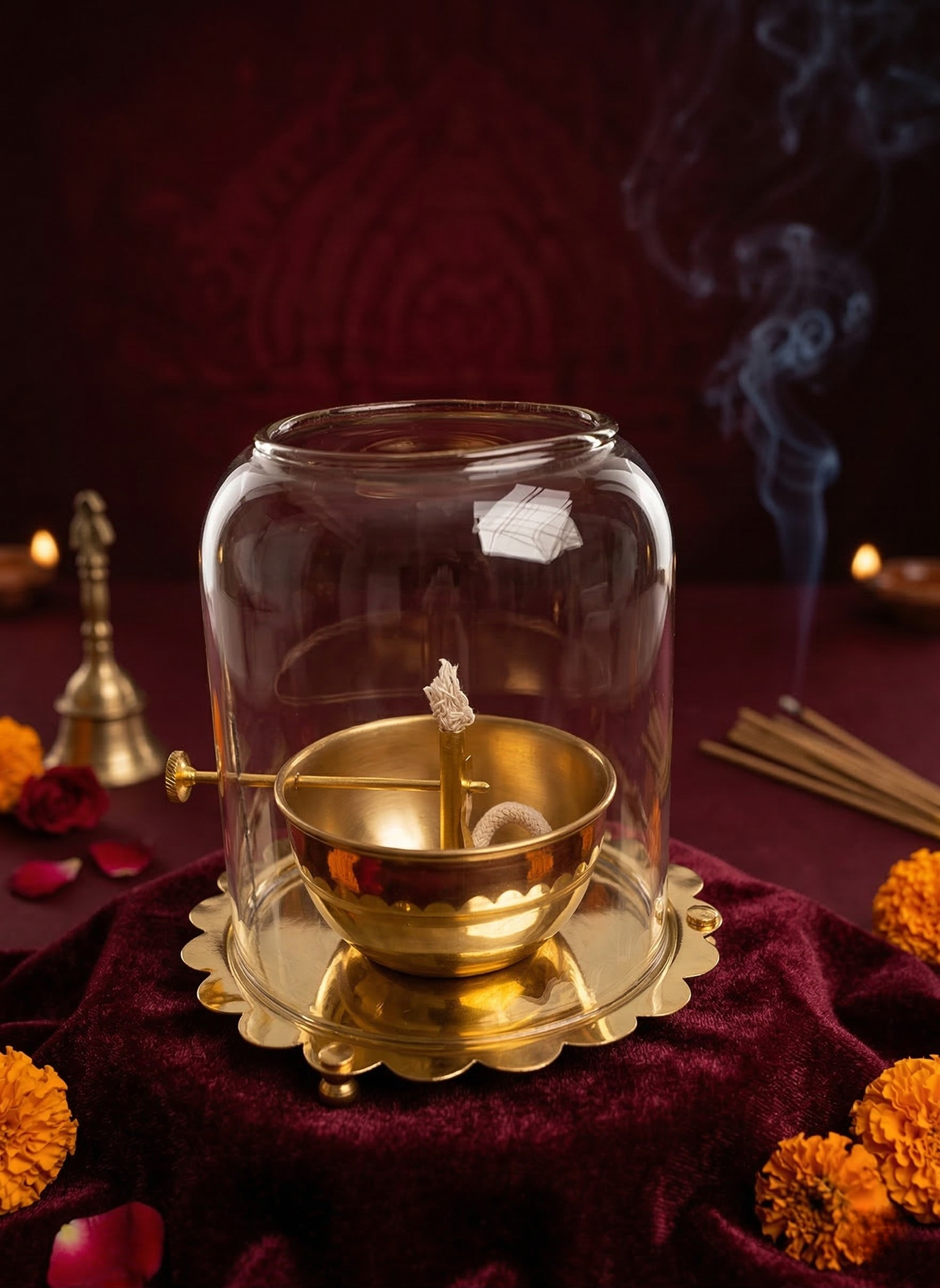
Brass Diya
The diya is one of the most recognizable objects in an Indian pooja space. Brass is commonly used to make oil lamps because it can be shaped into stable bases and decorative forms.
A traditional lamp can also become a visual centerpiece of a small mandir.
For households looking for a more decorative option, a handcrafted brass peacock diya set combines the lamp function with traditional ornamental detailing.
Brass Pooja Thali
A thali gives smaller pooja articles a dedicated place.
Depending on the design, it may hold a diya, kumkum container, incense holder, spoon, bell or other small accessories. This can be particularly useful in homes where the pooja area is compact and items need to be put away after use.
Brass Bell
A bell is commonly included in many household worship arrangements. Its use is associated with different ritual practices, and the design can range from a small hand bell to larger temple-style forms.
The important practical consideration is comfortable handling and secure construction, particularly when the bell is used frequently.
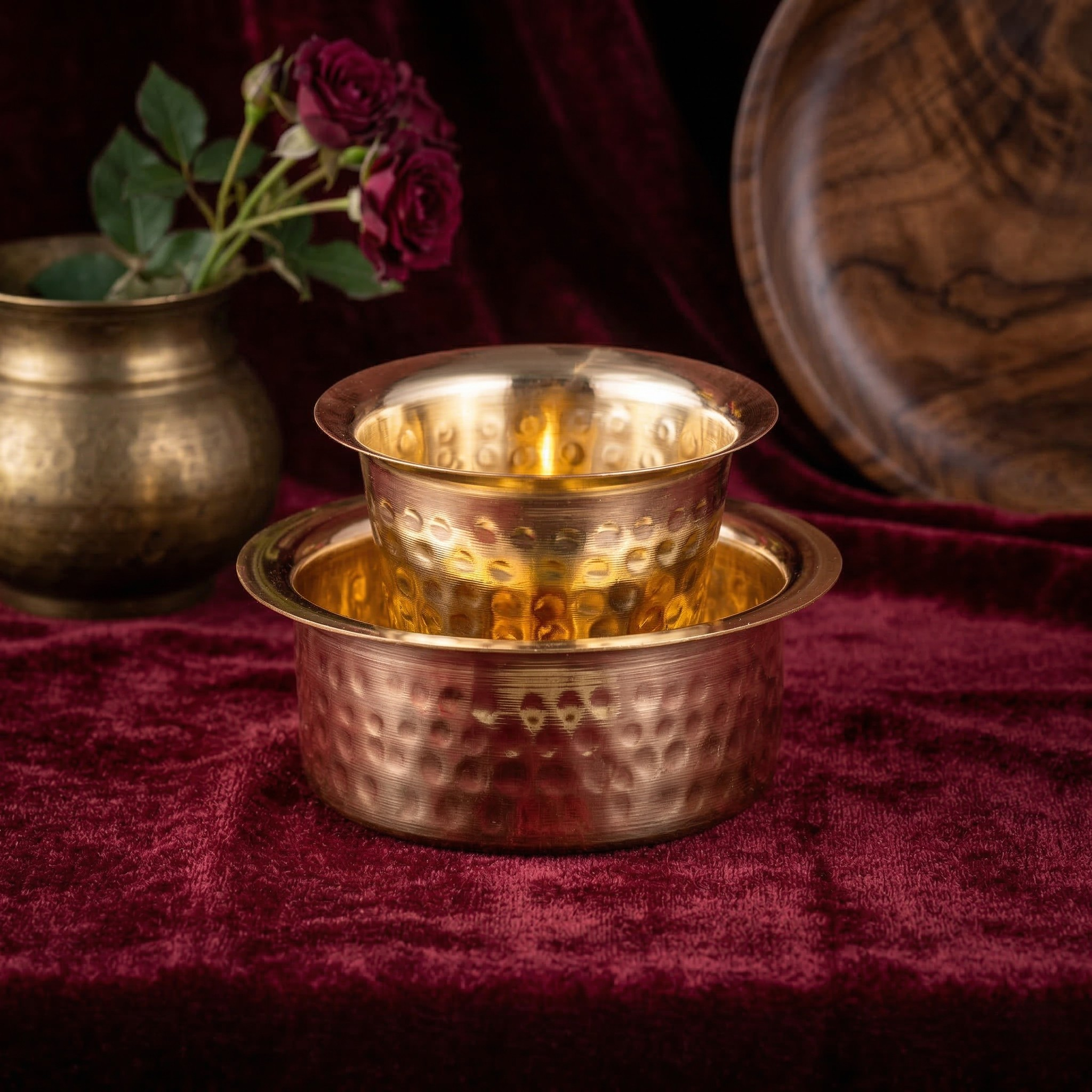
Brass Kalash or Lota
A kalash or lota may be used for water and other ritual purposes depending on the family's practice.
A floral nakashi brass pooja kalash can also serve as a decorative element within the mandir while retaining its traditional vessel form.
Brass Incense Holders
Incense holders need to provide a stable place for burning incense and collecting ash.
The practical features matter more than decoration alone. A broad enough base, stable construction and easy cleaning are useful qualities for an article that will be used regularly.
Brass Aarti Accessories
Aarti involves a collection of objects rather than one single item. Depending on the household, this may include a lamp, thali, bell and other accessories.
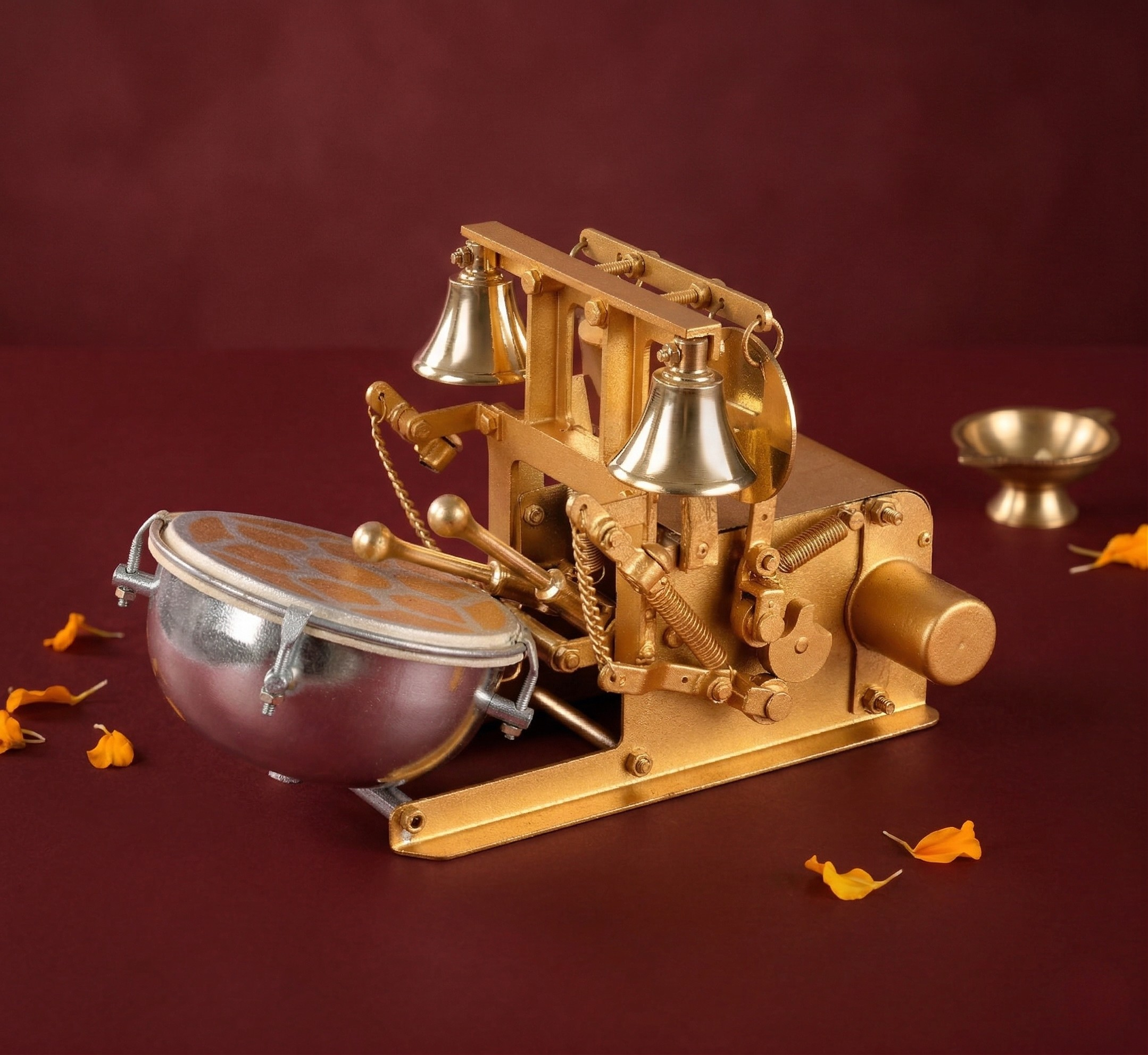
Modern households can also combine traditional brass articles with newer conveniences. For example, an automatic aarti machine for home can be used as a separate aarti accessory while the rest of the mandir retains a traditional arrangement.
Brass Pooja Items vs Other Materials: Which Is Better?
There is no universal winner for every household. Brass makes sense when tradition, durability and appearance are important, while other materials can be preferable for people who prioritize low maintenance or a particular design.
Brass vs Stainless Steel
Stainless steel is easy to clean and generally requires less attention to surface appearance. It is also widely available and practical for everyday household use.
Brass has a different appeal. It carries a stronger connection with traditional Indian metalware, has a distinctive warm colour and can be made into highly decorative ritual objects.
The choice therefore depends on what matters most to the household.
Brass vs Plastic
Plastic may be lightweight and inexpensive, but it does not offer the same material character or traditional metalworking connection as brass.
For a permanent home mandir, many families prefer metal articles because they feel more appropriate to the visual and functional character of the space.
That is a preference rather than a rule. Religious practice should not be reduced to the material alone.
Brass vs Brass-Plated Products
This is one area where buyers should pay attention.
A product with a brass-coloured surface is not automatically made entirely from brass. Brass-plated products have a different construction from solid brass articles.
Before buying, check the material description rather than judging quality from colour or photographs alone.
How to Choose Good-Quality Brass Pooja Items
A good-looking photograph is not enough to judge a metal product.
Before buying, look at several details.
Check the Material Description
The listing should clearly state what material has been used.
If the description is vague, ask the seller for clarification. This is particularly important when the product is described only as "golden," "metallic" or "brass finish."
Look at Construction
Check whether:
-
The base sits firmly on a surface
-
Handles and attachments appear secure
-
Edges are properly finished
-
Decorative details are clean
-
The size suits the available pooja space
Heavier does not automatically mean better. A well-designed item should have a weight appropriate to its purpose.
Consider the Finish
Brass may have a polished, matte, antique or handcrafted appearance.
A polished piece will usually need more attention if you want to keep its bright appearance. A more traditional finish may show natural changes in the metal more readily.
The right choice depends on how you want the pooja space to look.
Buy for Actual Use
Think about how often the item will be used.
A small daily-use diya may be more practical than an elaborate lamp that is difficult to clean. A compact thali may work better in an apartment than an oversized ceremonial set.
The best pooja setup is the one that fits naturally into the household's routine.
How to Clean and Maintain Brass Pooja Items
Brass requires some care, but maintenance does not need to become a complicated task.
Clean After Regular Use
Remove oil, ghee, ash or other residue rather than allowing it to build up over several uses.
A soft cloth or sponge and an appropriate mild cleaning method are generally preferable to aggressive scrubbing.
Dry the Item Properly
After cleaning, dry the surface thoroughly.
Moisture left around decorative details, joints or recessed areas can contribute to surface marks and tarnishing.
Polish When Necessary
Brass naturally changes appearance over time. If a brighter finish is preferred, periodic polishing can restore some of the surface shine.
Avoid treating every brass item with the same cleaning method. A special finish, lacquered surface or delicate engraving may require different care.
Avoid Harsh Abrasives
Steel wool and aggressive scrubbing can leave scratches.
For handcrafted or engraved pieces, gentle cleaning is particularly important because excessive abrasion can gradually affect surface detailing.
How to Build a Practical Brass Pooja Setup
A common mistake is buying too many items before deciding how the mandir will actually be used.
Start with the pieces that support the household's regular routine.
A basic arrangement might include:
-
A diya
-
A pooja thali
-
A bell
-
A small water vessel
-
An incense holder
From there, additional items can be added according to the family's rituals and available space.
A brass pooja set with an automatic aarti machine is another option for households that want traditional pooja essentials alongside a dedicated aarti accessory in one setup.
The important point is organization. A small mandir can feel more functional when every regularly used item has a clear place.
Brass Pooja Items Can Become Long-Term Household Pieces
One of the less discussed advantages of traditional metal pooja articles is how easily they can become part of a family's history.
A diya may be used during Diwali every year. A thali may be brought out during a housewarming ceremony and then used for everyday worship. A bell may remain in the same home mandir for decades.
The object gradually becomes associated with people and occasions.
That is one reason brass continues to appeal to households that value traditional materials. The purchase is often about more than appearance. It can be about having a useful object that remains part of a family's rituals for years.
Common Mistakes to Avoid When Buying Brass Pooja Items
Choosing Only by Appearance
A shiny golden finish does not tell you whether a product is made from solid brass, brass-plated material or another metal.
Always check the material information.
Assuming Every Brass Item Has the Same Quality
Two products can both be described as brass while differing in construction, thickness, finish and craftsmanship.
Look at the product specifications and intended use.
Ignoring Maintenance
Brass can tarnish. That is a natural surface change, not automatically a product defect.
If maintaining a bright finish is important to you, factor cleaning and polishing into your purchase decision.
Filling a Small Mandir With Too Many Objects
A crowded pooja space can make daily rituals harder rather than easier.
Choose articles according to actual use and available space.
Treating Traditional Beliefs as Scientific Facts
This is especially important when reading or writing online content about pooja metals.
Traditional beliefs can be discussed as beliefs. Material properties can be explained through metallurgy and product construction. Scientific health claims should only be made when reliable evidence supports them.
Keeping these categories separate makes it easier for readers to understand what they are actually buying and why the material has cultural significance.
How to Choose the Right Brass Pooja Items for Your Home
The best choice depends on your routine.
If the mandir is used every day, prioritize sturdy, easy-to-maintain articles. If the space is small, choose compact pieces that can be stored easily. For festivals, larger decorative lamps or additional ceremonial pieces may make more sense.
For a new home, starting with a basic set of frequently used items is usually more practical than purchasing a large collection immediately.
For gifting, consider whether the recipient has a pooja space and what type of items they already use. A useful thali, diya or kalash is more likely to become part of the household routine than a purely decorative object.
Why Brass Still Has a Place in Modern Home Temples
Brass remains relevant because it brings several qualities together in one material.
It has a documented place in India's traditional metalworking heritage. It can be shaped into practical objects for lamps, vessels, bells and thalis. It can withstand repeated handling when properly made and maintained. It also has a distinctive appearance that fits naturally into both traditional temples and contemporary home mandirs.
The strongest reason to choose brass is therefore not a single claim about spirituality or material superiority. It is the combination of heritage, function, durability, craftsmanship and familiarity that has allowed brass pooja articles to remain part of Indian households for generations.
For families looking to bring that combination into their own worship space, Raj Gharana Metals offers traditional brass pooja articles alongside other handcrafted metal products designed for home use.