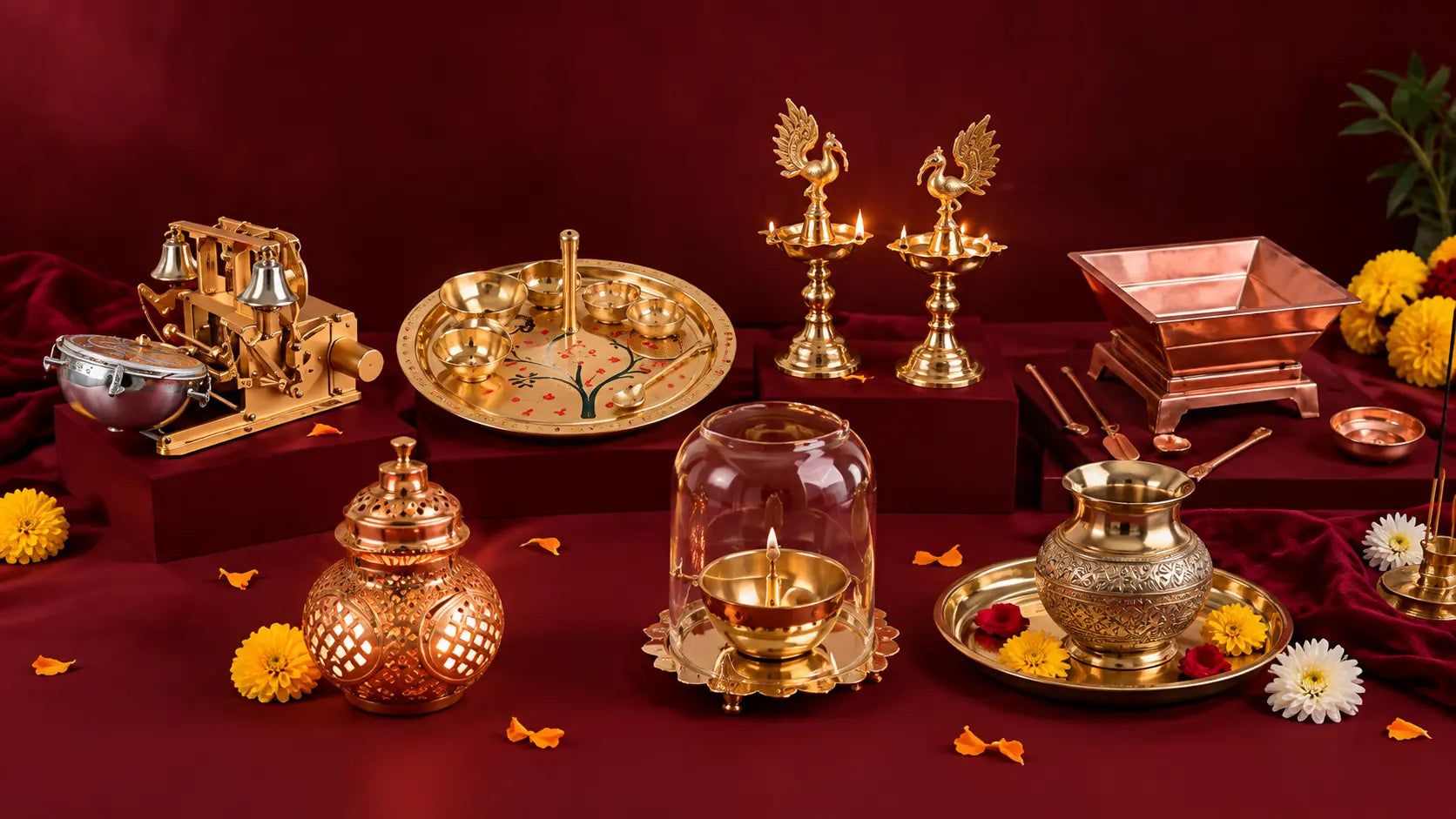
Navratri is observed in different ways across India, so the items used for pooja can vary from one tradition to another. In 2026, Sharad Navratri will be observed from October 11 to October 19, bringing nine nights of worship and celebration. A typical arrangement may include a pooja thali, diya, kalash, Garaba, flowers, incense and other offerings. Some celebrations may also include an Akhand Jyot or havan.
Brass and copper are commonly used for many traditional pooja items because they are well suited to lamps, thalis, vessels and other pieces used during worship. They also work well for festive arrangements where the same items may be used year after year.
If you are preparing for Navratri pooja, the best approach is to first understand what your particular ritual requires. From there, you can choose the brass and copper pieces that fit the occasion, the available space and the number of people participating.
Traditional Navratri Pooja Items to Consider
There is no single list that every Navratri celebration must follow. Customs differ by region, family and type of worship.
The following brass and copper items can be useful for different parts of Navratri pooja and related celebrations.
Brass Pooja Thali

A pooja thali keeps several smaller items together during worship. It can be used for offerings, diya lighting and aarti, depending on the pooja being performed.
A brass thali can hold items such as kumkum, rice, flowers, a diya, incense and other small pooja essentials. A larger thali can be useful when several items need to be arranged together, while a compact design may suit a smaller setup.
How to Arrange a Navratri Pooja Thali
There is no fixed arrangement that applies to every tradition. The contents should be organized according to the ritual being followed.
A simple setup may include:
For Navratri pooja thali decoration, flowers, leaves, rangoli elements or other festive touches can be placed around the functional items. Avoid filling the thali so much that it becomes difficult to handle.
A clean and organized thali makes it easier to find each item when it is needed.
Buy Brass Pooja Thali Set
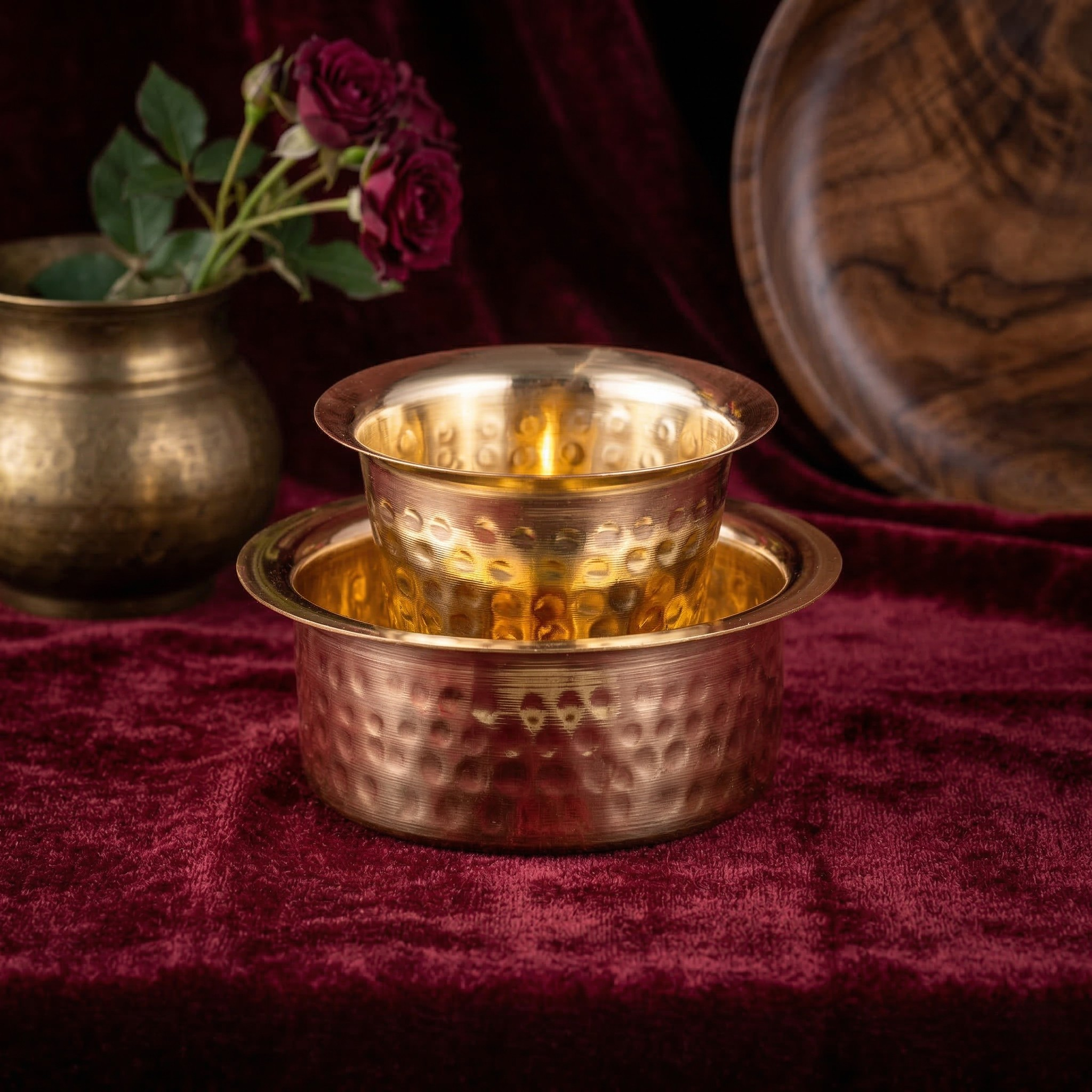
Copper Garaba With Diya Stand

The Garaba has a strong connection with Navratri celebrations, especially in Gujarat. The vessel has a place in devotional traditions, while Garba has become a major part of the festival's cultural celebrations.
A copper Garaba with a diya stand can be used as part of a Navratri pooja arrangement or placed as a decorative feature during the festival.
The design and size can vary considerably. When choosing a Garaba, consider where it will be placed and whether you want to use it only during Navratri or during other festive occasions as well.
If a diya is placed inside or near the Garaba, use a stable surface and keep fabrics, paper decorations and other flammable materials away from the flame.
Buy Copper Garaba With Diya Stand
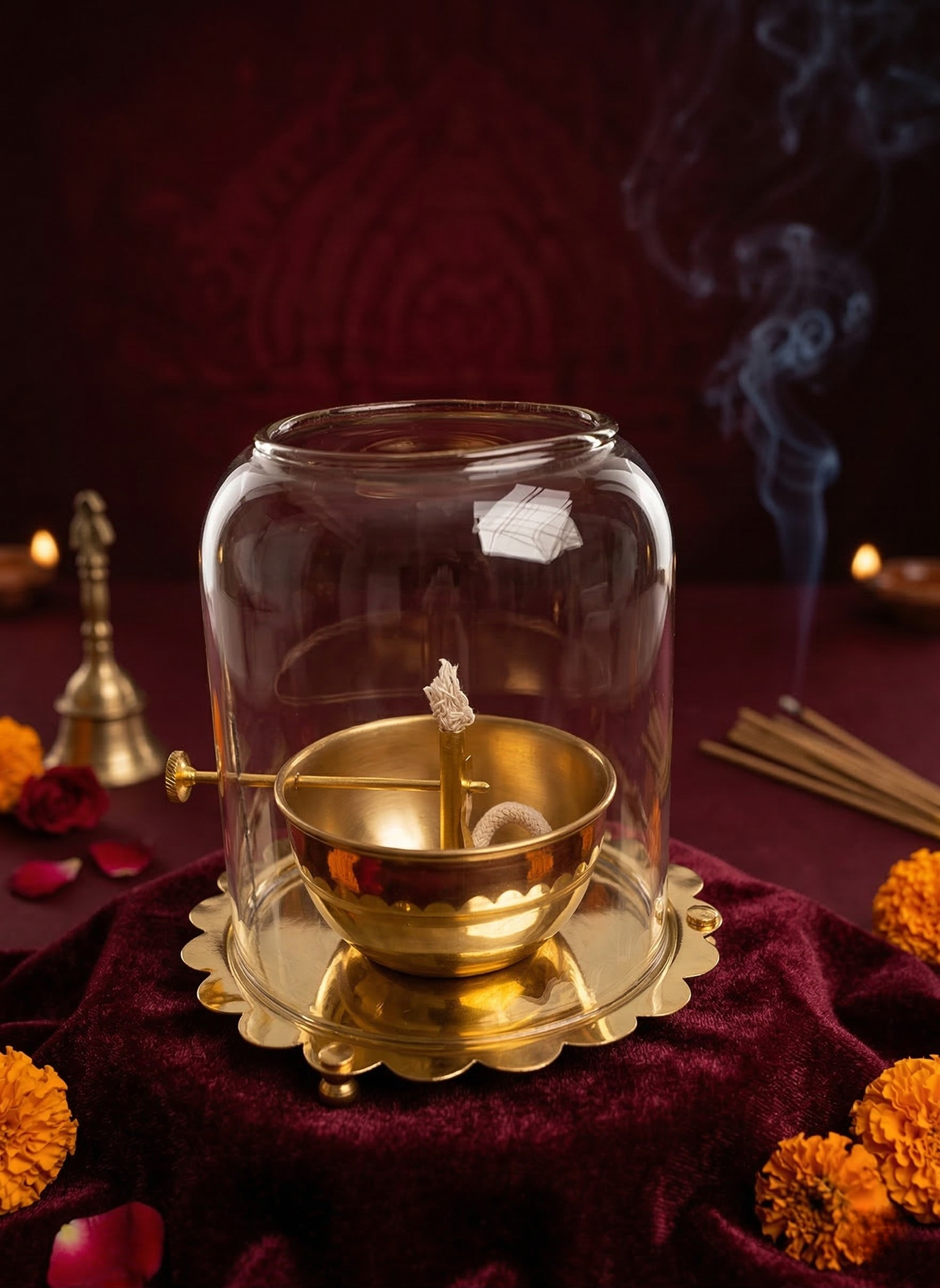
Brass Akhand Jyot Diya

An Akhand Jyot is a lamp that is kept burning continuously for a period according to the tradition being followed. Some devotees maintain one during Navratri, while others light a diya during specific parts of the daily pooja or aarti.
Brass Akhand Jyot diyas are designed for this type of use. Some include a glass cover that helps shield the flame from air movement while keeping the light visible.
Before choosing one, consider the oil capacity, wick arrangement, stability and ease of refilling. These details matter when a lamp is intended to burn for an extended period.
Safety should always come first. Keep the lamp away from curtains, paper, loose fabric and other combustible decorations. Place it somewhere stable where it will not be accidentally knocked over.
An Akhand Jyot is part of some Navratri traditions, but it is not a compulsory part of every pooja.
Buy Brass Akhand Jyot Diya
Brass Pooja Kalash

The kalash is a traditional vessel used in many forms of Hindu worship. During Navratri, it may have a specific role depending on the pooja and regional tradition being followed.
For Navratri pooja kalash preparation, the vessel may be filled with water and arranged with other customary items. Some traditions use leaves and a coconut as part of the setup.
The exact method can differ, so the preparation should follow the pooja practice being observed rather than a generic checklist.
A brass kalash can also be used for other religious occasions throughout the year. When choosing one, look at its size, opening, base and overall stability. Decorative detailing can add visual appeal, but the vessel should still be comfortable to handle.
Buy Brass Pooja Kalash
Traditional Brass Diyas

Lighting a diya is a familiar part of Hindu worship, and diyas are commonly included in festive pooja arrangements.
Brass diyas come in many forms. Some are simple and designed primarily for regular use, while others have detailed shapes and traditional motifs that make them suitable for festive displays.
A decorative diya can be placed near the pooja arrangement or used during aarti. Peacock designs are one example of a traditional decorative style.
When selecting a diya, check the stability of the base and the space available for oil or ghee and the wick. If multiple diyas are being used, leave enough distance between the flames.
Buy Traditional Brass Diyas
Copper Hawan Kund

A Hawan Kund is useful when havan or Agnihotra forms part of the Navratri observance. It is not required for every Navratri pooja, so this should be considered based on the ritual being performed.
Copper Hawan Kund sets may include the kund along with useful accessories such as a spoon, small vessel, stand or chimta.
The setup needs careful attention because havan involves an open flame. Use the kund on a stable, heat-resistant surface and keep sufficient clear space around it. The area should also have suitable ventilation.
The size should match the type of havan and the available space. For a small gathering, a compact kund may be more practical than a larger one.
Buy Copper Hawan Kund
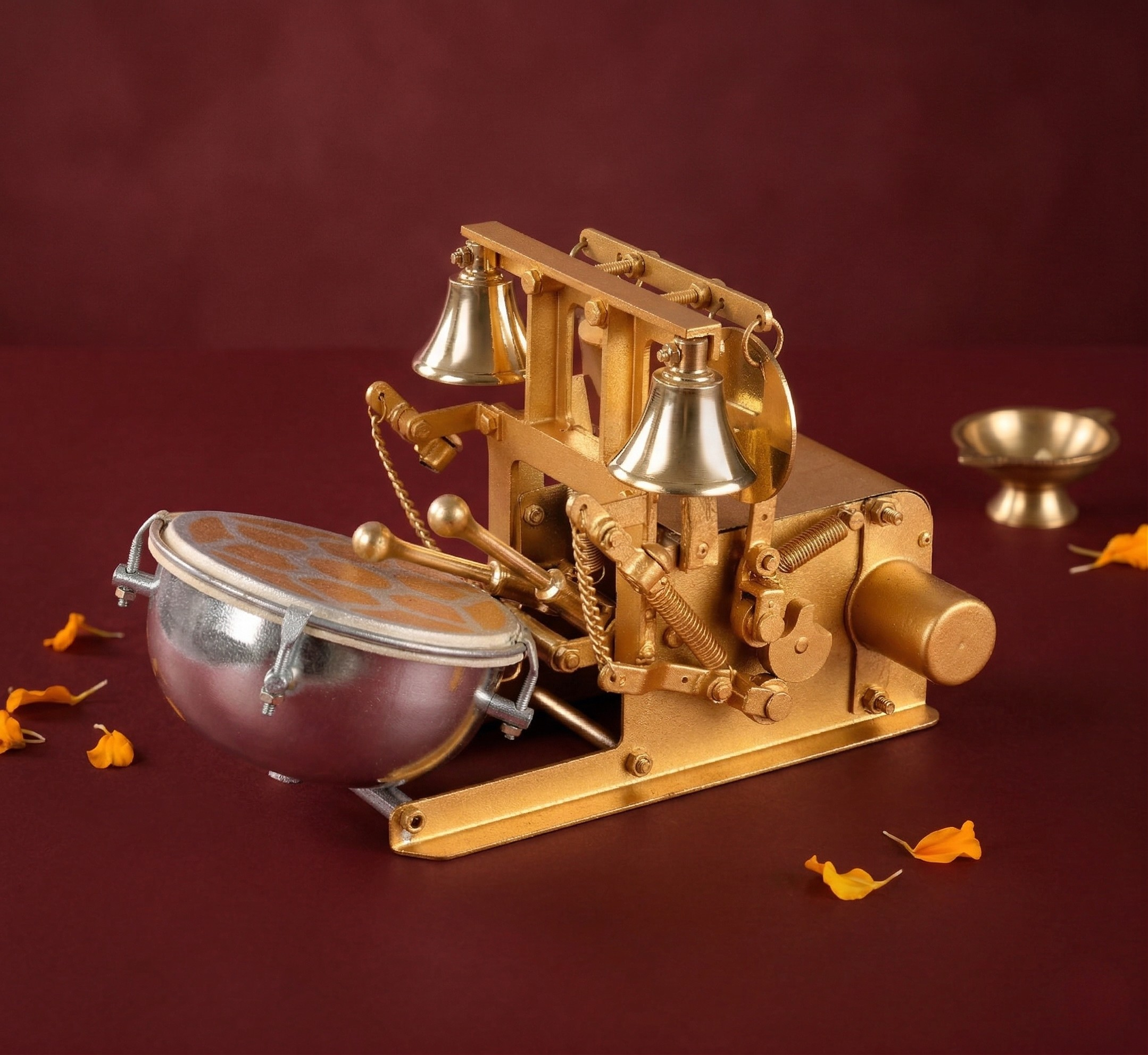
Automatic Aarti Machine for Home Pooja

An automatic aarti machine can be a convenient option for those who perform regular pooja at home. It is designed to handle the movement of the aarti setup automatically, making it an alternative to manually moving an aarti thali during worship.
This can be useful for people who want to include aarti as part of their daily pooja routine during Navratri without needing to hold and move the plate throughout the ritual.
An automatic aarti machine is optional and does not replace the traditional hand-held aarti thali. The choice simply depends on personal preference and the type of pooja arrangement being followed.
Buy Automatic Aarti Machine
Choosing the Right Navratri Pooja Items
The phrase Navratri pooja items can refer to everything needed for worship, including reusable metal pieces and consumable offerings.
Instead of following one large shopping list, begin with the rituals you plan to perform.
Consider the Type of Pooja
A simple daily pooja may need a diya, thali and a few basic offerings. A kalash setup may require additional items, while a havan requires a suitable Hawan Kund and related materials.
Your list should reflect the actual rituals being performed.
Consider the Scale of the Celebration
The number of people participating can affect the size and quantity of items required.
A personal pooja may need only a few pieces. A temple, society, community group or organized Navratri celebration may require larger items or additional pieces to accommodate more people.
Choose Items You Can Reuse
Many brass and copper pooja items can be used beyond Navratri.
A thali can be used for aarti and other festivals. Diyas can be used throughout the year. A kalash can be brought out for different religious occasions, while a Hawan Kund can be used whenever the relevant ritual is performed.
Thinking about future use can help you choose more practical pieces.
Check Size and Stability
The appearance of a pooja item is important, but practical details matter too.
Check:
-
Dimensions
-
Weight
-
Base stability
-
Ease of cleaning
-
Storage requirements
-
Intended use
A stable diya or vessel is especially important when the item will hold oil, ghee or water.
Navratri Pooja Samagri List
Along with reusable brass and copper items, Navratri worship may require various consumable materials.
Depending on the tradition, the Navratri pooja samagri may include:
The exact Navratri pooja samagri list depends on the pooja being performed.
This is why it helps to separate reusable pooja items from consumable samagri when preparing for the festival. Brass and copper pieces can be kept and reused, while flowers, incense and other offerings generally need to be arranged for each pooja.
Arranging the Pooja Setup for Navratri
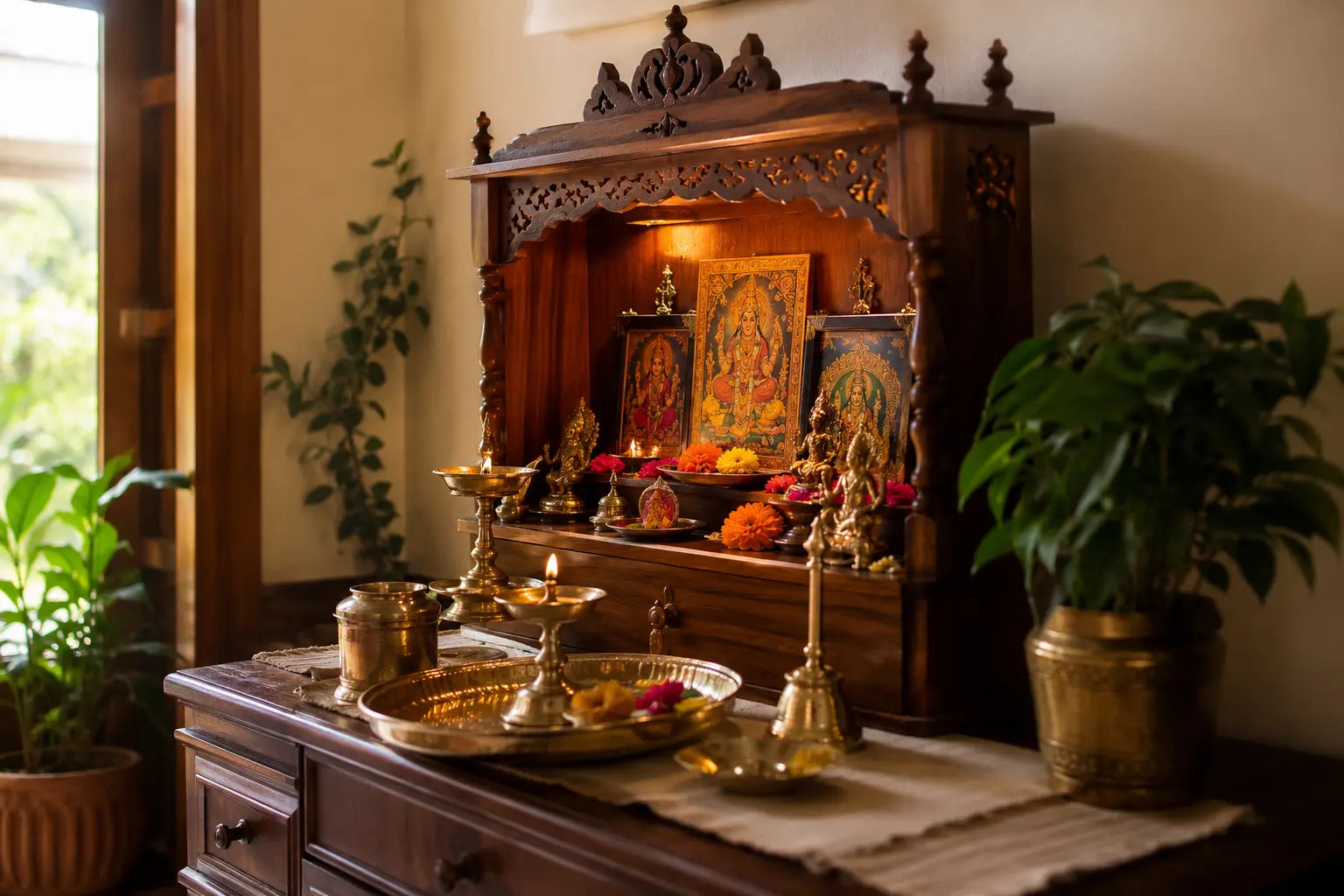
Once the required items are ready, arrange them in a way that makes the pooja easy to perform.
Start with the larger pieces. Place the kalash, Garaba, diya or other main items in their intended positions. Smaller items can then be kept nearby so they are easy to reach.
The pooja thali can hold the smaller materials used during offerings and aarti.
If a diya or Akhand Jyot is being used, position it on a stable surface away from anything that can catch fire. If a havan is planned, keep a clear area around the Hawan Kund and follow appropriate fire-safety practices.
For a larger Navratri celebration, think about movement as well. People should be able to participate without having to reach across flames or disturb the pooja arrangement.
Brass and Copper Items for More Than One Festival
Navratri may be the reason you purchase a new pooja item, but the item does not have to be limited to one festival.
A brass thali can be used for other poojas and aarti. Diyas can be lit during Diwali and other religious occasions. A brass kalash can be used for different ceremonies, while a copper Garaba can return as part of future Navratri celebrations.
This makes it worth considering how a piece will fit into your wider pooja collection before making a purchase.
Instead of choosing items only for their appearance during one festival, consider their size, function, durability and future use.
Preparing for Navratri
Navratri celebrations can be simple or elaborate. Some people perform daily pooja with a few essential items, while temples, communities and larger groups may arrange more extensive worship.
The best Navratri pooja items for one celebration may not be the same as those needed for another. Your selection should depend on the rituals being followed, the space available and the number of people involved.
Brass and copper offer a range of choices for traditional pooja arrangements, from thalis and diyas to kalash, Garaba and Hawan Kunds. Choosing each piece with its actual purpose in mind can make festival preparation easier and help you build a collection that remains useful for future occasions.
Traditional Brass and Copper Pooja Collection
Raj Gharana Metals brings together traditional brass and copper pieces for pooja and festive use, including brass thalis, diyas and kalash, copper Garaba and Hawan Kund sets.
The right selection depends on the type of Navratri worship being organized. Whether you are preparing for personal worship, temple pooja, a community celebration or another festive gathering, choose the pieces that match your rituals and practical needs.
Navratri is a time for worship and celebration. Having the required pooja items ready beforehand allows you to focus on the occasion rather than searching for things at the last moment.