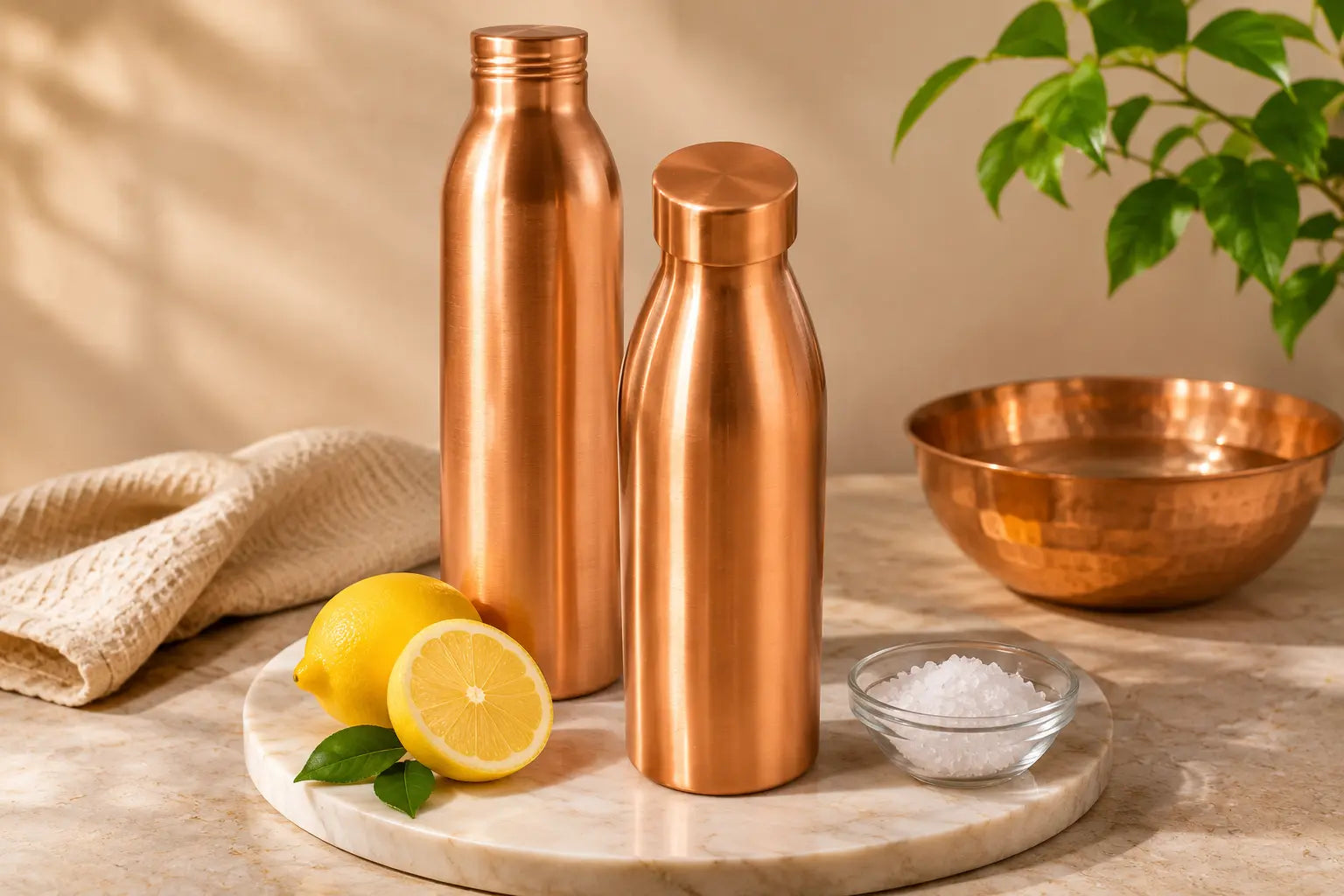
A copper water bottle can develop dark patches, lose its shine or collect water stains with regular use. Cleaning it is fairly simple. For everyday washing, use warm water, mild dish soap and a soft sponge. If the outside has developed tarnish, a little lemon juice and salt can help restore its appearance. Rinse the bottle thoroughly after cleaning and dry it completely before putting the cap back on.
The method depends on the type of dirt and the bottle's finish. Ordinary washing is enough to remove daily residue, while tarnish may need occasional attention. A coated or lacquered bottle also needs different care from one made of bare copper.
How to Clean a Copper Water Bottle at Home
Regular washing helps remove dust, water residue and anything left behind during daily use. You do not need expensive cleaning products or harsh chemicals for this job.
What You Need to Clean a Copper Bottle
Keep these basic items ready:
-
Warm water
-
Mild liquid dish soap
-
A soft sponge or cotton cloth
-
A soft bottle-cleaning brush, if needed
-
Fresh lemon and common salt for suitable bare copper surfaces
-
A clean, dry cotton or microfiber cloth
Use soap and water for routine cleaning. Keep lemon and salt for occasional exterior tarnish removal, provided the manufacturer allows this method for your bottle's finish.
Step-by-Step Copper Bottle Cleaning Method
Follow these steps for regular cleaning:
1. Empty the bottle
Pour out any remaining water. Remove the cap and check whether moisture or residue has collected around the opening and threads.
2. Rinse with warm water
Pour clean, lukewarm water into the bottle and swirl it around. This helps loosen any loose residue inside.
3. Wash with mild dish soap
Add a few drops of mild dishwashing liquid and some warm water. Gently clean the inside using a soft bottle brush if the opening allows it. Avoid hard brushes that can scratch the copper.
4. Clean the exterior
Use a soft sponge with a little soapy water to wipe the outside. Pay attention to the base, neck and areas around the cap.
5. Rinse thoroughly
Empty the soapy water and rinse the bottle several times with clean water. Make sure no detergent remains inside.
6. Dry the bottle completely
Place the bottle upside down on a clean drying rack with its opening uncovered. Allow the inside to dry fully. Wipe the outside with a soft cotton cloth.
Do not close the cap while the inside is still damp. Trapped moisture can leave water marks and create an unpleasant smell over time.
How to Remove Black Stains and Tarnish from a Copper Bottle
Copper naturally reacts with its surroundings, which can change the appearance of its surface. You may notice dark patches, brown marks or a loss of shine even when the bottle is cleaned regularly.
This is generally called tarnishing. It is different from ordinary dirt and may not disappear with soap and water alone.
Cleaning Copper with Lemon and Salt
Lemon juice contains citric acid, which helps loosen copper tarnish. Salt provides mild abrasive action and can help remove surface discoloration.
For a bare copper exterior, follow this method:
-
Cut a fresh lemon in half.
-
Sprinkle a small amount of salt over the cut surface.
-
Gently rub the lemon over the tarnished area.
-
Use a soft cloth to wipe away the loosened residue.
-
Rinse the surface thoroughly with clean water.
-
Dry immediately using a soft cotton cloth.
Avoid pressing too hard or scrubbing repeatedly in one spot. Excessive rubbing can leave scratches, particularly on polished surfaces.
The Alabama Cooperative Extension System's instructions for cleaning copper and brass utensils also describe salted lemon as a way to remove tarnish. Its guidance recommends washing copper thoroughly with soapy water after using acidic cleaning products.
A note about the inside of the bottle: Lemon and salt are better treated as an occasional polishing method for compatible exterior surfaces. For the interior drinking surface, use mild soap and water unless the bottle manufacturer specifically recommends another cleaning method.
How to Deal with Green or Blue-Green Deposits
Green or blue-green marks need more attention than ordinary dark tarnish.
These deposits can be signs of copper corrosion. A small amount of surface discoloration on an old decorative copper item is different from deposits appearing inside a drinking bottle.
If you notice green residue inside your bottle:
-
Stop using the bottle for drinking.
-
Do not try to remove the deposits with aggressive scrubbing.
-
Check the manufacturer's cleaning and safety instructions.
-
Inspect the surface for pitting, flaking or other damage.
-
Contact the manufacturer if the deposits do not come away with normal cleaning.
A bottle with a damaged or heavily corroded interior should not be returned to regular use without an appropriate inspection.
How to Clean the Inside of a Copper Water Bottle
The interior needs regular attention because water remains in direct contact with the copper surface. A narrow opening can also make it difficult to reach the bottom and corners.
For everyday interior cleaning, use this approach:
-
Empty the bottle after use.
-
Add warm water and a few drops of mild dish soap.
-
Use a soft bottle brush to reach the base and interior walls.
-
Move the brush gently without applying too much pressure.
-
Empty the bottle and rinse several times.
-
Turn it upside down and leave it open until completely dry.
If you do not have a bottle brush, add some soapy water, close the bottle temporarily and gently swirl it. Empty and rinse it thoroughly afterwards. This can help with loose residue, although it will not replace brushing when the interior needs a more thorough wash.
Avoid steel wool, metal scrubbers and abrasive cleaning powders. They can scratch the surface and make the bottle harder to maintain.
Also, do not leave cleaning solutions sitting inside the bottle for extended periods. Once cleaning is complete, rinse away all residue.
How Often Should You Clean a Copper Water Bottle?
The cleaning routine depends on how frequently you use the bottle and how it is stored.
For a bottle used every day, the following schedule is a practical starting point:
|
Cleaning task
|
Recommended frequency
|
|
Empty and rinse
|
After each use
|
|
Wash with mild soap
|
Regularly, ideally daily
|
|
Clean the cap and threads
|
During regular washing
|
|
Remove exterior tarnish
|
When needed
|
|
Dry completely
|
After every wash
|
There is no need to polish copper every day. Frequent use of acidic cleaners can gradually affect the finish, particularly if the bottle is polished or has a decorative coating.
Some manufacturers recommend occasional lemon, salt or vinegar cleaning. Follow the instructions supplied with your particular bottle rather than applying the same polishing schedule to every copper product.
Cleaning Mistakes That Can Damage a Copper Bottle
A few common cleaning habits can cause unnecessary wear or leave residue behind.
Using steel wool or rough scrubbers
Steel wool can scratch copper and affect its polished appearance. Use a soft sponge or cloth instead.
Using strong chemical cleaners
Harsh chemicals and unsuitable metal polishes may damage the surface or leave residues. Stick to mild dish soap for routine washing.
Leaving lemon juice or vinegar on the surface
Acidic cleaning solutions should not be left on copper for long periods. After polishing, rinse thoroughly and dry the surface.
Putting the bottle in a dishwasher
Dishwasher detergents, high temperatures and repeated washing cycles can damage the finish. Hand washing is the safer choice unless the manufacturer explicitly confirms that the bottle is dishwasher-safe.
Closing the cap while the bottle is wet
Moisture trapped inside can contribute to unpleasant smells and water marks. Allow the bottle and cap to dry before closing it.
Storing acidic drinks in a copper bottle
Copper should not be used to store lemon water, fruit juice, vinegar-based drinks or other acidic liquids. The acidity can increase copper dissolution into the drink.
The U.S. Food and Drug Administration's Food Code restricts copper and copper alloys from contact with foods below pH 6, including vinegar and fruit juice, in the specified food-service applications. This is an important precaution when using bare copper drinkware.
For everyday use, follow the manufacturer's guidance about which liquids are suitable for your bottle.
How to Maintain Your Copper Bottle After Cleaning
A few simple habits can help keep a copper bottle in good condition:
-
Empty the bottle when you have finished using it.
-
Rinse it regularly to remove water residue.
-
Wash with mild soap and a soft sponge.
-
Keep the cap open while the interior dries.
-
Store the bottle in a clean, dry place.
-
Use a soft cloth to remove fingerprints and surface marks.
-
Follow the manufacturer's instructions if the bottle has a lacquered, coated or decorative finish.
Copper can naturally become darker over time. This does not automatically mean that the bottle is dirty or damaged. The aim of regular cleaning is to remove residue, maintain a clean drinking surface and prevent avoidable damage, not to keep the metal looking brand new at all times.
Choosing a Copper Water Bottle That Is Easy to Maintain
The construction and finish of a copper bottle affect how it should be cleaned. Before buying one, check whether it is made from bare copper, whether it has a protective coating and whether the manufacturer provides clear washing instructions.
A practical opening also makes a difference. Bottles with accessible openings are easier to clean inside, particularly around the base and neck.
For those looking for a traditional copper drinkware option, Raj Gharana Metals' Premium Copper Water Bottle has a plain copper finish and a hand-wash care recommendation using mild soap and a soft sponge. Its copper drinkware collection includes other options for different household requirements.
Regular washing, careful tarnish removal and complete drying are usually enough to keep a copper water bottle clean and ready for use.
FAQs
1. How do you clean a copper water bottle at home?
Wash your copper water bottle with warm water, mild dish soap and a soft sponge. Use a soft bottle brush to clean the inside, rinse thoroughly and leave the bottle open until completely dry.
2. How do you remove black stains from a copper water bottle?
For suitable bare copper surfaces, apply a small amount of lemon juice with salt using a soft cloth. Rub gently, rinse thoroughly with clean water and dry immediately. Avoid this method on coated or lacquered finishes unless the manufacturer approves it.
3. Can you clean a copper water bottle with lemon and salt?
Yes. Lemon juice and salt can help remove tarnish from bare copper. Apply the mixture gently to the exterior, avoid prolonged contact, rinse thoroughly and dry with a soft cloth. Do not assume this method is suitable for every bottle finish.
4. How often should you clean a copper water bottle?
Rinse your bottle after each use and wash it regularly with mild dish soap. Clean the cap and threads during regular washing. Remove exterior tarnish only when necessary, rather than polishing the bottle every day.
5. How do you clean the inside of a copper water bottle?
Add warm water and a few drops of mild dish soap. Use a soft bottle brush to reach the interior walls and bottom. Rinse several times to remove soap residue, then leave the bottle open to dry completely.
6. Why does my copper water bottle turn black?
Copper naturally reacts with oxygen, moisture and other substances in its surroundings. This can cause tarnishing, which appears as dark patches or a loss of shine. If you notice green deposits, pitting or flaking inside the bottle, stop using it and have it inspected.
7. Can you use vinegar to clean a copper water bottle?
Vinegar can help remove tarnish from some bare copper surfaces because of its acidity. Use it only if the manufacturer's care instructions permit it. Rinse thoroughly afterwards and avoid using vinegar inside the bottle as a storage liquid.
8. Can you wash a copper water bottle with dish soap?
Yes. Mild dish soap and warm water are suitable for routine hand washing. Use a soft sponge or bottle brush, rinse away all detergent and dry the bottle completely before storing it.
9. Can you put a copper water bottle in the dishwasher?
It is better to hand wash a copper water bottle unless the manufacturer specifically confirms that it is dishwasher-safe. Dishwasher detergents, heat and repeated washing can damage the copper's finish.
10. How should you store a copper water bottle after cleaning?
Empty the bottle, allow the inside to dry completely and keep the cap separate until all moisture has evaporated. Store it in a clean, dry place away from prolonged moisture.