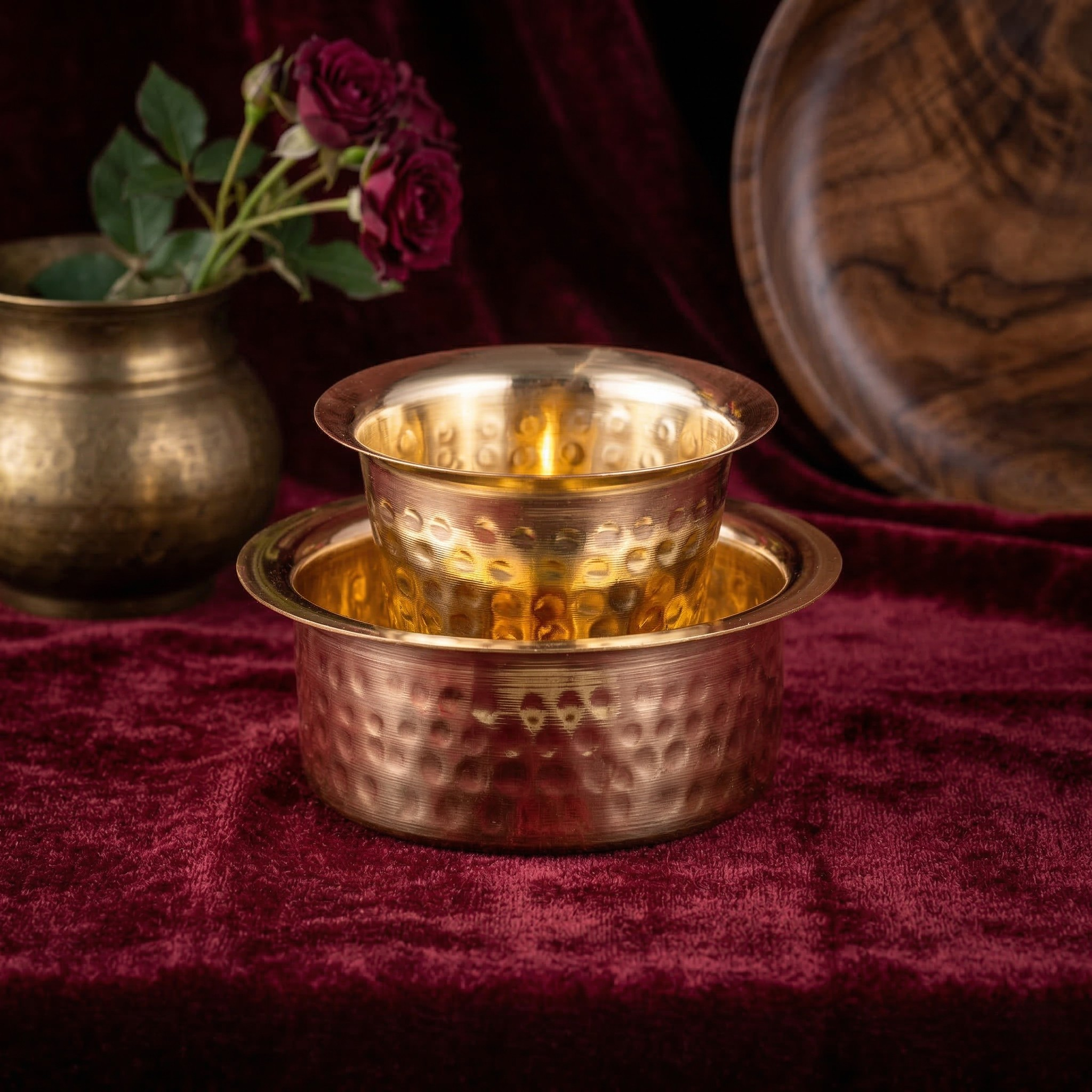
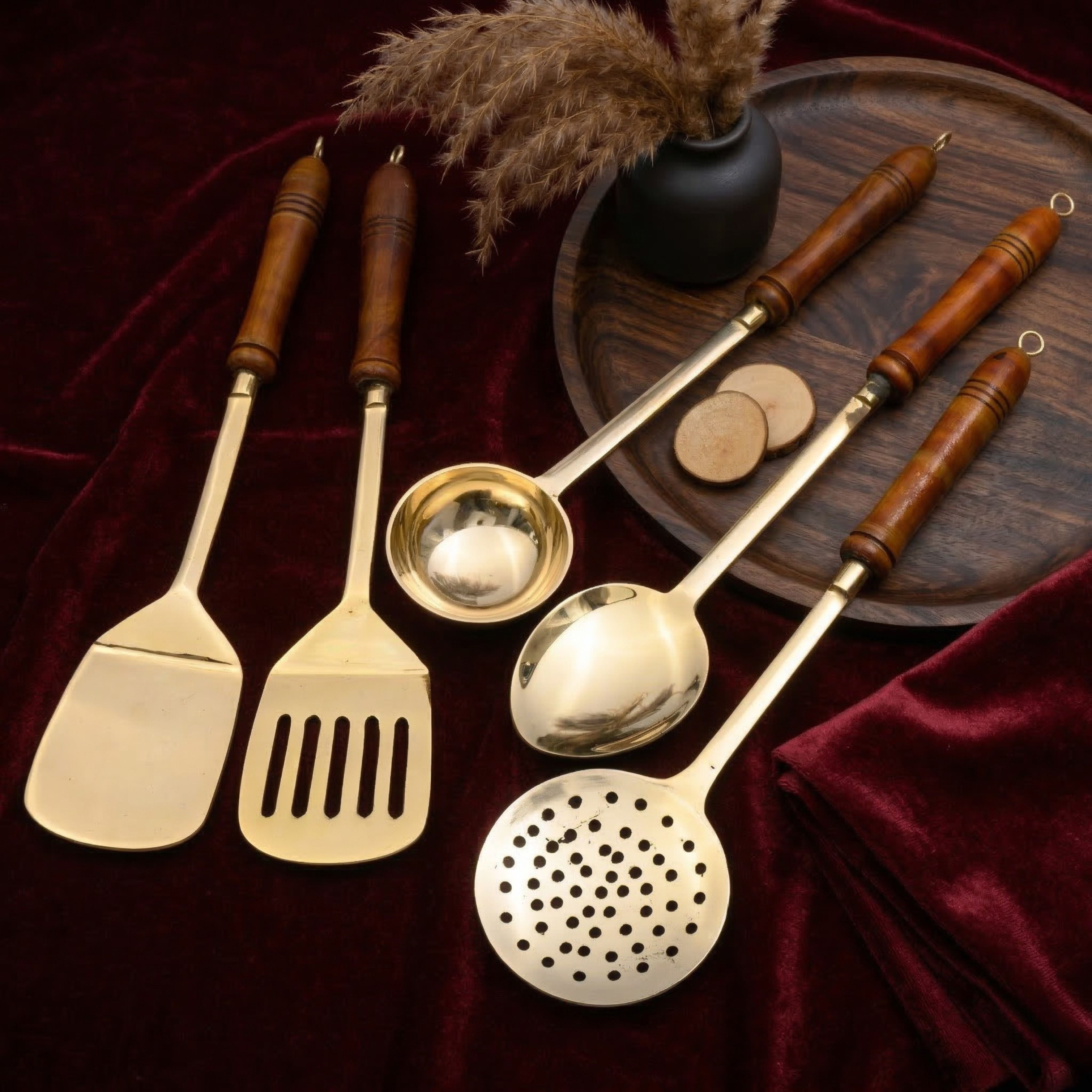
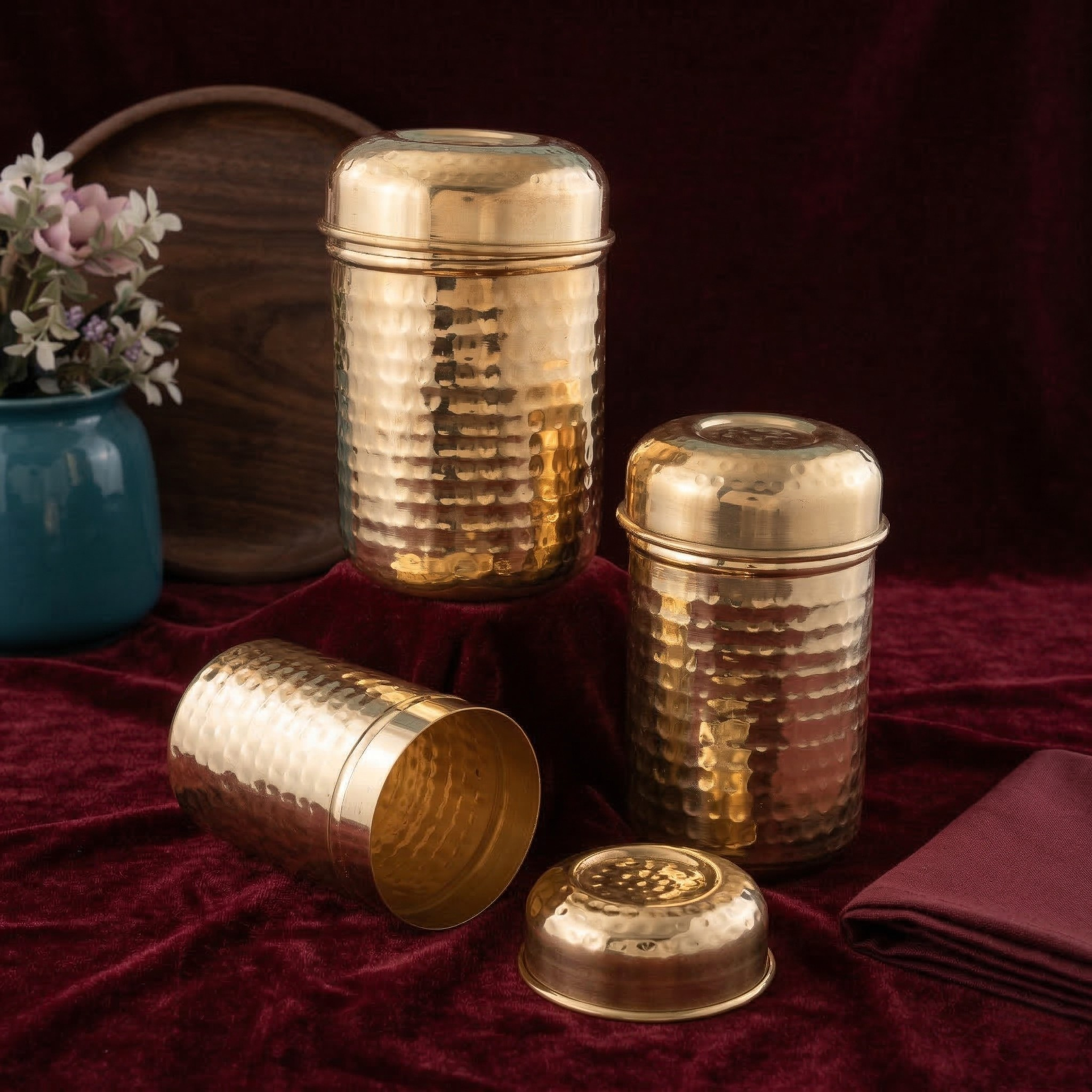
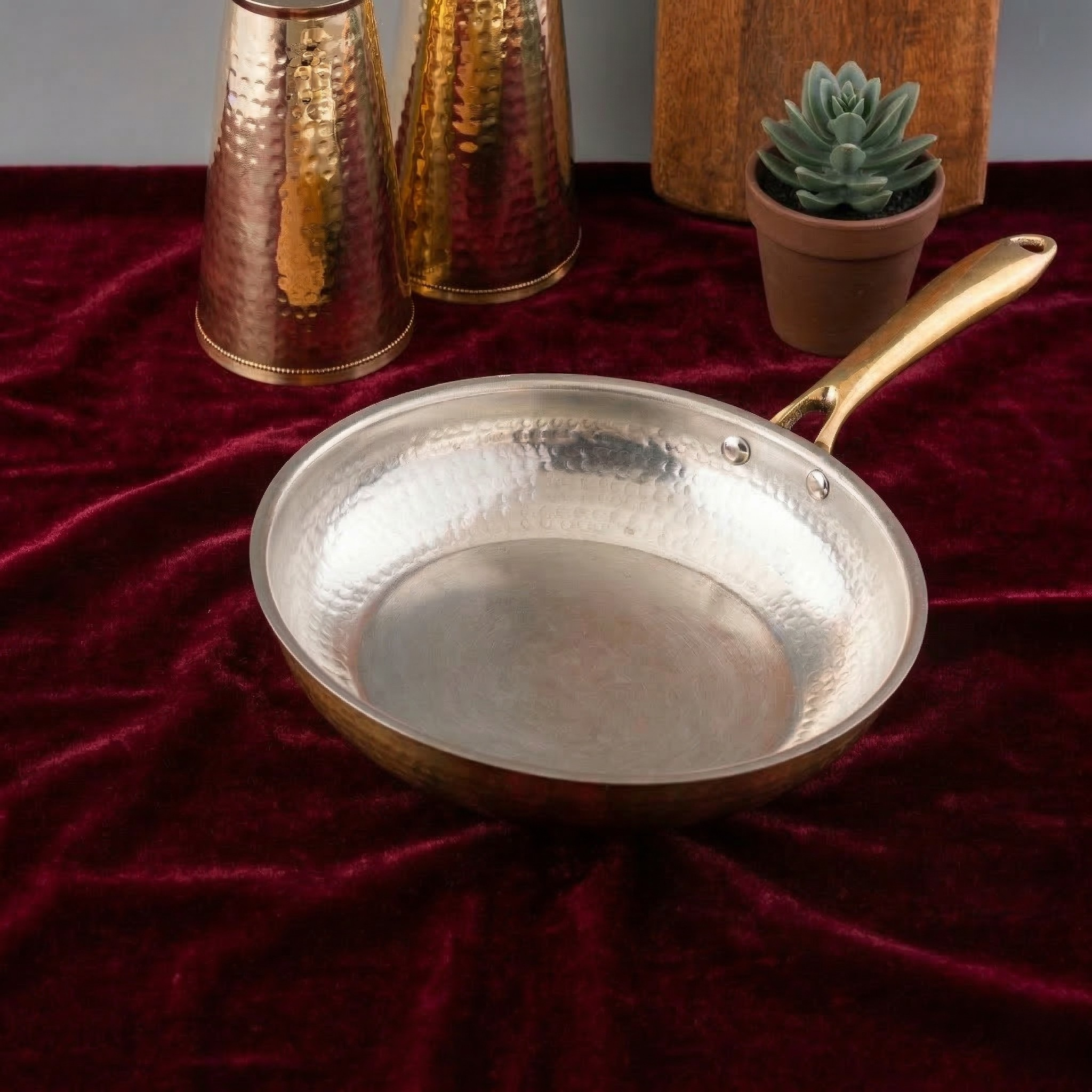
The revival of brass utensils in contemporary kitchens reflects a blend of cultural heritage and practical cooking needs. Brass has been used for centuries across India for everyday cookware because it heats evenly, retains warmth, and lasts for generations. Today, food safety and sustainability are equally important considerations. This guide explains what brass cookware is, how it should be used, and why tin coating is crucial for safe cooking.
What Is Brass?
Brass is a copper–zinc alloy. According to metallurgical sources, brass generally contains about two‑thirds copper and one‑third zinc. Manufacturing guides note that high‑quality brass often uses approximately 60 % copper and 40 % zinc. Because copper is an excellent heat conductor, brass utensils disperse heat evenly—industrial data list the thermal conductivity of brass at around 119 W/m·K at 20 °C, much higher than stainless steel. Brass alloys are also malleable and durable, making them easy to shape into heavy‑gauge cookware.
Brass isn’t just strong and conductive; copper and its alloys have inherent antimicrobial activity. The Copper Development Association notes that uncoated brass surfaces continuously kill bacteria and other pathogens. This natural property explains why brass storage containers and water pots have been valued for generations.
Why Tin Coating (Kalai) Is Essential
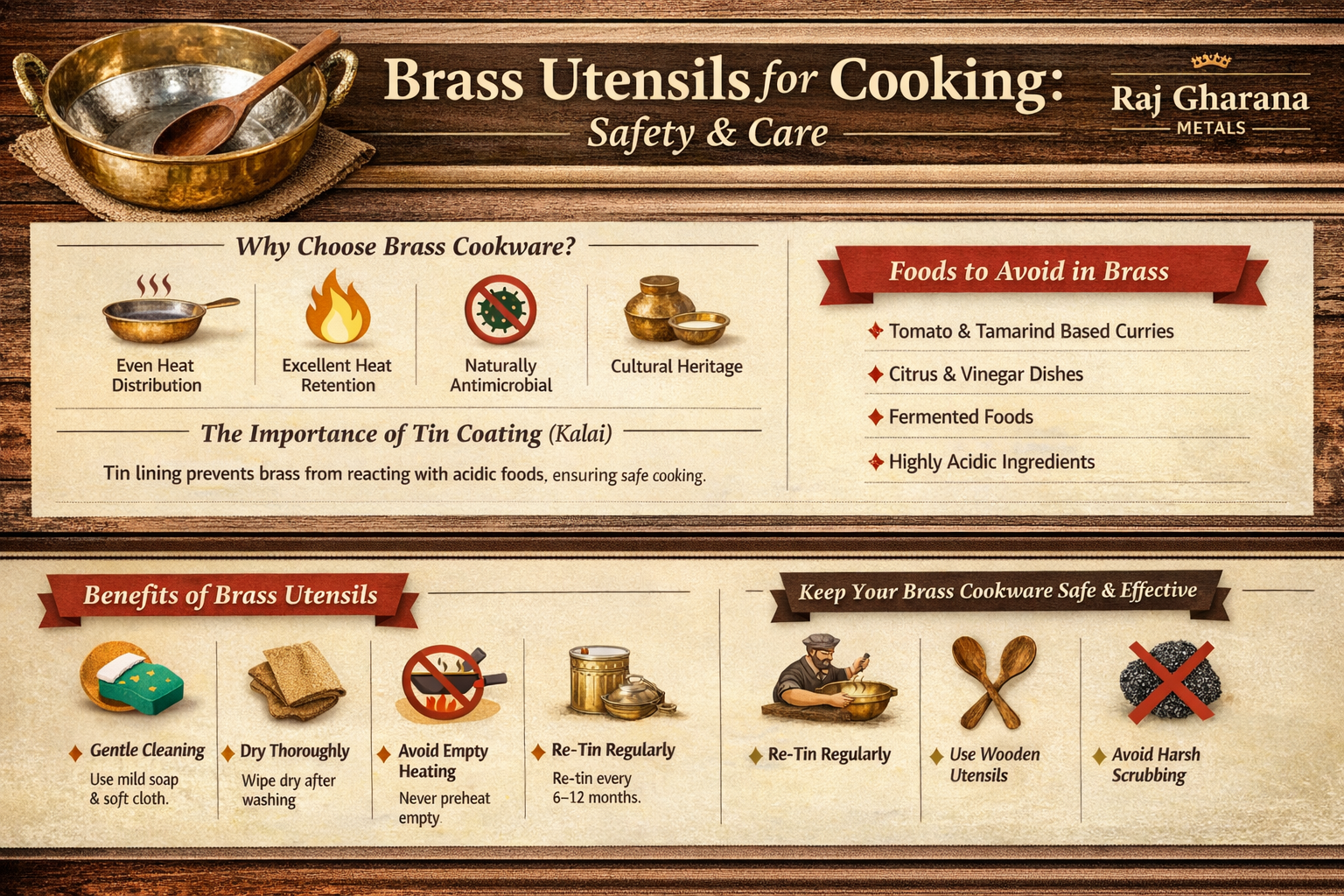
Although brass conducts heat well, it contains copper, which reacts with acids. When foods containing tomatoes, tamarind, or citrus are cooked in raw brass, the copper component can react and form verdigris (greenish copper salts). A guide to Kalai (tinning) explains that these copper salts are toxic and may cause digestive distress. Tin coating—known traditionally as Kalai—solves this problem by lining the inside of brass or copper cookware with a thin layer of pure tin. The same guide notes that tin acts as a non‑reactive barrier so that the food does not react with the underlying metal. Tin is a soft, corrosion‑resistant metal that is approved for food contact.
Many Indian artisans still perform Kalai by hand. Articles on traditional tinning describe heating a cleaned brass pot over charcoal, sprinkling ammonium chloride (flux) to prepare the surface, then rubbing melted pure tin across the interior. This creates the characteristic silver‑coloured lining that protects food. Retail guides emphasise that tin‑coated brass utensils prevent copper or zinc from leaching into food, improve hygiene, and preserve the traditional taste of dishes.
How Often to Re‑tin
Tin is soft and gradually wears away. Artisan sources recommend re‑tinning brass cookware every 4 – 12 months, depending on frequency of use, while consumer guides suggest re‑tinning annually to maintain safety. Signs that re‑tinning is needed include patches of exposed brass showing through the silver lining.
Advantages of Brass Cookware
Brass utensils gained popularity because they offer several cooking benefits:
· Even heat distribution: The high thermal conductivity of brass helps heat spread uniformly across the pan, reducing hot spots and burning. Many cooks use brass kadai for slow simmering and making thick gravies.
· Heat retention: Once heated, brass retains warmth longer than thin aluminum or stainless steel, which suits slow‑cooked curries and dairy dishes.
· Durability: Brass vessels can last decades when maintained properly. They withstand heavy stirring and high heat without warping.
· Antimicrobial surface: Copper alloys such as brass are naturally antimicrobial and can continuously kill bacteria when cleaned regularly.
· Cultural heritage: Using brass connects modern kitchens with ancestral cooking methods and Ayurveda. Many Indian households still use brass pots for boiling milk and making rice.
Using Brass Utensils Safely
Suitable foods
Tin‑coated brass utensils are ideal for foods that don’t involve strong acids, such as:
· Milk and dairy preparations
· Lentils, dals, and pulses
· Rice dishes and khichdi
· Slow‑cooked curries without a heavy tomato or tamarind base
Foods to avoid in raw brass
Cooking acidic or fermented foods in unlined brass is unsafe. Brass contains copper and zinc; cooking acidic foods causes chemical reactions that form toxic copper salts. Consumer guides advise using lined brass or switching to stainless steel or enameled cookware for tomato‑based curries, citrus‑rich dishes, vinegar sauces, and fermented batters.
Choosing safe cookware
· Food‑grade materials: Look for cookware labeled as food‑safe or culinary‑grade brass. Some decorative brass items contain higher levels of zinc or lead; they are not suitable for cooking.
· Tin lining: Verify that the interior is coated with pure tin and that the manufacturer provides re‑tinning services. Tin acts as a protective shield and prevents metal leaching.
· Avoid nickel coatings: Health Canada notes that older copper cookware was sometimes coated with nickel; such cookware should be considered decorative and may trigger allergies.
Caring for Brass Utensils
Proper maintenance prolongs the life of brass cookware and keeps it safe:
· Gentle cleaning: Wash with mild soap and a soft sponge. Do not scrub with steel wool or harsh abrasives; they scratch the tin layer.
· Dry immediately: Wipe dry after washing to prevent moisture spots and tarnish.
· Avoid dry heating: Never pre‑heat an empty tinned vessel on high heat—the tin can melt. Always have oil or food in the pan before turning on the flame.
· Wooden utensils: Use wooden ladles instead of metal spoons to avoid scratching the soft tin.
· Regular re‑tinning: As the tin layer wears away, re‑tin the utensil through a certified craftsman every few months to a year.
Brass vs. Stainless Steel vs. Aluminium
|
Feature
|
Brass (tin‑coated)
|
Stainless Steel
|
Aluminium
|
|
Heat distribution
|
High thermal conductivity (≈119 W/m·K) ensures even heating
|
Moderate; stainless steel alone conducts heat poorly and often requires copper/aluminum bases
|
Rapid heat transfer but prone to hot spots
|
|
Heat retention
|
Retains heat well due to its mass and thermal properties
|
Medium
|
Low; cools quickly
|
|
Reactivity
|
Safe when properly tin‑coated; unlined brass reacts with acidic foods, producing toxic salts
|
Generally non‑reactive, safe for all foods
|
Reactive; acidic foods can dissolve aluminum unless anodized
|
|
Durability
|
Very durable; heavy-gauge resists warping
|
Durable and low‑maintenance
|
Softer metal prone to dents; may warp under high heat
|
|
Antimicrobial
|
Copper alloys exhibit continuous antimicrobial action
|
Lacks inherent antimicrobial properties
|
Not antimicrobial
|
Common Mistakes to Avoid
1. Using unlined brass for acidic cooking: Always ensure your brass cookware is tinned or switch to stainless steel for tomato or citrus dishes.
2. Ignoring re‑tinning: Worn tin exposes brass; re‑tin at recommended intervals.
3. Scrubbing with harsh abrasives: Steel pads scratch the tin layer; use soft sponges.
4. Assuming all brass is food‑safe: Decorative brass may contain lead or high zinc levels. Buy certified culinary‑grade products.
When Brass May Not Be Ideal
Brass cookware may not suit every cooking style. If you rely on very high‑heat, fast cooking (e.g., deep‑frying at extremely high temperatures), prefer to cook highly acidic foods frequently, or require zero‑maintenance cookware, stainless steel or cast iron might be more practical. Brass requires periodic re‑tinning and gentle care to remain safe and functional.
Conclusion
Brass utensils embody a balance of tradition, functionality, and aesthetics. As a copper–zinc alloy, brass offers excellent heat distribution and durability, while the antimicrobial nature of copper alloys provides an added hygiene benefit. The practice of Kalai, applying a pure tin lining, is not merely decorative—it is essential for safety, preventing copper salts from contaminating food. When you choose culinary‑grade, tin‑coated brass cookware and maintain it through gentle cleaning and regular re‑tinning, you honour a centuries‑old culinary tradition while enjoying even heating and artisanal craftsmanship in a modern kitchen.
FAQs: Brass Utensils for Cooking
1. Are brass utensils safe for cooking?
Yes, tin-coated (Kalai) brass utensils are safe for cooking. Tin lining prevents copper from reacting with food and avoids toxic residue.
2. Why is tin coating necessary on brass utensils?
Brass contains copper, which reacts with acidic foods. Tin coating creates a protective, non-reactive layer that makes brass cookware food-safe.
3. What foods can be cooked in brass utensils?
Tin-coated brass utensils are best for:
4. How often should brass utensils be re-tinned?
Brass cookware should be re-tinned every 6–12 months, or sooner if the tin layer wears off and brass becomes visible.
5. Can acidic foods be cooked in brass utensils?
No. Tomato, tamarind, lemon, vinegar, and fermented foods should not be cooked in unlined brass, as they can form harmful copper salts.