Choosing the right kitchen utensil set is less about buying the largest collection and more about choosing utensils that match the way you cook. A good set should include the tools you use regularly, be made from suitable food-contact materials, work well with your cookware, and fit your cleaning and storage routine.
For Indian kitchens, this decision can also involve traditional materials such as brass, copper, and Kansa. Each material has different characteristics and care requirements, so the best kitchen utensil set depends on what you cook, how often you cook it, and how you plan to use each piece.
Current kitchenware trends also show a move toward reusable, durable, purpose-specific products. Instead of filling a drawer with tools that rarely get used, many households can benefit from building a smaller collection around everyday cooking and serving needs.
What Should You Look for in a Kitchen Utensil Set?
A quality utensil set should make everyday cooking easier. Before buying one, consider five basic factors:
-
Material: Is the utensil suitable for the intended food and cooking method?
-
Construction: Are the handles, joints, edges, and surfaces properly finished?
-
Function: Will you actually use each piece in the set?
-
Maintenance: Can you follow the cleaning and care requirements?
-
Size and weight: Is each utensil comfortable for the type of cooking you do?
The material deserves particular attention. Food-contact regulations and guidance place specific requirements on materials used for food preparation and storage. In India, FSSAI regulations state that copper or brass containers used for food should be properly tinned and that appropriate grades of metals and alloys should be used.
This is one reason buyers should look beyond appearance and price when choosing traditional metal kitchenware.
Kitchen Utensil Trends to Know Before Buying
Durable and Reusable Kitchenware
Reusable kitchenware continues to be a practical choice for households that want products designed for repeated use. The U.S. Environmental Protection Agency recommends reusable food service ware where an effective reuse system is available and notes that durable materials such as metal can be considered when suitable reusable options are needed.
For a home kitchen, the same idea can be applied in a simple way: buy utensils that you will use regularly and maintain them according to their material and construction.
A sturdy cooking ladle used several times a week can be more useful than a large collection containing several tools that remain in storage.
Traditional Metal Kitchenware
Traditional metal utensils remain popular in Indian homes because they combine practical kitchen functions with familiar materials and distinctive finishes.
Brass, copper, and Kansa are three materials that are often associated with Indian kitchen and dining traditions, but they should not be treated as identical.
Brass can be found in cookware, ladles, spice boxes, and other kitchen pieces. Copper is commonly used in drinkware and has limited applications in cookware because it can react with acidic foods. Its suitability for cooking depends on the lining, food type, and manufacturer's instructions. Kansa, a traditional bronze alloy, is particularly associated with thalis, bowls, serving pieces, and dinner sets.
The right choice depends on the product's intended use and the manufacturer's care instructions.
Purpose-Based Utensil Sets
A large set is not automatically a better set.
If you regularly prepare dal, sabzi, rice, rotis, curries, and other Indian dishes, your most useful utensils may be a ladle, turner, serving spoon, frying ladle, and other basic cooking tools.
For a household that frequently cooks with traditional cookware, adding a suitable tawa, kadai, saucepan, or spice box may make more sense than purchasing several similar serving tools.
The goal is to give every utensil a job.
How to Choose the Right Material for Kitchen Utensils
Different materials work better for different purposes. There is no single material that needs to be used for every utensil in your kitchen.
|
Material
|
Common kitchen use
|
What to consider
|
|
Stainless steel
|
Everyday cooking and serving
|
Easy to maintain and suitable for many routine kitchen tasks
|
|
Brass
|
Traditional cookware, cooking ladles, spice boxes, and kitchenware
|
Check the lining, intended use, and manufacturer's care instructions
|
|
Copper
|
Drinkware, including glasses and bottles
|
Follow product-specific care instructions and use for the intended purpose
|
|
Kansa/Bronze
|
Traditional dinnerware, including thalis, bowls, and serving pieces
|
Check composition, finish, weight, and cleaning requirements
|
|
Wood
|
Stirring and serving
|
Clean properly and dry thoroughly after use
|
|
Silicone
|
Selected cooking utensils
|
Check the product's stated heat rating and cookware compatibility
|
Your cooking habits should determine which materials you buy.
Brass Kitchen Utensils
Brass has a long association with Indian household kitchenware. Today, it can be found in cooking vessels, ladles, spice boxes, serving pieces, and other traditional kitchen products.
For cookware, it is particularly important to understand whether the cooking surface has an appropriate lining and how the utensil should be used. FSSAI's food-contact regulations state that copper or brass containers that are not properly tinned should not be used for the preparation, packaging, or storage of food.
A brass utensil should therefore be selected according to its intended purpose rather than simply because it looks attractive.
For households looking to build a coordinated collection, a Brass Cookware Set - 10 Pcs includes multiple cookware pieces in one set. Individual pieces are also available for buyers who prefer to build their kitchen collection gradually.
Copper Drinkware
Copper is well known for its thermal conductivity and traditional use in kitchenware and drinkware. It also requires more attention to food compatibility and care than some everyday materials.
The FDA Food Code states that copper and copper alloys such as brass should not be used in contact with foods with a pH below 6, including foods such as vinegar and fruit juice, in the situations covered by the code.
That guidance is useful when deciding where copper or brass utensils fit into your kitchen routine.
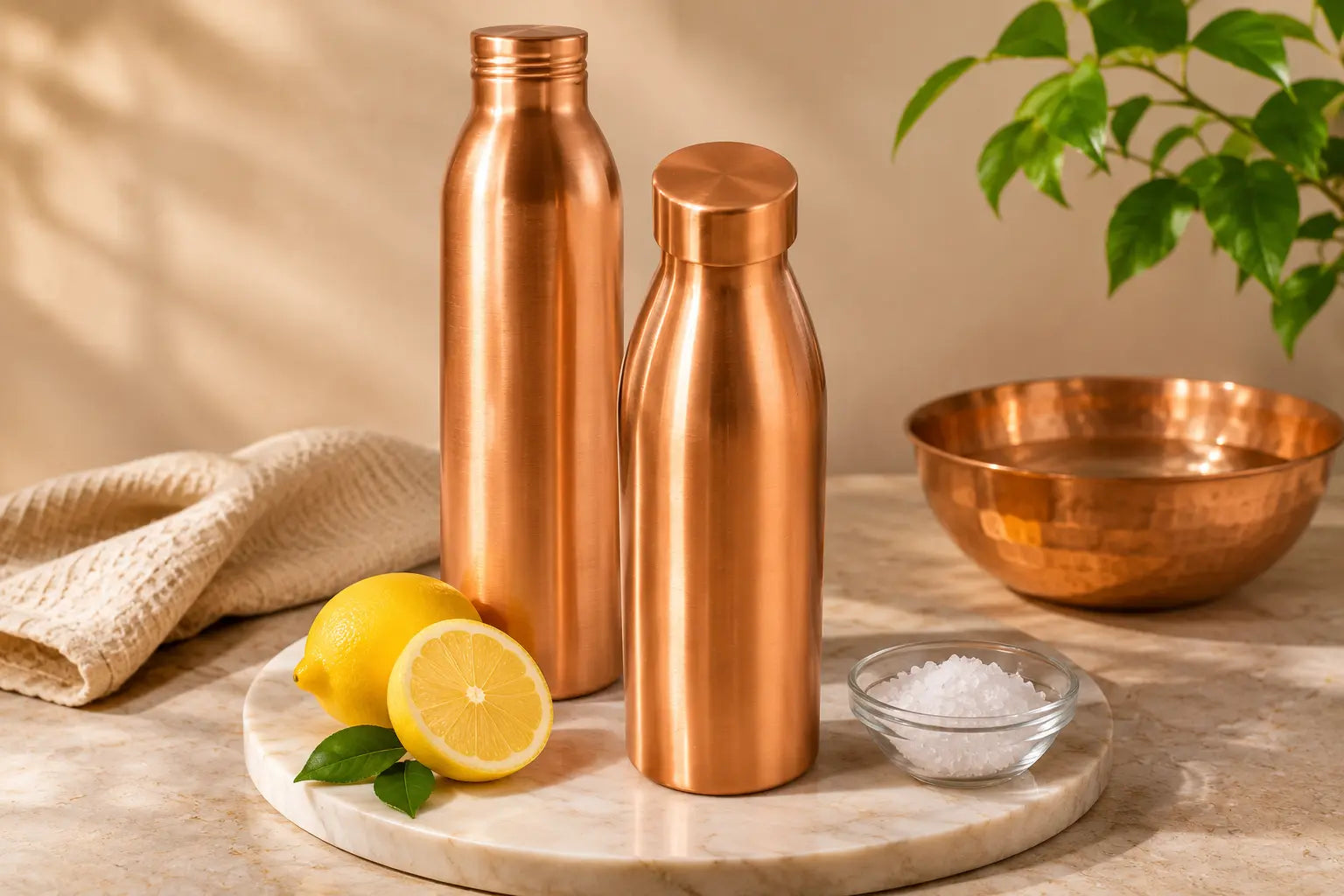
For buyers primarily interested in copper drinkware, choosing dedicated copper glasses, bottles, or other drinkware is a different decision from choosing copper cookware for food preparation.
Kansa or Bronze Utensils
Kansa is a traditional bronze alloy primarily made from copper and tin. It is strongly associated with Indian dining traditions and is commonly found in thalis, bowls, glasses, serving pieces, and dinner sets.
When choosing Kansa tableware, consider:
A Kansa dinner set is a practical choice for those looking to bring traditional Indian tableware to their dining collection. These sets may include a thali, bowls, a sweet dish, a tumbler, and a spoon, depending on the design. Explore the matte-finished Kansa dinner set for a coordinated dining option, or browse the complete range of Kansa dinnerware and tableware to find a set that suits your household's needs.
What Should a Kitchen Utensil Set Include?
The right combination depends on the meals you prepare, but most Indian kitchens can benefit from a few basic categories.
Cooking Ladles
A ladle is useful for dal, gravies, curries, soups, and other foods that need to be transferred from a deep cooking vessel.
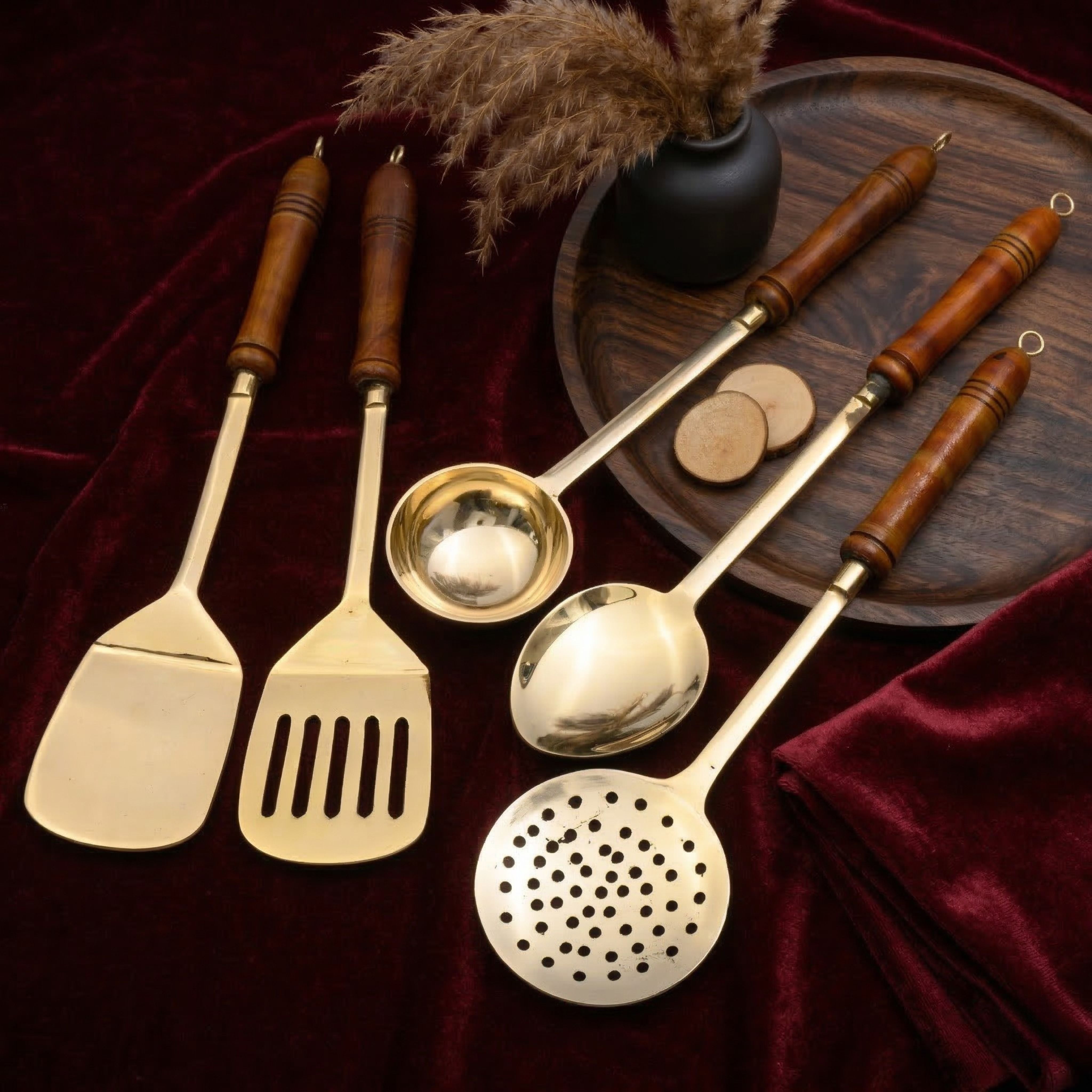
A set can be more practical when it includes different shapes for different tasks. A Brass Cooking Ladles Set of 5, for example, contains several ladle styles designed for different cooking functions.
Flat Turners
Flat turners are useful for flipping and lifting foods such as rotis, parathas, vegetables, pancakes, and fried items.
The size and handle design matter because a utensil that is too small may struggle with larger foods, while an oversized turner may feel awkward for smaller pans.
Frying Ladles
A frying ladle or skimmer is useful for removing fried food from hot oil while allowing excess oil to drain.
This is especially useful in kitchens where dishes such as pakoras, puris, samosas, or other fried foods are prepared regularly.
Roti Tawa
For households that make rotis regularly, a tawa may be more useful than several specialty utensils.
A Brass Roti Tawa can be considered by buyers specifically interested in traditional brass cookware. The important point is to understand the product's intended use and follow the care instructions provided for the utensil.
Kadai or Frying Pan
A kadai or frying pan can cover a wide range of everyday cooking tasks, from sautéing vegetables to preparing gravies and frying ingredients.
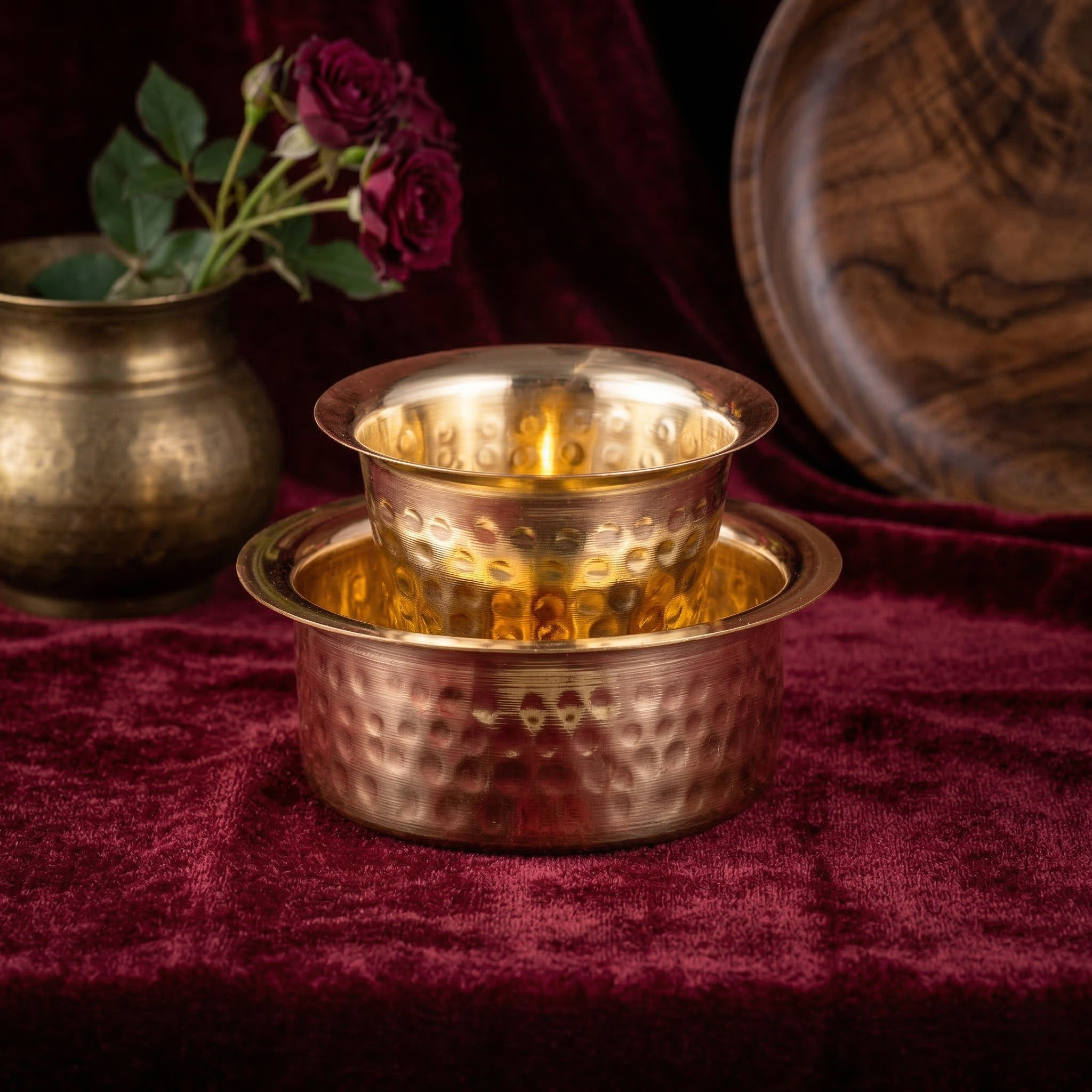
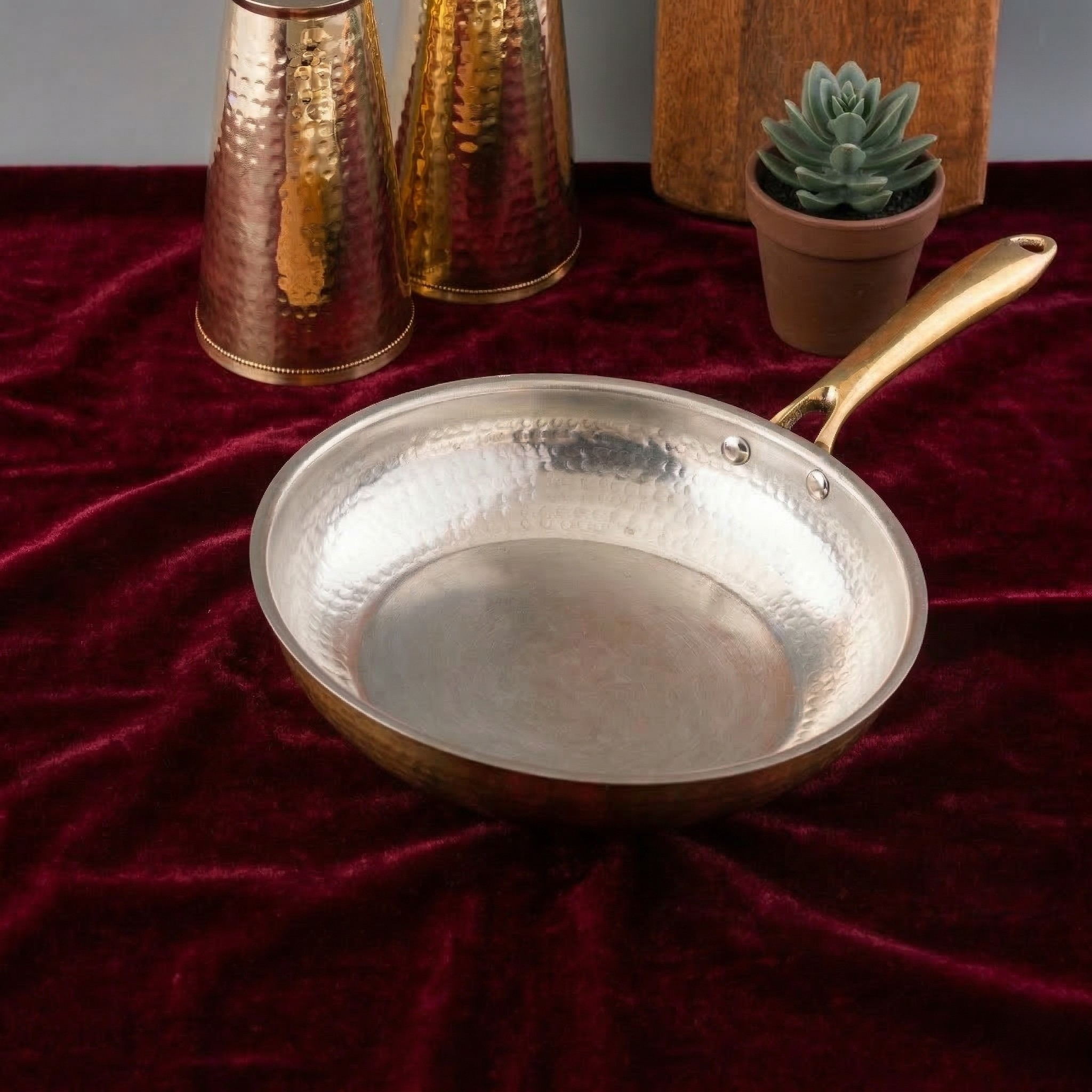
A Brass Kadai with Lid is one option for shoppers who want a traditional brass cooking vessel. A hammered brass frying pan is another option for buyers who prefer a smaller pan with a handle.
Spice Box
A spice box is not a cooking utensil in the narrowest sense, but it can be an extremely useful part of an Indian kitchen setup.
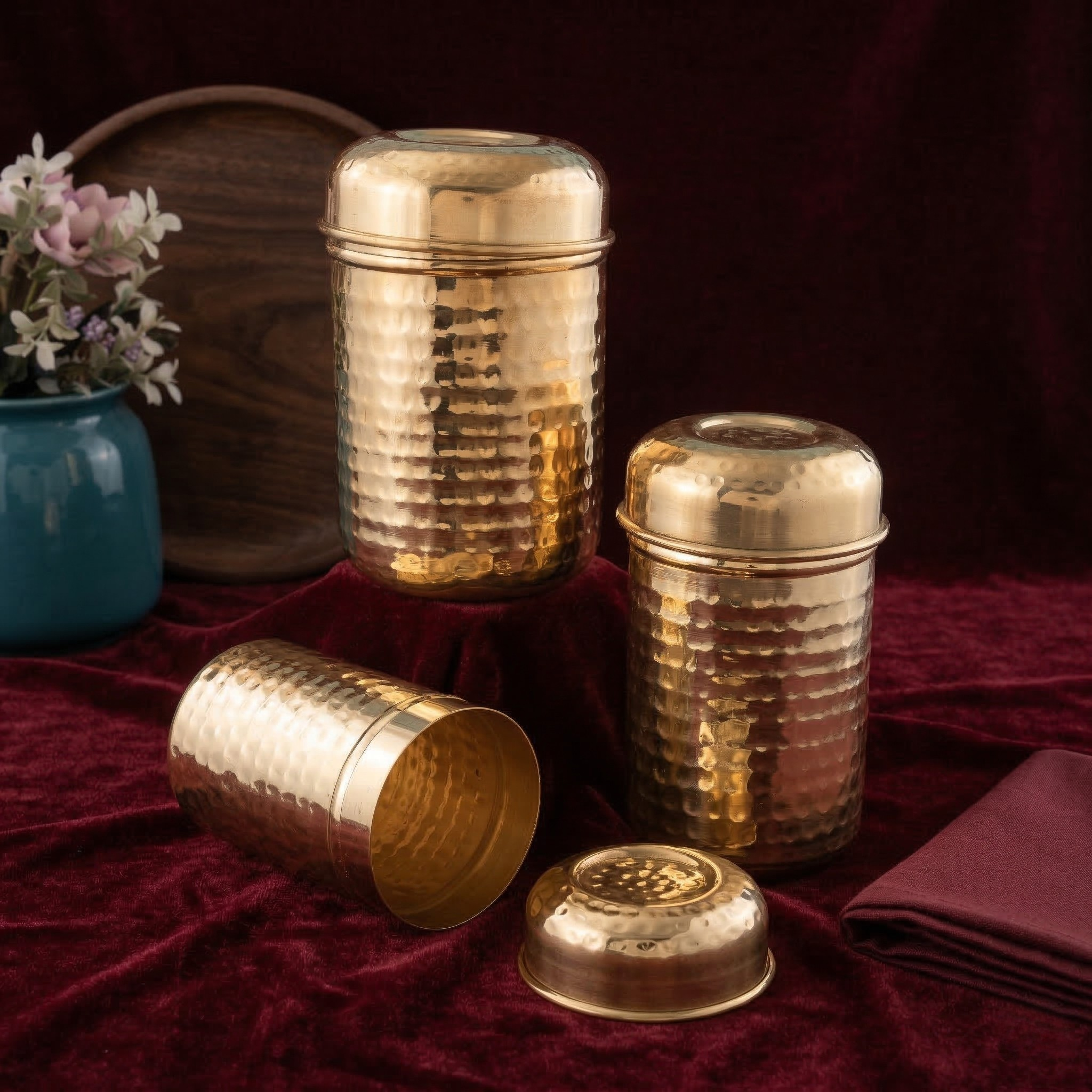
A brass spice box can keep frequently used spices organised in one place, reducing the need to search through separate containers while cooking.
Cooking Utensils and Serving Utensils Are Different
One common mistake is assuming that any attractive utensil can be used for every kitchen task.
Cooking utensils are exposed to heat and interact directly with cookware. Serving utensils are primarily used to transfer food from the cooking vessel to the dining table.
The requirements can therefore be different.
For example, a traditional metal serving spoon may be perfectly suited to serving dal or vegetables, while a utensil used for cooking on a particular pan should be selected with the cookware surface and heat exposure in mind.
If you use non-stick cookware, check whether the utensil is appropriate for that surface before using it.
How Many Utensils Do You Really Need?
There is no fixed number that works for every household.
A small household may need only a handful of frequently used cooking utensils. A larger family that prepares several dishes at once may need duplicate ladles, serving spoons, or turners.
A better approach is to count functions rather than pieces.
Ask yourself:
-
Do I need more than one ladle?
-
Do I regularly fry food?
-
Do I make rotis?
-
Do I prepare large batches of curry or dal?
-
Do I need separate serving utensils?
-
Do I have enough storage space?
This helps prevent a common problem: buying a large utensil set and using only a few pieces regularly. If you're looking for a coordinated collection of traditional cookware, explore the Raj Gharana Metals Bronze Cookware Set to find cookware that suits your kitchen needs.
What to Check Before Buying a Quality Utensil Set
1. Check the Material
The product description should clearly state what the utensil is made from.
Avoid vague descriptions that do not explain the material or intended use.
2. Check the Intended Purpose
A utensil designed for serving should not automatically be assumed to be suitable for high-heat cooking.
Read the product information and care instructions before using it.
3. Check the Construction
Look at the handle, joints, edges, thickness, and overall finish.
For cookware, also consider the lid, handle attachment, and cooking surface.
4. Check the Weight
Traditional metal utensils can feel heavier than lightweight alternatives.
That is not necessarily a problem, but the weight should be comfortable for you to use regularly.
5. Check Maintenance
Different materials require different levels of care.
Traditional brass and copper pieces may need more attention than stainless steel. Kansa tableware also needs appropriate cleaning and storage.
If a product requires maintenance that you know you will not follow, choose another material or product that better matches your routine.
6. Check What Is Actually Included
Always look at the individual pieces in a set.
A five-piece set containing five genuinely useful tools may be more practical than a 15-piece set containing several items you rarely need.
Common Mistakes When Buying Kitchen Utensils
Buying Only for Looks
Traditional metalware can be visually appealing, but appearance should come after material, construction, intended use, and maintenance requirements.
Choosing the Largest Set
A bigger set means more pieces, not necessarily more usefulness.
Buy according to your cooking routine.
Ignoring Food Compatibility
This is especially important with copper and brass.
The FDA Food Code places restrictions on copper and copper alloys coming into contact with acidic foods because of potential metal leaching. FSSAI also specifies requirements for copper and brass food containers, including proper tinning.
Forgetting About Storage
Before buying a large collection, consider where each piece will be kept.
Large thalis, kadais, serving bowls, and multiple ladles can take up considerably more space than a compact everyday set.
Not Reading Care Instructions
Traditional metalware can change appearance with regular use. That does not automatically mean the product is damaged.
Follow the manufacturer's cleaning and maintenance instructions instead of using the same cleaning method for every type of metal.
How to Build a Practical Kitchen Utensil Collection
A useful kitchen collection can be divided into three groups.
Daily cooking:
Ladles, turners, frying spoons, spatulas, and other tools used during meal preparation.
Cookware:
Kadais, frying pans, saucepans, tawas, patilas, and other vessels chosen according to the dishes you prepare.
Serving and dining:
Thalis, bowls, glasses, serving spoons, and dinner sets used at the dining table.
This approach allows you to mix materials according to function.
For example, you may use everyday stainless-steel tools for some cooking tasks, traditional brass cookware for suitable recipes, and Kansa dinnerware for serving meals.
There is no requirement to make every item in the kitchen from the same material.
Kitchen Sets Available from Raj Gharana Metals
For shoppers interested in traditional Indian kitchenware, Raj Gharana Metals has kitchen and dining collections covering brass cookware, cooking utensils, Kansa dinnerware, and related pieces.
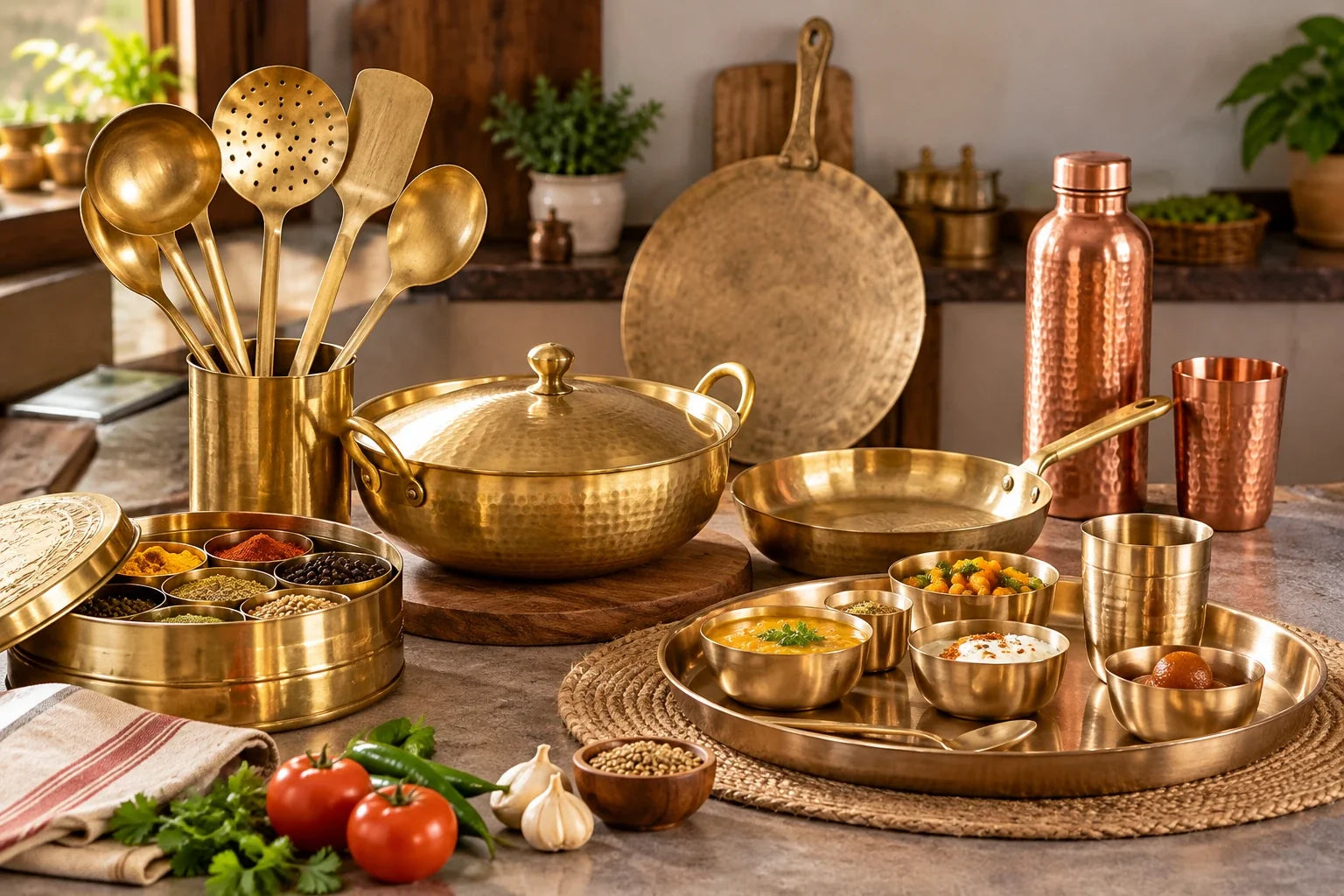
The brass kitchenware range includes options such as a 10-piece Brass Cookware Set, Brass Kadai with Lid, Brass Frying Pan, Brass Sauce Pan, Brass Roti Tawa, Brass Cooking Ladles Set of 5, Brass Spice Box, Brass Mortar and Pestle, and Brass Patila with Lid.
The Kansa tableware range includes six-piece dinner sets in different finishes, larger Kansa dinner combinations, and individual Kansa thalis. This gives shoppers the option of buying a complete set or selecting individual pieces based on their household needs.
When choosing between them, start with the way you cook and serve food. If you need cookware for everyday preparation, focus on the appropriate cooking vessels and utensils. If your priority is traditional dining, a Kansa dinner set or thali may make more sense.
The best kitchen utensil set is ultimately the one that fits your cooking habits, storage space, maintenance routine, and intended use. Choose fewer pieces when they cover your needs well, and add specialised utensils only when they have a clear place in your kitchen.