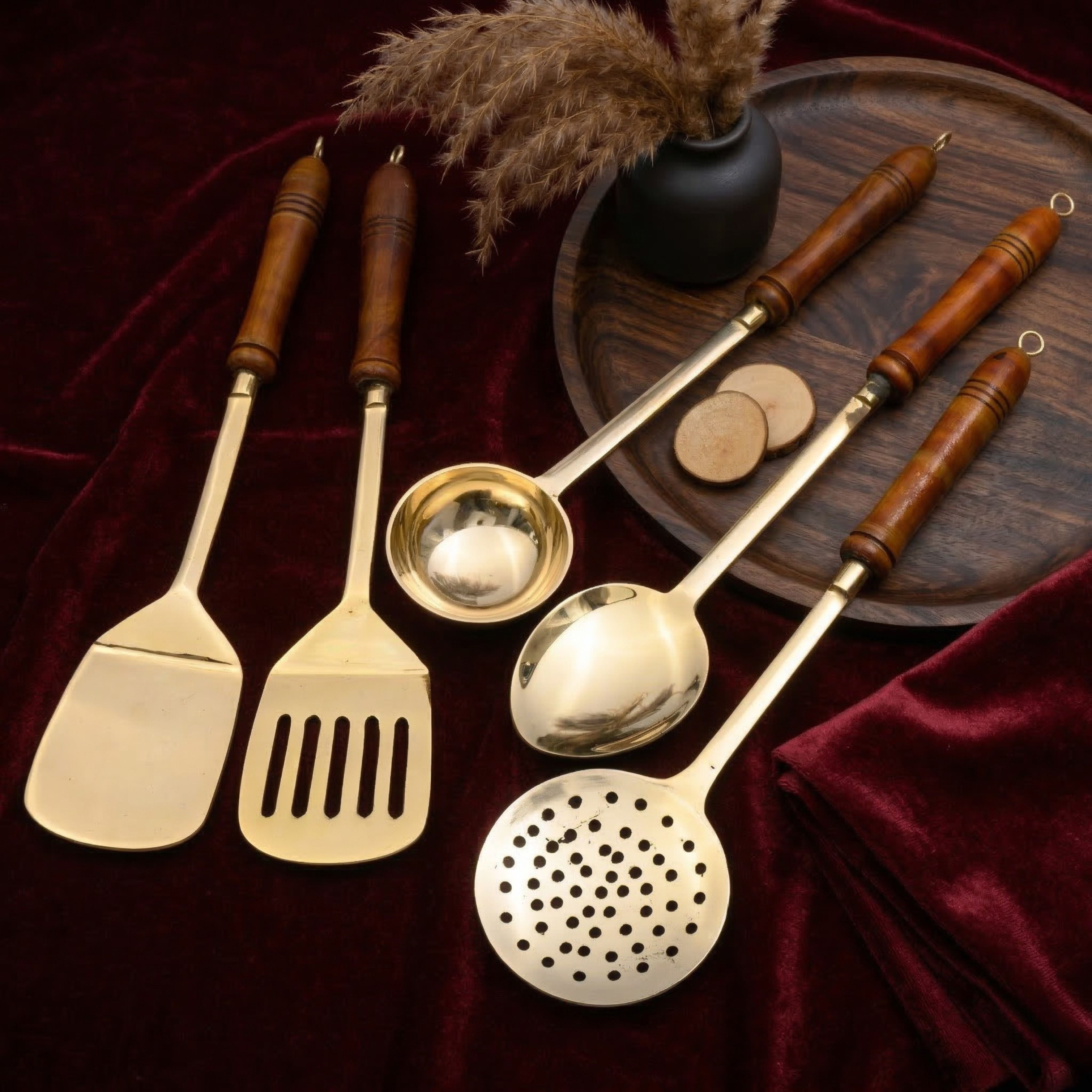
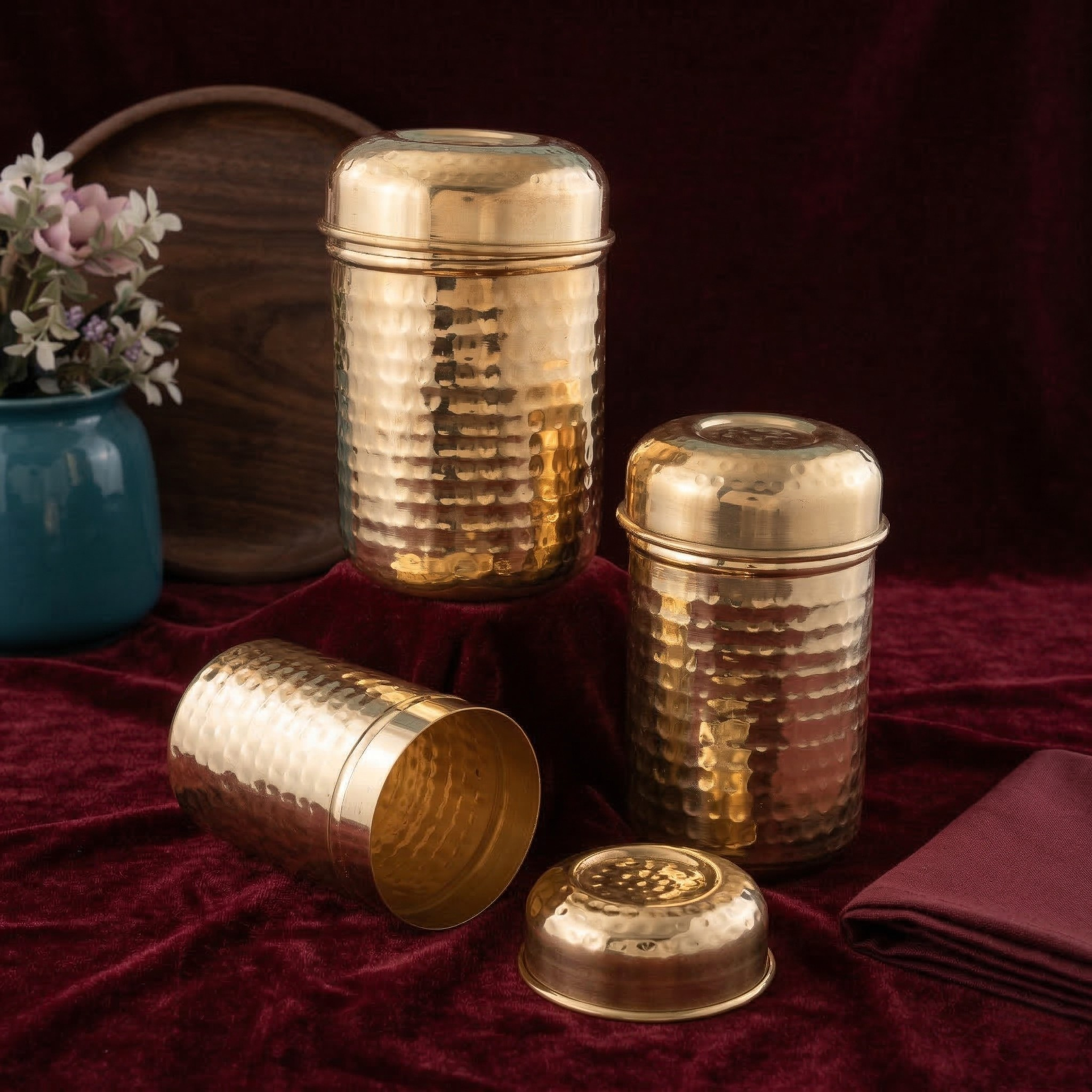
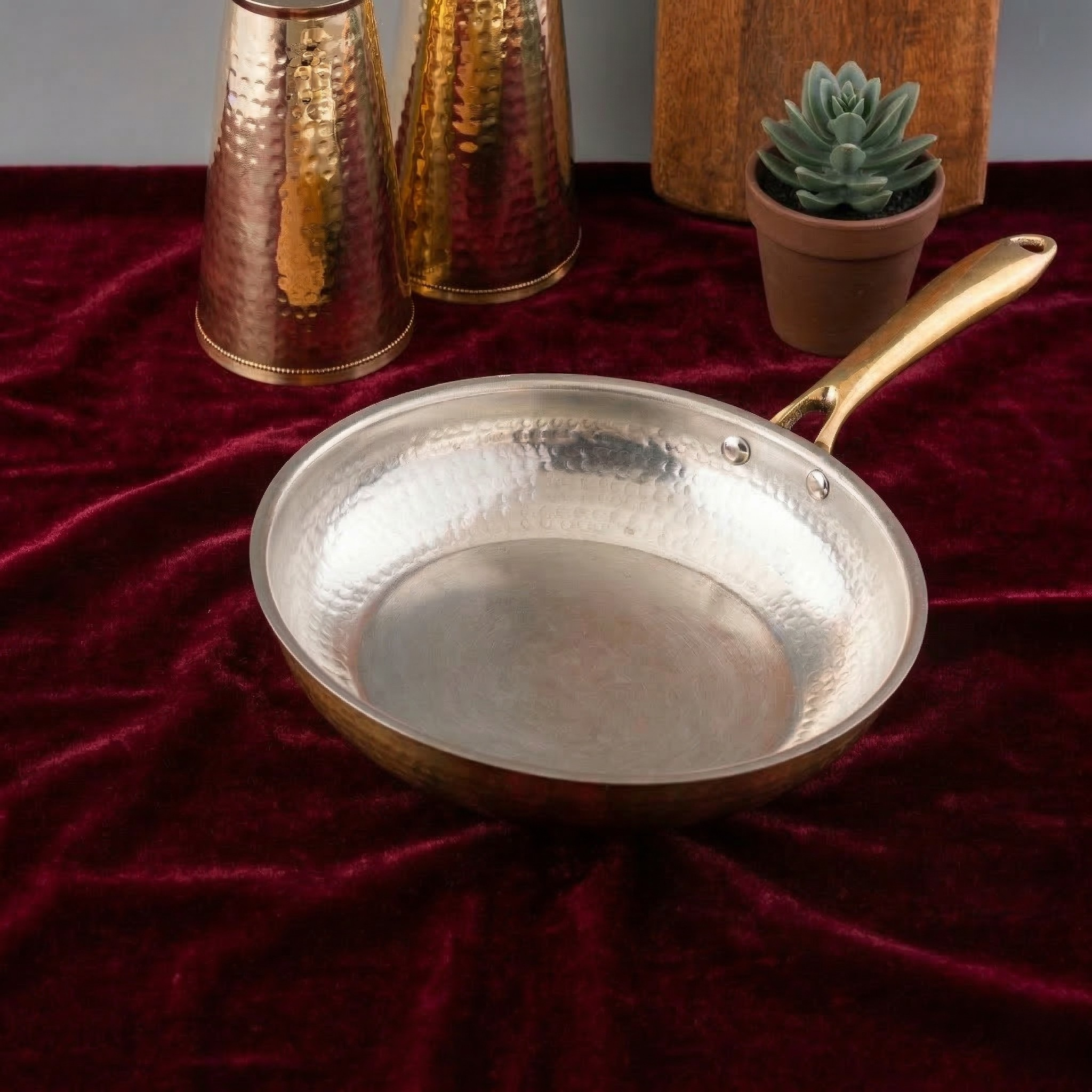
Bronze utensils and stainless steel both have a place in the modern kitchen, but they create very different experiences at the dining table. If you value traditional craftsmanship, the warm character of metalware and the heritage of Indian dining, bronze utensils offer something that standard kitchenware simply cannot replicate. Stainless steel is widely used for its familiar qualities, while bronze brings a stronger sense of tradition, craftsmanship and occasion.
The right choice depends on what you want from your utensils. A bronze thali can become part of everyday family meals, a bronze dinner set can make a beautiful addition to a dining table, and individual bronze bowls, glasses and serving pieces can be introduced gradually. For anyone considering bronze utensils for their home, understanding the material, its care requirements and its best uses is more useful than simply asking which metal is better.
Bronze also has an interesting connection with nutrition. Copper, one of the principal metals used in traditional copper-tin bronze, is an essential mineral involved in energy production, nervous system function, connective tissue formation and immune function. The National Institutes of Health's copper fact sheet lists 900 mcg as the recommended daily amount for adults. This does not mean bronze utensils should be treated as a nutritional source, but it provides useful context when discussing the material.
What Is Bronze Used for in Traditional Utensils?
Bronze is a family of copper-based alloys. Traditional foodware bronze is generally made by combining copper with tin, creating a harder material with a distinctive golden-brown appearance.
The composition matters. Not every product marketed simply as "bronze" is made from the same alloy, which is why buyers should look for clear material information before purchasing food-contact products.
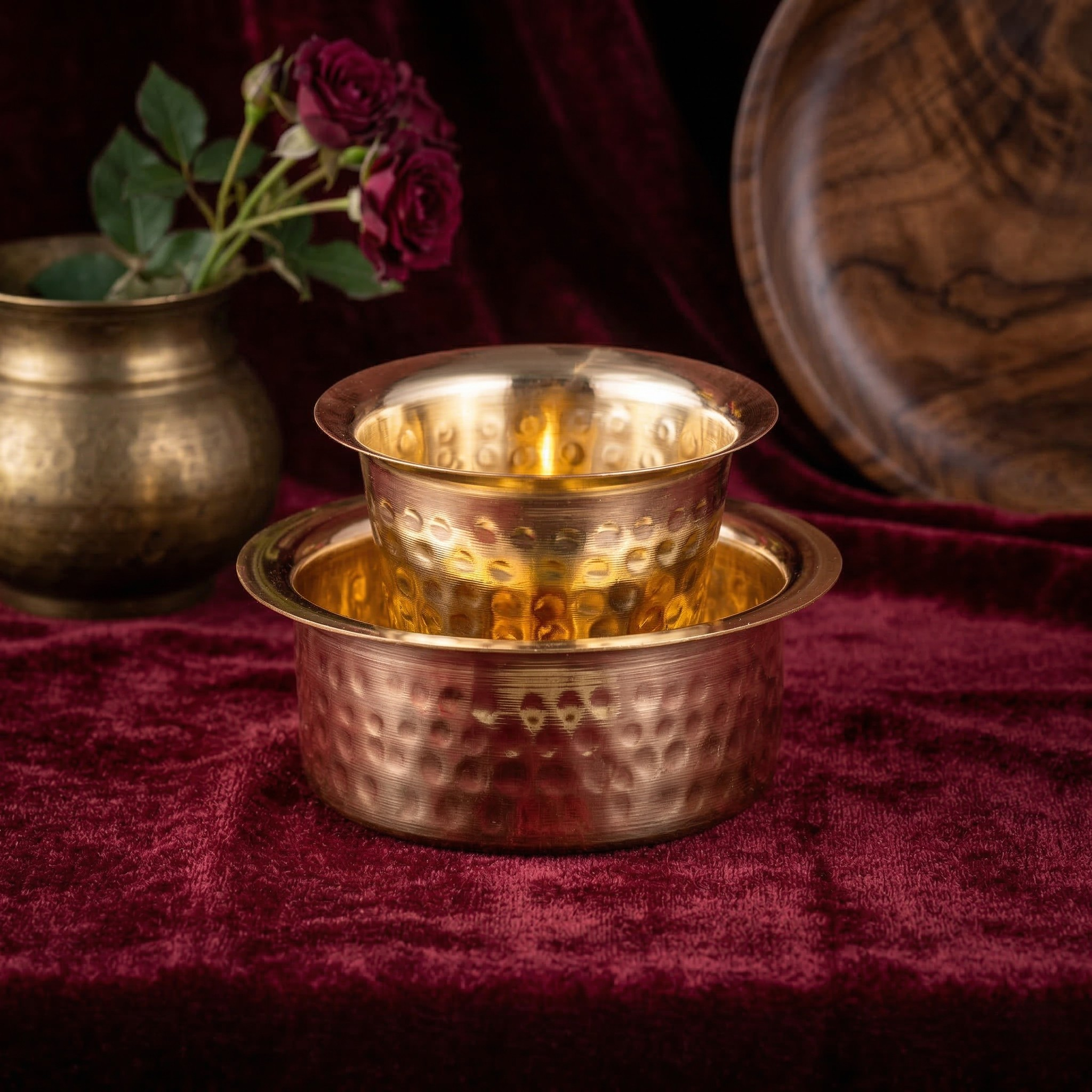
Traditional bronze has been used for plates, bowls, glasses, spoons, serving vessels and other household articles for generations. Its appeal is partly practical, but a large part of its value comes from craftsmanship.
A handmade bronze plate can have subtle variations in texture and finish. Instead of looking identical to every other plate on the shelf, it carries visible signs of the work involved in making it.
That is one reason bronze continues to attract people who want traditional metalware in a modern home.
Bronze Utensils vs Stainless Steel at a Glance
|
Feature
|
Bronze
|
Stainless Steel
|
|
Appearance
|
Warm, traditional and distinctive
|
Clean and uniform
|
|
Traditional Indian dining
|
Excellent choice
|
Common choice
|
|
Handcrafted character
|
Strong
|
Usually limited
|
|
Thalis and dinnerware
|
Particularly suited
|
Widely used
|
|
Serving food
|
Well suited
|
Well suited
|
|
Maintenance
|
Needs appropriate care
|
Generally straightforward
|
|
Durability
|
Long-lasting with proper care
|
Long-lasting
|
|
Food compatibility
|
Depends on alloy and intended use
|
Broad for general kitchen use
|
|
Cultural character
|
Strong
|
Primarily functional
|
|
Dining experience
|
Traditional and distinctive
|
Familiar and contemporary
|
|
Health Conscious
|
Traditionally preferred for food use
|
Commonly preferred for everyday food use
|
The comparison is useful, but it does not tell the whole story. Bronze has qualities that become much more noticeable once you actually use it.
Why Choose Bronze Utensils?
There is a reason traditional bronze tableware has remained relevant even as modern kitchen materials have become common.
Traditional craftsmanship
Bronze utensils can bring the work of metal artisans directly to the dining table. Hammering, shaping, finishing and polishing all contribute to the final appearance of a piece.
Small variations are often part of handmade metalware. A slight difference in texture or finish can be a sign that the piece has been individually worked rather than mass-produced.
A distinctive appearance
Bronze has a warm metallic tone that works particularly well with traditional Indian food and dining spaces.
Place rice, dal, vegetables, roti and sweets on a bronze thali and the entire presentation feels different. The metal becomes part of the dining experience rather than simply serving as a surface underneath the food.
Long-term use
Good-quality bronze utensils can be durable when they are used and maintained appropriately.
They can become pieces that remain in a household for many years, and some families choose traditional metalware precisely because it can be passed from one generation to the next.
A connection with Indian dining traditions
For many buyers, this is the biggest attraction.
Bronze utensils are associated with traditional Indian homes, festive meals, family gatherings and ceremonial occasions. Bringing them into a modern dining room creates a connection between older traditions and present-day living.
Bronze vs Stainless Steel for the Dining Table
The difference becomes especially clear when both materials are used for serving a traditional meal.
Imagine a complete dinner with dal, sabzi, rice, roti, a sweet dish and accompaniments. A stainless-steel plate can certainly hold the meal, but a bronze thali adds another dimension to the presentation.
The warm colour of bronze complements Indian cuisine naturally. Matching bowls and serving pieces create a cohesive table setting, while the weight and feel of the metal make the utensils noticeable in the hand.
This is particularly appealing for people who enjoy hosting family meals, celebrating festivals at home or simply want their everyday dining setup to feel more traditional.
You can begin with a single bronze thali and add matching pieces later.
Bronze Dinner Sets for Complete Traditional Dining
A complete dinner set is useful when you want more than one individual piece.
A typical bronze dinner set can include a thali, bowls, a sweet dish, spoon and glass. Having matching pieces gives the dining table a more finished appearance and makes the set suitable for both regular meals and special occasions.
A bronze dinner set can also be a thoughtful choice for weddings, housewarmings, anniversaries and festive gifting.
For larger families or people who enjoy hosting, a large bronze dinnerware set provides multiple thalis, bowls, glasses, serving pieces and other tableware in one coordinated collection.
The important thing is to choose a set based on how many people you regularly serve. A smaller six-piece set may be enough for a couple or a small family, while a larger collection makes more sense for frequent family gatherings.
Check the latest collections & buy Bronze Utensils From Here
Can Bronze Utensils Be Used Every Day?
Bronze does not have to be reserved for special occasions.
A bronze plate can be part of a regular breakfast or dinner. Bowls can be used for suitable foods, while glasses and serving pieces can become part of a normal dining routine.
The key is proper use and care.
Bronze is a copper-based alloy, so it should not be treated exactly like every other kitchen metal. Food type, contact time and the intended purpose of the utensil all matter.
For example, using a bronze thali to serve a freshly prepared meal is different from storing a strongly acidic food in a bronze vessel for a prolonged period.
This distinction is important because traditional tableware is designed around particular uses.
If you are planning to use bronze utensils regularly, it is worth understanding their care requirements before buying. This guide on how to care for bronze utensils explains cleaning, tarnish, drying and long-term maintenance.
What Foods Should You Be Careful With?
Copper-based alloys can react with acidic foods, particularly when there is prolonged contact.
The U.S. Food and Drug Administration's Food Code includes restrictions on copper and copper-alloy surfaces coming into contact with foods below pH 6.
This does not mean that bronze tableware is unsuitable for normal dining. It means that the intended use of the product matters.
Foods containing ingredients such as vinegar, concentrated citrus or strongly acidic preparations deserve particular care. You should also avoid using bronze as a long-term storage container for acidic foods unless the manufacturer specifically confirms that the product is suitable for that purpose.
Bronze utensils can generally be used for serving and eating a wide range of foods. However, it is best to avoid storing vinegar, concentrated citrus juices, or other strongly acidic foods in bronze utensils for extended periods, as prolonged contact with acidic ingredients may react with the metal.
For everyday dining, follow the product-specific care instructions rather than relying on broad claims about what all bronze utensils can or cannot do.
How to Care for Bronze Utensils
Bronze rewards regular care.
For everyday cleaning, use a gentle cleaning method and a soft sponge rather than aggressive abrasive materials. Rinse the utensil properly and dry it thoroughly before storing it.
Moisture left on the surface can contribute to tarnishing over time.
Bronze can naturally darken as it ages. This change is called patina, and it is not automatically a sign of damage. Many people actually appreciate the deeper colour because it gives traditional metalware a more aged appearance.
If you prefer a brighter finish, follow an appropriate bronze-cleaning method rather than using whatever household chemical happens to be available.
Most importantly, do not assume that a cleaning method designed for stainless steel will be equally suitable for bronze.
What Makes a Good Bronze Utensil Worth Buying?
A good bronze utensil should be judged by more than its appearance in a product photograph. The natural shine of bronze product appears with golden shine.
Check the composition
Look for clear information about the alloy. Traditional foodware bronze is generally based on copper and tin, but exact composition can vary upto 2 %.
Look at the construction
Pay attention to thickness, weight, edges and overall finish. These details can tell you a great deal about how the piece was made.
Consider the intended use
A bronze thali designed for dining should not automatically be treated as cookware for every type of cooking.
Choose a utensil according to its intended purpose.
Look at the finish
Matte and polished finishes create very different looks. A matte bronze dinner set has a softer, more understated appearance, while a polished finish catches more light.
Check the care instructions
A seller should provide clear information about cleaning, food use and storage.
Consider the number of pieces you actually need
If you are buying for two people, a six-piece set may be enough. If you regularly host extended family, a larger dinnerware collection may be more useful.
Common Mistakes People Make When Buying Bronze Utensils
Buying only because the utensil looks beautiful
A beautiful finish is a good starting point, but material composition, construction and intended use matter just as much.
Assuming every bronze product is identical
Bronze is a broad family of alloys. Always check what the product is actually made from.
Expecting the surface to stay exactly the same
Bronze naturally changes with exposure to air, moisture and use. A developing patina can be part of its character.
Using harsh cleaning products
Strong chemicals and abrasive scrubbers can affect the surface. Gentle cleaning is usually the better approach.
Storing acidic food for long periods
Copper-based alloys require more care around strongly acidic foods. Follow the manufacturer's instructions.
Believing every health claim associated with bronze
Copper is an essential mineral, but that does not mean every claim about bronze improving digestion, immunity or other health conditions is scientifically established.
The strongest reason to buy bronze is the combination of material quality, craftsmanship, traditional use and the dining experience it creates.
Bronze Utensils vs Stainless Steel: Which One Should You Choose?
If you are looking for traditional tableware with a strong connection to Indian craftsmanship, bronze is an excellent option.
Bronze makes particular sense if you want:
-
A traditional dining setup
-
A handcrafted bronze thali
-
Matching bowls and serving pieces
-
A warm, distinctive appearance
-
Traditional dinnerware for family meals
-
Tableware for festivals and special occasions
-
A meaningful wedding or housewarming gift
-
Durable pieces that can remain in the family for years
Stainless steel has become familiar in modern kitchens, but choosing bronze does not mean you have to replace everything you already own.
You can keep the kitchenware you currently use and introduce bronze specifically where it adds the most character: the dining table.
Start with one plate or thali if you want to experience the material before buying a complete set. If you enjoy it, add bowls, glasses, spoons and serving pieces to create a coordinated collection.
Why Bronze Belongs in a Modern Home
Traditional utensils do not have to disappear simply because kitchens have become more modern.
In fact, bronze fits naturally into contemporary homes because it combines functionality with craftsmanship.
A bronze thali can be used for an ordinary family dinner. A matching set can come out during Diwali or another celebration. A beautifully packaged dinner set can become a wedding or housewarming gift. Over time, the utensils can become associated with family meals and occasions that are remembered long after the meal itself.
That is something a purely functional comparison often misses.
The value of bronze is not limited to the metal itself. It is also in the workmanship, the appearance, the tradition and the feeling of using something made with a connection to an older form of Indian craftsmanship.
Bring Traditional Bronze Tableware to Your Dining Table
Bronze utensils offer a distinctive alternative for people who want more from their tableware than uniform, mass-produced kitchenware. With appropriate care and suitable use, bronze thalis, bowls, glasses, spoons and dinner sets can become a lasting part of everyday dining as well as special occasions.
If you are starting your collection, choose pieces that fit the way your family actually eats. A single bronze thali is a simple beginning, while a coordinated dinner set creates a complete traditional dining experience.
At Raj Gharana Metals, we offer handcrafted bronze tableware including thalis, dinner sets, bowls, glasses, spoons and serving pieces, made for people who want to bring the character of traditional Indian metal craftsmanship into their homes.